







The Government Unlocks the Launchpad
For decades, space in India was the exclusive domain of the Indian Space Research Organisation (ISRO), the country's revered and highly successful government agency. ISRO earned global respect for its impressively cost-effective missions, like its 2014
Mars orbiter, which cost less to make than the movie *Gravity*. But the ecosystem was closed. That all changed in 2020 when the Indian government threw open the doors, announcing sweeping reforms designed to encourage private companies to build, launch, and operate in space. This wasn't just a minor policy tweak; it was a foundational shift. The government created a new regulatory body, IN-SPACe, to act as a bridge between ISRO and the private sector, effectively giving startups access to ISRO's world-class facilities, testing infrastructure, and deep institutional knowledge.
Meet the New Rocket-Builders
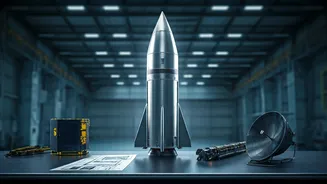
The policy shift lit a fire under a new generation of entrepreneurs. Within a few short years, a host of ambitious startups emerged from stealth mode. The most prominent is Skyroot Aerospace, which in late 2022 became the first private Indian company to launch a rocket into space. Their Vikram-S rocket was a suborbital test flight, but it was a massive proof of concept. Another key player is Agnikul Cosmos, which specializes in 3D-printing its rocket engines—a technique that dramatically cuts production time and cost. Their entire engine can be printed as a single piece of hardware, a major manufacturing innovation. These companies aren't trying to send humans to Mars just yet. Their focus is on the booming market for launching small satellites, a service in high demand globally.
India's Secret Weapon: Frugal Innovation
If U.S. space innovation is defined by audacious, moonshot-level spending, India's is defined by what's locally known as *jugaad*—a mindset of frugal engineering and creative problem-solving. This isn't about being cheap; it's about being radically efficient. Indian space startups are leveraging this cultural advantage to build rockets and satellites at a fraction of the cost of their Western counterparts. While a dedicated launch for a small satellite on an American rocket might run into the millions, Indian startups are aiming to deliver similar services for significantly less. This cost competitiveness is their single biggest selling point and the reason why satellite companies from the U.S. and Europe are already signing contracts with them. They are betting they can become the go-to budget launch provider for the world.
More Than Just Launch Vehicles
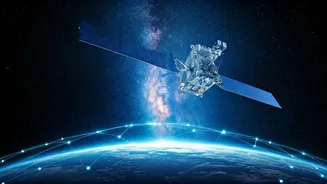
The boom isn't limited to rockets. A whole ecosystem of space-tech companies is flourishing. Take Pixxel, a startup building a constellation of hyperspectral imaging satellites. While a normal satellite camera sees in red, green, and blue, Pixxel's can see in hundreds of colors, revealing data invisible to the naked eye. This has powerful applications on Earth, from detecting crop diseases and monitoring water pollution to identifying mineral deposits. Other startups are focusing on satellite components, ground station services, and data analytics. This diversification shows the sector's growing maturity; it's not just about getting to space, but about creating value from it.
Why the U.S. Should Be Watching
For American companies and investors, India's space boom is more of an opportunity than a threat. While the new Indian firms will certainly create competition in the small satellite launch market, they also represent a new frontier for partnership and investment. With recent rules allowing up to 100% foreign direct investment in parts of the sector, U.S. capital has a direct path into this high-growth market. Furthermore, these Indian startups could become crucial partners in the global space supply chain, providing cost-effective components and services. As space becomes more integrated into the global economy, the emergence of a low-cost, high-talent hub doesn't just change the game for India—it makes the entire cosmic playing field bigger and more dynamic for everyone.