







What Is Walking Yoga, Anyway?
Let’s clear up the first question: no, this doesn’t mean you have to attempt a wobbly Warrior II pose on a busy sidewalk. Walking yoga is less about complex postures and more about mindful movement. At its core, it’s a practice that combines the principles
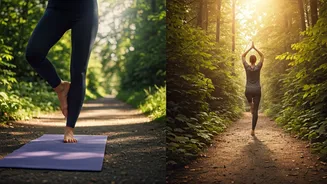
of yoga—conscious breathing, body awareness, and a meditative focus—with the simple, rhythmic motion of walking. Think of it as an upgrade to your daily stroll. Instead of walking with your mind racing or your face buried in a phone, you intentionally connect your breath to your steps, tune into the sensations in your body, and engage with your surroundings. During pauses, you might incorporate simple, standing stretches or poses to release tension and improve flexibility, but the primary focus remains on the mindful journey itself.
Why It's a Perfect Fit for Beginners
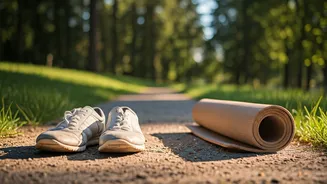
The fitness world can feel like a members-only club with a high barrier to entry. Walking yoga throws that notion out the window. First, it’s incredibly low-impact, making it gentle on the joints and safe for individuals who are new to exercise or recovering from an injury. Second, the equipment list is beautifully short: a comfortable pair of shoes is all you need. There are no expensive memberships or complicated machines. Third, it dismantles the psychological hurdles. By focusing on breath and awareness rather than performance or intensity, it reduces the pressure and anxiety that often accompany new workout regimens. It shifts the goal from “crushing a workout” to simply being present and moving your body, which helps build a sustainable, positive relationship with exercise. The mental health benefits are just as significant, as the combination of light physical activity, fresh air, and mindfulness is a well-established recipe for reducing stress and improving mood.
How to Start Your First Walk
Ready to try? Don’t overthink it. The beauty of walking yoga is its simplicity. Here’s a basic guide to your first session: 1. **Choose Your Space:** Find a relatively quiet, safe place to walk. A park path, a peaceful neighborhood street, or a local track is perfect. Aim for a flat, even surface to start. 2. **Warm Up with Breath:** Before you start moving, stand still for a minute. Close your eyes if you feel comfortable. Take a few deep, slow breaths. Inhale through your nose, feel your belly expand, and exhale slowly through your mouth. Notice how your body feels. 3. **Sync Breath and Movement:** As you begin walking at a natural pace, start to coordinate your breath with your steps. A simple pattern is to inhale for three or four steps, and then exhale for the same count. Find a rhythm that feels comfortable, not forced. The goal is to create a smooth, meditative cadence. 4. **Engage Your Senses:** Pay attention to the world around you. Notice the feeling of the ground under your feet, the temperature of the air on your skin, the sounds of birds, and the colors of the leaves. When your mind wanders (and it will), gently guide your focus back to your breath and your steps.
Easy Movements to Weave In
As you get more comfortable, you can incorporate gentle poses during brief pauses in your walk. Find a stable spot, like a flat patch of grass or a park bench to hold for balance. Always move slowly and never push into pain. * **Mountain Pose (Tadasana):** Simply stand with your feet hip-width apart, ground down through your feet, lengthen your spine, and relax your shoulders down and back. It’s a great way to reset your posture. * **Standing Cat-Cow:** Place your hands on your thighs. As you inhale, gently arch your back and look forward (Cow). As you exhale, round your spine, tuck your chin to your chest, and press your hands into your thighs (Cat). This is excellent for spine mobility. * **Simple Quad Stretch:** Hold onto a tree or bench for support. Bend one knee and grab your ankle, gently drawing your heel toward your glute. Feel a light stretch in the front of your thigh. Hold for a few breaths and switch sides.