




Dudhsagar Falls, Goa
Meaning "Sea of Milk" in the local Konkani language, Dudhsagar is a four-tiered spectacle on the border of Goa and Karnataka. The name perfectly captures the illusion created as the Mandovi River plummets over 1,000 feet, its forceful spray appearing
as a thick, milky cloud against the lush green backdrop of the Western Ghats. What makes Dudhsagar uniquely cinematic is the railway line that crosses directly in front of the falls. Seeing a train traverse the arched bridge as water thunders behind it is an unforgettable, almost surreal image. Accessing the base typically involves a rugged jeep safari through the Bhagwan Mahaveer Sanctuary and Mollem National Park, making the journey as much of an adventure as the destination itself. The best time to visit is right after the monsoon, from October to May, when the flow is powerful but the paths are accessible.
Jog Falls, Karnataka
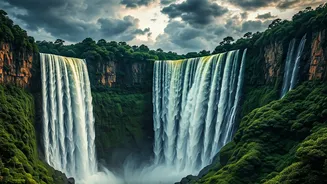
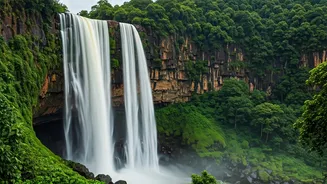
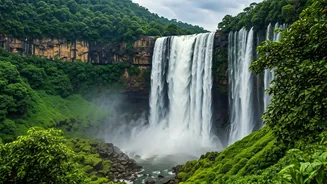
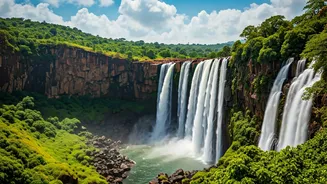
For sheer, raw power, few waterfalls in India can compete with Jog Falls. During the monsoon season (typically June to September), the Sharavathi River drops a staggering 830 feet, becoming the second-highest plunge waterfall in the country. It’s not a single cascade but four distinct torrents, each with a evocative name: Raja (The King), Roarer, Rocket, and Rani (The Queen). In peak flow, these four merge into a single, deafening wall of water that crashes into the gorge below, sending up a perpetual mist. Unlike waterfalls that require a strenuous hike, Jog Falls is easily accessible, with well-maintained viewing platforms offering panoramic views. For the more adventurous, a steep path of over 1,400 steps leads down to the base, offering a perspective that truly captures the waterfall’s immense scale and force.
Athirappilly Falls, Kerala
Often called "The Niagara of India," Athirappilly Falls in Kerala is a testament to the power of water in a tropical paradise. Located in the Chalakudy River, this 330-foot-wide cascade is surrounded by dense, biodiverse forest that is home to exotic birds, including the endangered great hornbill. Its sheer breadth and volume, especially during the monsoon months, create a commanding presence that has made it a favorite backdrop for Indian filmmakers. Visitors can view the falls from a platform at the top, feeling the spray on their faces, or take a 15-minute hike down a paved path to the bottom. From below, the perspective changes completely, offering a full, thunderous view of the water crashing onto the rocks. It’s a sensory experience, combining the roar of the falls with the rich sounds and smells of the rainforest.
Nohkalikai Falls, Meghalaya
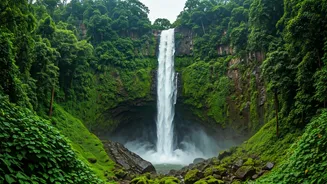
In Meghalaya, a state known as the "abode of the clouds" and one of the wettest places on Earth, you’ll find Nohkalikai Falls, India's tallest plunge waterfall. Dropping an uninterrupted 1,115 feet from a verdant clifftop, the water carves a straight, elegant line down to a stunning turquoise pool below. The falls are fed entirely by rainwater collected on the plateau above, so their intensity fluctuates dramatically with the seasons. During the monsoon, the flow is immense and powerful. In the drier months, it becomes a slender, graceful ribbon of water. Surrounded by mist and the dramatic landscape of the Khasi Hills, Nohkalikai feels otherworldly. A viewing gallery provides a safe and spectacular vantage point to appreciate its dizzying height and the stark beauty of its surroundings.
Hogenakkal Falls, Tamil Nadu
Located on the Kaveri River in Tamil Nadu, Hogenakkal is less about a single grand plunge and more about a complex, sprawling network of cascades. The name translates to "Smoking Rocks," a reference to the misty spray that perpetually rises as water crashes over unique carbonatite rock formations, some of the oldest of their kind in South Asia. What sets Hogenakkal apart is the experience. Visitors can take rides in traditional coracles—small, round boats made of bamboo and waterproofed with buffalo hide—skillfully piloted by locals through the gentler currents. These rides offer an up-close perspective of the various cascades and rocky gorges. It’s an interactive and immersive way to experience a waterfall, making it feel less like a viewpoint and more like a water-borne adventure.