





Beyond the Grid and Gadgets
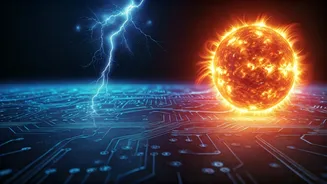
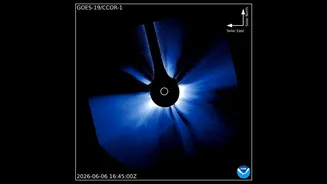
First, let’s cover the basics. A major solar storm, often a Coronal Mass Ejection (CME), is a massive eruption from the sun’s surface that hurls plasma and magnetic fields into space. If one hits Earth, it can induce powerful electrical currents in our
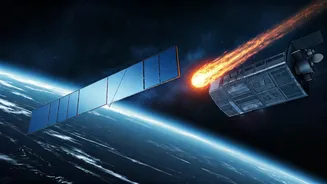
technology. The risks are well-documented and soberingly real. A severe storm could fry satellite components, rendering GPS and communication networks useless. More critically, it could overload national power grids, triggering blackouts that last for weeks or months, crippling everything from water treatment plants to hospital equipment. This is the scenario that keeps engineers at FEMA and NASA up at night. It’s a cascading technological failure that would fundamentally alter modern life. But this focus on our infrastructure, while necessary, often obscures a more primal connection between the sun’s activity and our planet.
A Ghost Story from 1859
To understand the sun’s raw power, we look to the past. In 1859, the largest solar storm in recorded history struck Earth. Known as the Carrington Event, it was a world-altering spectacle. Auroras, normally confined to the poles, were seen as far south as Cuba and Hawaii. People in the Rocky Mountains woke up in the middle of the night, thinking it was dawn. But the real story was in the technology of the day: the telegraph. The geomagnetic storm was so intense it induced electrical currents in the telegraph wires, causing sparks to fly from the equipment, shocking operators, and in some cases, setting the telegraph paper on fire. Some operators found they could disconnect their batteries and still send messages, powered solely by the storm itself. Now, imagine that same electrical energy coursing through the veins of our hyper-connected, power-dependent 21st-century world. The Carrington Event gives us a baseline for a worst-case scenario, one that goes far beyond a temporary Wi-Fi outage.
Nature's Disrupted Compass
This is where the story gets fascinating. Humans aren't the only ones with a system vulnerable to geomagnetic chaos. Countless species on our planet navigate using an internal “magnetic sense.” Migratory birds, sea turtles, salmon, and even whales rely on the Earth’s magnetic field as a natural GPS to guide them across vast distances. Scientists have long theorized that a major solar storm could jam this delicate biological compass. The evidence is compelling. Studies have linked solar storm activity to mass strandings of whales, which may become disoriented and swim into shallow waters. Homing pigeons, famous for their navigational prowess, become confused and lost during periods of high geomagnetic activity. A Carrington-level event wouldn't just be a technological disaster; it could be an ecological one, potentially wiping out entire migratory paths and causing chaos in ecosystems that depend on the predictable movement of animals.
The Human Connection
Could these powerful storms affect us directly, not just our technology? This is the most controversial and least understood part of the puzzle. For decades, some researchers have tried to connect the dots between solar cycles and human health. A body of research, much of it from Eastern Europe, has suggested correlations between geomagnetic disturbances and an increase in heart attacks, strokes, and even psychiatric episodes. The theory posits that the same forces that disrupt electrical grids might interfere with the body's own subtle bioelectrical signals, particularly in the heart and brain. It’s crucial to state that this is far from settled science in the mainstream Western medical community. Correlation is not causation, and many other environmental factors could be at play. However, it's an active area of research, reminding us that we are electrochemical beings living on a giant magnet in the path of a volatile star. The idea that we might be completely immune to its whims seems, at the very least, a bit presumptive.