






Not Your Average 'Cool'
When you hear “cooling food,” your mind might jump to ice cream or a cold drink. In the context of Indian cuisine and its ancient wellness system, Ayurveda, the concept is far more nuanced. It’s not about the literal temperature of the food but its intrinsic
property, or ‘taasir’—the effect it has on your body after digestion. 'Heating' foods are thought to speed up metabolism and produce heat, while 'cooling' foods are believed to have a calming, anti-inflammatory, and soothing effect on the digestive system. Think of it as internal air conditioning. A spicy chili is considered 'heating' even if eaten cold, while a cucumber is 'cooling' even at room temperature. This framework has guided Indian households for centuries in balancing meals, especially during hot weather or to soothe an upset stomach.
The Gut-Health Connection
So, where does the “gut-health rebrand” come in? It turns out that many of these traditionally 'cooling' foods are powerhouses of nutrients that modern science now celebrates for promoting a healthy gut microbiome. The language has just changed. What was once described as balancing 'pitta' (the Ayurvedic fire element) is now discussed in terms of probiotics, prebiotics, and anti-inflammatory compounds. The West's obsession with gut health, driven by research linking our microbiome to everything from immunity to mood, has created a new market for these age-old remedies. Consumers are already primed to look for the next kefir or sauerkraut, and these Indian staples are stepping into the spotlight, not as something foreign or exotic, but as a familiar-sounding solution to a very modern problem.
The Cooling All-Stars
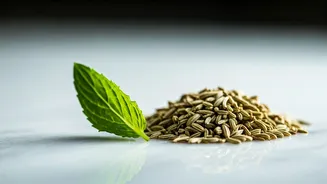
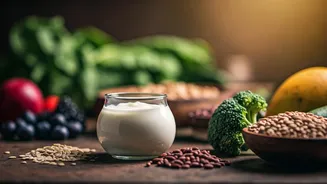
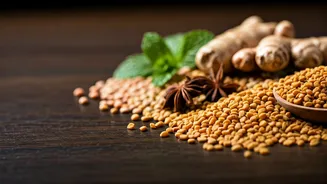
Many of these gut-friendly cooling foods are likely already in your vocabulary, if not your kitchen. Yogurt (dahi) is the undisputed champion. It’s the base for countless cooling dishes, from the savory yogurt dip raita, often loaded with cucumber and mint, to the refreshing drink lassi. Both are packed with probiotics—the beneficial bacteria that support a healthy gut. Then there are fennel seeds (saunf), the little candied seeds you often see in a bowl by the door at Indian restaurants. They’re a traditional post-meal digestive aid, known to reduce gas and bloating. Sabja (basil seeds), which become gelatinous when soaked in water much like their trendy cousin, chia seeds, are another cooling hero, prized for their high fiber content and used in drinks like falooda to soothe the stomach. Other staples include coconut water, mint, and cilantro, all praised for their hydrating and calming properties.
A Welcome Rediscovery
This trend isn't just about slapping a 'gut-friendly' label on a carton of lassi. It represents a broader, welcome shift where Western wellness is finally catching up to the sophisticated, time-tested food philosophies of other cultures. For many Indian Americans, seeing these humble, everyday foods celebrated is a moment of validation. The same yogurt their grandmother told them to eat for an upset stomach is now being recommended by wellness influencers. The challenge, of course, is to ensure the cultural context isn't completely stripped away in the marketing buzz. The story behind these foods—the centuries of knowledge, the principle of balance, the emphasis on holistic health—is just as important as the probiotic count. This isn't just a rebrand; it's a rediscovery of food as medicine, something Indian cuisine has always understood.