
The Brain's Time Machine
That powerful feeling isn't just you being sentimental. It’s a well-documented psychological phenomenon. Psychologists refer to nostalgia as a bittersweet emotion, a fond reflection on the past that can boost our mood, increase our sense of social connection,
and reinforce our identity. When this feeling attaches to a physical place, it creates what’s known as ‘place attachment.’ A room stops being a simple collection of drywall and flooring and becomes a stage for our personal history. Sensory inputs are the triggers. The specific slant of afternoon light through a window, the creak of a particular floorboard, or the faint scent of old paper from a bookshelf can instantly transport us. Our brains are wired to link sensory data with emotional memories, creating a powerful shortcut back to a moment, a person, or a younger version of ourselves. This is why your childhood bedroom, even if redecorated, can still feel like a portal to the past.
More Than Just 'Stuff'
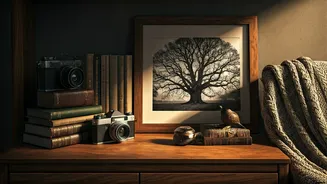
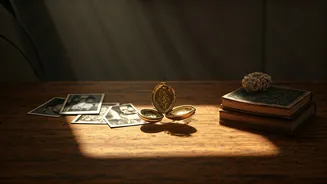
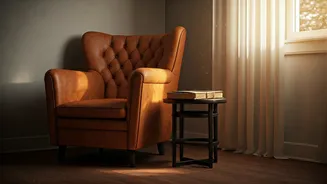
In this context, the objects we fill our rooms with are not just 'stuff'—they are artifacts. A chipped coffee mug from a college diner, a faded concert poster, a stack of your grandfather's favorite books—these items are imbued with meaning far beyond their material value. They are emotional anchors. In an age of minimalist aesthetics, there can be a pressure to declutter and discard. But there’s a crucial distinction between clutter and curation. Clutter is the chaotic, meaningless accumulation of things. A curated collection of nostalgic items, however, serves a purpose. Each object is a storytelling device. It doesn’t just take up space; it holds space for a memory. That worn-out armchair isn’t just a piece of furniture; it’s the countless hours spent reading with your father. The key is intentionality. When we choose to display these items, we are externalizing parts of our identity and our history, making them a visible, tangible part of our daily lives.
How to Curate Your History
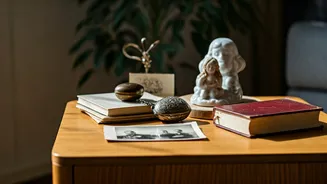
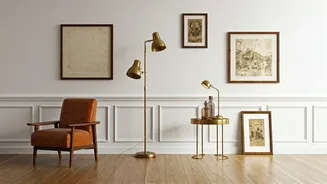
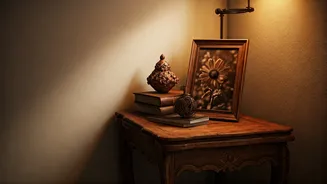
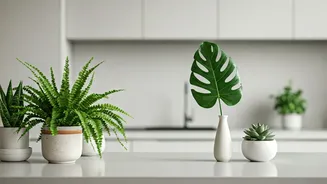
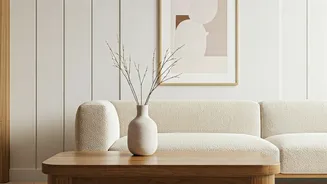
So how do you incorporate these personal artifacts without making your home look like a museum or a flea market? The secret is in the balance and presentation. Instead of scattering memory-laden objects everywhere, try grouping them. Create a ‘gallery wall’ that mixes family photos with art prints and meaningful ephemera, like a postcard or a ticket stub. This turns a collection of small items into a single, cohesive artistic statement. Another technique is to give important objects breathing room. Place a single, beautiful heirloom—like a vintage vase or a wooden box—on a modern, uncluttered surface. The contrast between old and new highlights the object's unique history and character. Finally, think about weaving memories into the room’s function. Use your grandmother's mixing bowls in the kitchen, not just for display. Read the actual books from your father’s collection. When nostalgic items are part of your life, not just relics behind glass, they keep the memories they hold alive and active.
Activating All the Senses
Visuals are only part of the story. The most emotionally resonant spaces engage our other senses, too. Scent is perhaps the most powerful memory trigger. A candle with a fragrance that reminds you of a Christmas tree farm, a linen spray that smells like a hotel from a favorite vacation, or simply the aroma of a dish you cook often can define a room’s emotional texture. Sound works in a similar way. The warm crackle of a record player, a playlist of songs from a specific era of your life, or the simple chime of a grandfather clock can layer a room with auditory nostalgia. Even touch plays a role—the nubby texture of a vintage wool blanket, the cool smoothness of a marble coaster, or the worn softness of a leather-bound book. By considering the full sensory experience, you can create a space that doesn't just look like you, but feels like a rich tapestry of your entire life.