

The Original, Imperfect Masterpiece
To understand the glow-up, you have to appreciate the original. True bhel puri is a symphony of delightful chaos, an edible expression of a bustling Mumbai street. It’s traditionally served by a vendor—a bhelwala—who works with the speed and precision
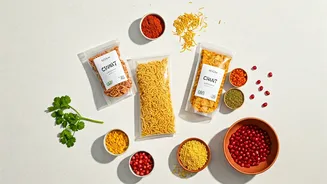
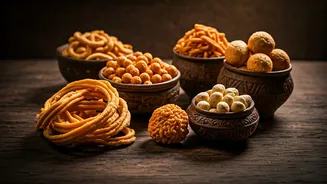
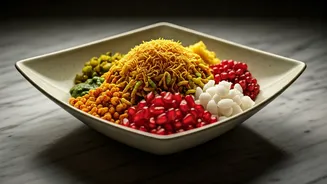
of a maestro. Into a paper cone or a simple plate goes a jumble of puffed rice, crushed flat puris for crunch, and a heap of finely diced potatoes and red onions. Then comes the magic: generous drizzles of three distinct chutneys. There’s the sweet-and-sour tamarind, the bright and spicy green chutney made from mint and cilantro, and often a fiery garlic one. Everything is tossed together with a spoon in seconds, topped with a blizzard of sev (crispy chickpea flour noodles) and fresh cilantro, and handed over to be eaten immediately, before the crunch gives way to sog. It’s not pretty. It’s an exhilarating, five-minute race against entropy, and every bite is a different explosion of sweet, sour, spicy, and savory.
Enter the Aesthetic Overhaul
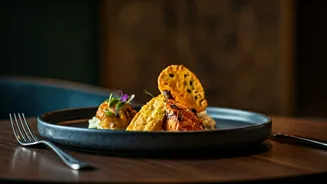
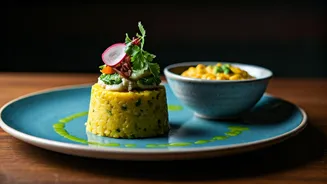
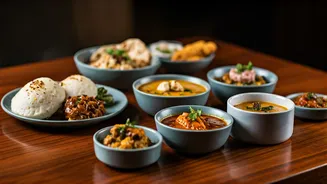
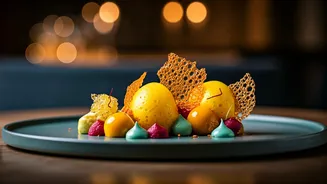
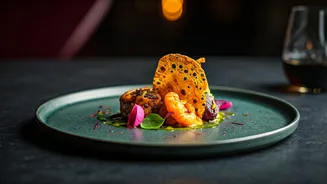
The “mood-board” bhel is the polar opposite of this beautiful mess. It’s what happens when that street snack goes to art school and gets a minimalist makeover. Instead of a spontaneous pile, you’ll see its components thoughtfully, almost architecturally, arranged on a ceramic plate. A neat mound of puffed rice might sit next to perfectly placed cubes of avocado or boiled potato. The chutneys are no longer sloshed on but applied as deliberate dots, swirls, or delicate smears. The sev might be sprinkled with the precision of a pastry chef finishing a dessert. Pomegranate arils and edible flowers are added for pops of color, turning the dish into a photogenic composition. This isn’t bhel to be devoured on a corner; this is bhel to be admired, photographed, and then eaten with a fork. It’s controlled, clean, and designed from the ground up for visual appeal, prioritizing texture and color separation over the joyful jumble of the original.
The Chefs Behind the Canvas
This transformation isn’t happening in a vacuum. It’s part of a larger movement in modern Indian-American cuisine. Across the country, a new generation of chefs is confidently reinterpreting the food of their heritage. Many are second-generation immigrants who grew up eating traditional dishes at home but received formal culinary training in French, New American, or Japanese kitchens. They are now applying those fine-dining techniques to the flavors they know best. For too long, Indian food in the U.S. was typecast, often relegated to all-you-can-eat buffets and seen as cheap, heavy, and homogenous. These chefs are dismantling that stereotype one dish at a time. By taking a humble snack like bhel puri and giving it the same careful consideration as a crudo or a tartare, they are making a powerful statement: our food belongs here, at the highest levels of culinary art.
More Than Just a Pretty Plate
This glow-up is about more than just aesthetics; it’s about cultural currency. In the age of Instagram, a dish’s visual appeal directly impacts its perceived value. A beautifully plated bhel commands attention and, frankly, a higher price point. It invites diners who might have otherwise overlooked it to give it a try. For the chefs and the diaspora community, it’s a form of validation. It reframes Indian cuisine not as foreign or ethnic, but as a sophisticated and dynamic part of the American culinary landscape. Some purists might argue that something is lost in translation—that the soul of bhel is its chaotic, street-side spontaneity. But proponents see it as evolution, not erasure. It’s about telling a new story, one where the complex flavors of India are presented with the visual language of global fine dining, demanding and receiving the respect they’ve always deserved.