



First, Let’s Talk About ‘The Fog’
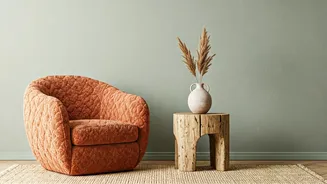
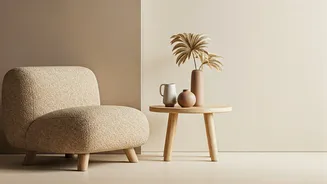
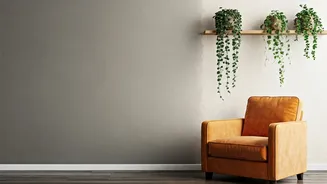
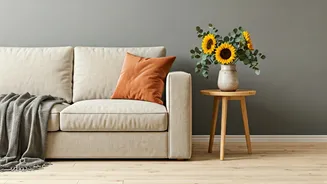
You know the look. The cool gray walls, the greige sectional, the white boucle chair. For the better part of a decade, the dominant aesthetic was one of serene, inoffensive minimalism. It was safe, clean, and endlessly replicable, a visual quiet-down
in a noisy world. This 'fog' wasn't bad, but it was…everywhere. It was the interior design equivalent of an algorithm-generated pop song—pleasant, but lacking a distinct soul. Now, the collective design consciousness is waking up, blinking, and asking, "Where did all the personality go?" The rejection of this uniform neutrality isn’t about shaming gray; it's about a cultural craving for spaces that feel uniquely, unapologetically human again.
The Rise of the ‘Art-Forward’ Room
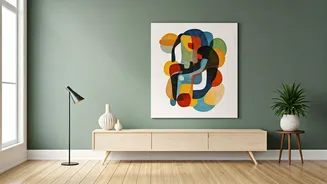
The antidote to the fog is clarity, and nothing is clearer than a piece of art you love. The 2026 approach flips the old script. Instead of buying art to match the sofa, the art *is* the starting point. We're talking about designing rooms around a single, impactful painting, a gallery wall of personal photos and prints, or a striking sculpture. This isn't about owning a Picasso; it’s about elevating personal expression. Think large-scale abstract prints that dictate a room's color palette, or a quirky ceramic piece that sets a playful tone. Art is no longer a final accessory you hang to fill a blank space; it’s the foundational element that gives the room its voice and purpose.
Color Drenching Over Muted Hues
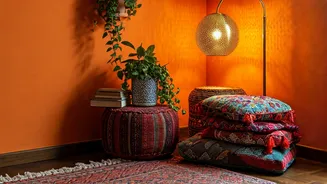
If gray was the fog, then rich, saturated color is the glorious sunshine breaking through. The trend of 'color drenching'—painting walls, trim, and even the ceiling in the same bold shade—is gaining serious momentum. Imagine a study wrapped in deep forest green, a dining room in warm terracotta, or a bedroom in a moody, dusty blue. This isn't just about painting an accent wall. It’s an immersive commitment to color that creates a powerful, cocooning effect. Jewel tones like sapphire, emerald, and ruby are pushing out the pale pastels, bringing a sense of drama, history, and grown-up glamour back into our living spaces.
Curated Collections, Not ‘Clutter’
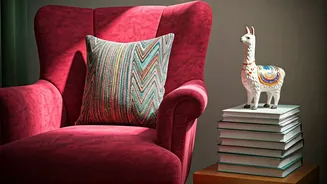
The minimalist ethos taught us to hide our belongings. The new mood encourages us to celebrate them. This isn't about messy hoarding; it's about 'curated clutter' or 'bookshelf wealth'—the artful display of objects that tell a story. It's the stack of art books on the floor, the collection of vintage glassware on open shelves, the travel souvenirs arranged on a mantel. These layers of personal artifacts create a space that feels lived-in, intelligent, and deeply personal. It’s a direct rebellion against the sterile, show-home aesthetic. Your home should look like someone interesting lives there—and that someone is you.
Statement Lighting as Functional Sculpture
Why should art be confined to the walls? The coming years will see lighting fixtures treated as sculptural centerpieces. Forget boring, recessed can lights or simple drum pendants. Think dramatic, oversized chandeliers in unexpected materials, whimsical table lamps that look like works of art in themselves, and sleek, architectural floor lamps that command attention. This trend blends form and function perfectly, providing both illumination and a major style moment. A sculptural light fixture can anchor a dining area or add a touch of drama to a living room corner, proving that even the most practical elements of a home can be an opportunity for artistic expression.
Embracing the Perfectly Imperfect
Mass-produced furniture created a sea of sameness. The move away from the fog is also a move toward unique, handcrafted, and vintage pieces. It's the slightly wonky handmade ceramic bowl, the antique wooden dresser with a rich patina, or the hand-woven rug with its charming imperfections. These items bring texture, history, and soul into a room in a way that flat-pack furniture simply cannot. Sourcing from local artisans, flea markets, and vintage shops not only makes your home more interesting but also promotes a more sustainable, less disposable approach to decorating. It’s about building a home over time, one meaningful piece at a time.