






1. Back to the Moon, This Time to Stay
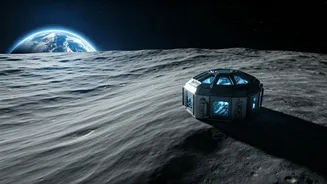
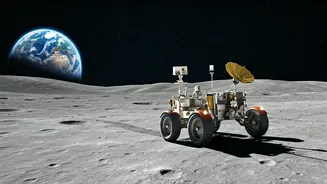
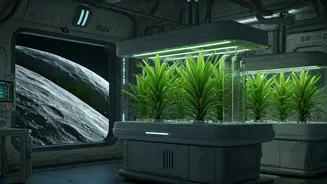
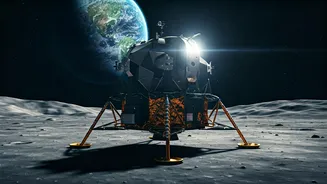
NASA's Artemis program isn't just about repeating the triumphs of the 1960s. Instead of brief visits, the goal is to establish a sustainable human presence on and around the Moon. This represents a fundamental shift from exploration to habitation. The
plan involves not just landings at the lunar South Pole—a region rich with water ice—but also the construction of the Gateway, a small space station in lunar orbit that will act as a staging point for missions to the surface and, eventually, to Mars. Why does this transform science? By learning to live and work long-term on another celestial body, we can conduct geological and astronomical research that’s impossible with short trips. Scientists will analyze ancient lunar rock for clues about the formation of our solar system and experiment with using lunar resources, like water ice, to create breathable air and rocket fuel—a crucial step for making deep space travel viable.
2. The Search for Life in Alien Oceans
While Mars has dominated the search for past life, some of the most compelling targets lie much farther out. Jupiter's moon Europa is an ice-covered world believed to hide a global, liquid water ocean that may contain more than twice the water in all of Earth's oceans. The upcoming Europa Clipper mission, launching in late 2024, is designed to find out if this hidden ocean has the ingredients for life. Instead of landing, Clipper will make dozens of close flybys, using a suite of advanced instruments to scan the moon’s icy shell, measure its magnetic field to confirm the ocean's existence and depth, and even fly through plumes of water vapor that may be erupting from the surface. If it can sample one of these plumes, it could directly analyze the chemistry of a hidden alien sea, a scientific opportunity that was pure science fiction just a generation ago.
3. A Nuclear-Powered Drone on an Alien World
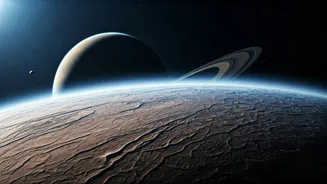
Rovers are incredible, but they're slow. The Dragonfly mission, set to launch for Saturn’s largest moon, Titan, in the coming years, is something else entirely. It’s a car-sized, nuclear-powered quadcopter designed to fly through Titan’s dense, nitrogen-rich atmosphere. Titan is a bizarre world with liquid methane rivers, lakes, and seas under a hazy orange sky. Dragonfly will operate like a relocatable science lab, flying from one promising location to another, covering hundreds of miles over its multi-year mission. It will study prebiotic chemistry—the complex organic molecules that could be precursors to life—in diverse environments, from impact craters to dunes of organic sand. This mission will transform planetary exploration by giving us the first in-depth look at a complex, active, and potentially life-harboring environment beyond Earth, all from the air.
4. Finding the Next Earth
The James Webb Space Telescope has already given us breathtaking new views of the cosmos and the atmospheres of distant planets. But what comes next is even more ambitious. NASA is planning the Habitable Worlds Observatory, a next-generation space telescope with a primary mission that sounds like it’s straight from a novel: to directly image Earth-like planets orbiting Sun-like stars and search their atmospheres for signs of life. Scheduled for the 2040s, its development over the next decade will define the future of astronomy. Using an advanced coronagraph to block the overwhelming glare of a planet’s host star, the observatory will be able to spot the faint dot of a world like our own. More importantly, it will analyze the light from that planet’s atmosphere for biosignatures—gases like oxygen and methane that, in the right combination, could strongly suggest the presence of a living biosphere. It’s our first real shot at answering the question, “Are we alone?”