

A Carpet of Color in the Clouds
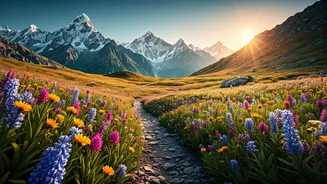
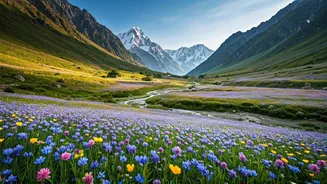
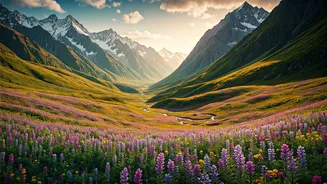
Imagine trekking through the rugged Garhwal Himalayas, where jagged peaks scrape the sky. Just as your legs begin to ache, the trail opens up, and you’re met with a sight that seems impossible: a valley floor blanketed in millions of wildflowers. This
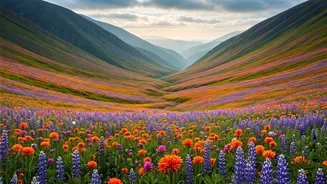
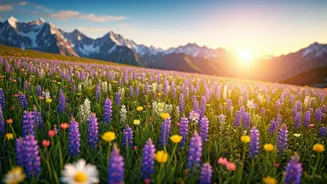
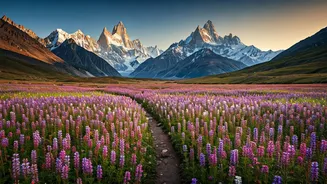
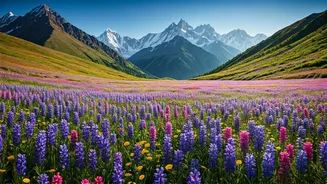
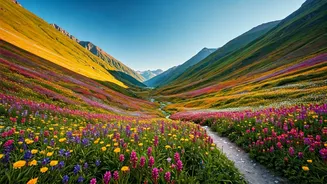
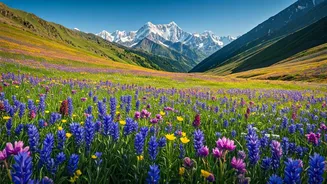
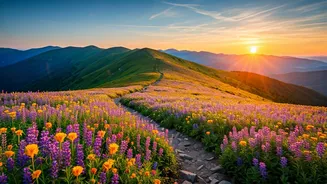
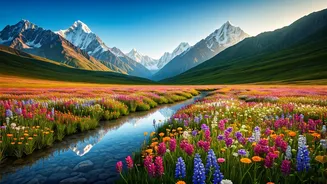
is Uttarakhand’s Valley of Flowers National Park, a UNESCO World Heritage Site that lives up to its name in the most breathtaking way possible. From a distance, it looks like a painter’s palette spilled across the landscape—swathes of purple, yellow, pink, and blue nestled between cascading waterfalls and glacial streams. It’s not just a field of flowers; it's an entire ecosystem bursting into life, a high-altitude meadow that seems more dream than reality.
The Race Against Time
The magic of this place is amplified by its fleeting nature. The “bloom window” is incredibly short, typically lasting from early July to late September. For most ofover the year, the valley is buried under a thick blanket of snow, its vibrant life dormant and waiting. As the summer monsoon rains arrive and the snow melts, the valley floor awakens. Seeds that have waited patiently through the harsh winter germinate all at once, creating a frantic, synchronized explosion of life. This compressed timeline is what makes the display so dense and dramatic. By October, the first snows return, and the valley once again retreats into its icy slumber. To witness it, you must time your journey perfectly, making the experience feel like a rare and precious appointment with nature.
The Journey Is Part of the Spectacle
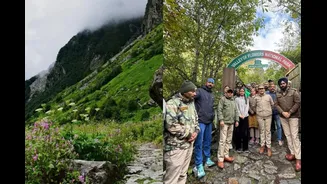
You don't simply drive up to the Valley of Flowers. The journey is an adventure in itself, a pilgrimage that makes the final reveal all the more rewarding. The trek typically begins from the small settlement of Govindghat, from which a path winds its way up to Ghangaria, a base camp village. This leg of the journey takes you through lush forests, alongside the roaring Pushpawati River, and offers humbling views of the surrounding peaks. After an overnight stay in Ghangaria, a final, shorter trek leads you into the heart of the valley. This multi-day effort filters out the casual tourist, ensuring that those who make it are truly there to appreciate the serenity and grandeur. The physical effort of the trek melts away as you enter the valley, replaced by a profound sense of awe and accomplishment.
A Botanist’s Paradise
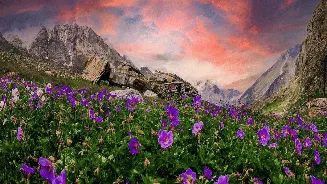
While the sheer visual scale is what first captures your attention, the valley’s true significance lies in its incredible biodiversity. It is home to over 500 species of flowering plants, many of which are endemic to the region and found nowhere else on Earth. Look closely, and you’ll find a miniature world of exquisite detail. The elusive blue poppy, a flower celebrated in botanical lore, grows here. You can spot elegant primulas, vibrant marigolds, wild roses, and the curiously shaped cobra lily. The valley is also a sanctuary for rare and endangered animals, including the Asiatic black bear, snow leopard, and blue sheep. It’s a living laboratory and a sanctuary, a place where the delicate balance of a high-altitude ecosystem is on full, glorious display.