





A Sanctuary Above the Clouds
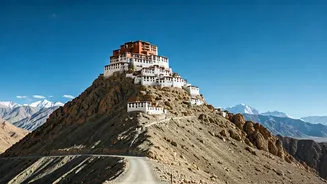
Tucked away in the Indian region of Ladakh, often called “Little Tibet,” Hemis Monastery is not a place you simply stumble upon. Located about 25 miles from the region’s main city of Leh, it’s nestled in a dramatic, secluded valley off the banks of the mighty
Indus River. Founded in the 17th century, it is the largest and wealthiest monastery in Ladakh, a spiritual stronghold of the Drukpa lineage of Tibetan Buddhism. Unlike other monasteries perched precariously on hilltops, Hemis is concealed, revealing itself only at the end of a winding road. This hidden nature is part of its profound allure; the journey prepares you for the tranquility you find within its walls, a stark contrast to the rugged, imposing wilderness outside.
The Unforgettable Himalayan Panorama
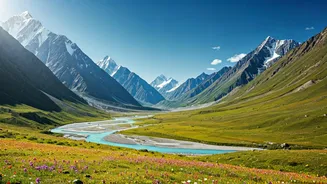
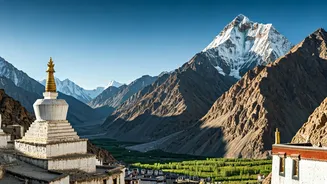
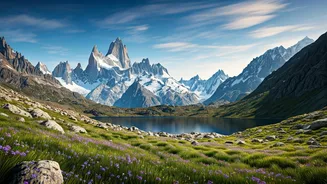
The headline doesn't lie. The views are, in a word, staggering. The monastery is cradled by barren, rust-colored mountains that soar towards an impossibly blue sky. This isn't the lush, green mountain scenery of the Swiss Alps; this is something more primal and powerful. The high-altitude desert landscape of Ladakh is a geological masterpiece of stark lines, deep shadows, and subtle, earthy colors that shift with the sun. From the monastery's courtyards and rooftops, you get a 360-degree panorama of this raw beauty. The scale is humbling. You feel infinitesimally small against the backdrop of the Zanskar Range, a feeling that quiets the mind and encourages introspection. The views aren't just a pretty backdrop; they are an integral part of the spiritual experience, a physical manifestation of the immense, silent power that pervades this sacred space.
A Living Museum of Culture
To focus only on the landscape would be to miss the soul of Hemis. The monastery is a living, breathing center of faith and culture. As you step inside, the scent of juniper incense and butter lamps fills the air. The low, resonant chanting of monks can often be heard from the prayer halls. The walls are adorned with vibrant, intricate murals depicting Buddhist deities and mandalas, their colors preserved by the dry mountain air. Hemis also houses a remarkable collection of ancient artifacts, including a magnificent copper-gilt statue of the Lord Buddha and a vast collection of sacred thangkas (Tibetan silk paintings). The most famous of these, a giant thangka, is only unfurled for public viewing once every 12 years, drawing pilgrims from across the globe.
The Spectacle of the Hemis Festival
If you can time your visit right, the Hemis Tsechu (festival) transforms the serene monastery into a whirlwind of sound and color. Held annually in the early summer to honor Padmasambhava, the founder of Tibetan Buddhism, this two-day event is one of the most famous cultural spectacles in the Himalayas. Monks don elaborate costumes and fearsome, expressive masks to perform the Chaam, a series of ritualized dances depicting the triumph of good over evil. Accompanied by the clang of cymbals, the drone of long horns, and the beat of drums, the festival is a mesmerizing, kaleidoscopic experience that offers a profound glimpse into the region's living heritage. It’s an event that elevates Hemis from a beautiful monastery to an essential cultural landmark.