





Welcome to the Wettest Place on Earth
Forget Seattle showers or London drizzle. In the East Khasi Hills of Meghalaya, a state in northeastern India whose name translates to “the abode of clouds,” lies the village of Mawsynram. According to Guinness World Records, this is officially the wettest
place on the planet. The average annual rainfall here is a staggering 467.4 inches. To put that in perspective, New York City gets about 50 inches a year. Mawsynram gets almost that much in its wettest single month. This isn't a seasonal downpour; it’s a near-constant state of being from June to September, when the Bay of Bengal monsoon unleashes its full force upon the Khasi Hills, which act as a barrier, forcing the moisture-laden clouds to dump their contents relentlessly.
A Constant, Thundering Soundtrack
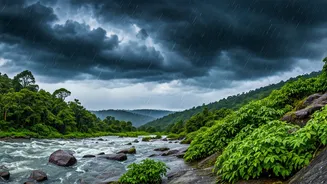
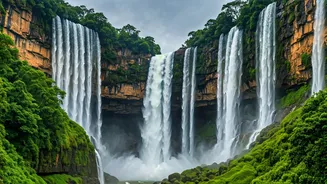
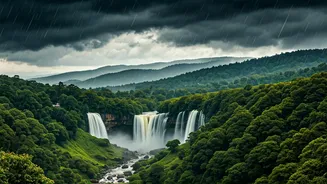
The first thing that strikes you in Mawsynram isn't the sight of the rain, but the sound. During peak monsoon, it's not a gentle tap but a deafening, percussive roar that fills every moment. Villagers have to shout to be heard over the din. The sound becomes the soundtrack to life, a constant reminder of the power of the water falling from the sky. This endless deluge transforms the landscape into a water world. Waterfalls erupt from cliffs that were bare just hours before. Rivers swell into powerful torrents, and the very air feels thick with mist and spray. The humidity is absolute, seeping into clothes, homes, and bones. Anything left unprotected quickly succumbs to a fuzzy layer of green mold.
Life in the Abode of Clouds
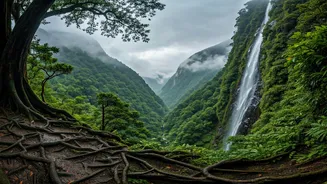
For the Khasi people who call this region home, life is a masterclass in adaptation. Umbrellas are flimsy and useless against the wind and sheer volume of water. Instead, locals use “knups,” traditional rain shields woven from bamboo and banana leaves. These large, turtle-shell-like coverings are worn on the back, leaving both hands free for work in the fields or at the market. Construction is a constant battle against the elements. Grass is laid on the roofs of homes to soundproof them against the incessant drumming of the rain. Food is dried and stored with extreme care to prevent spoilage. Even the infrastructure is a testament to nature-based engineering. Nearby, one can find the famous living root bridges, where the aerial roots of rubber fig trees are guided across rivers for generations to form strong, living structures that only get more robust with time and moisture—unlike steel, which would rust away in years.
A Different Kind of Beauty
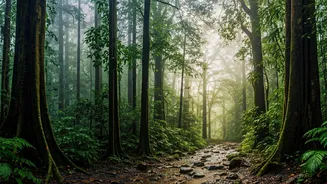
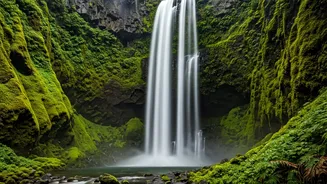
For a visitor, the beauty of Mawsynram is profound but demanding. The landscape is a hyper-saturated green, an almost impossibly lush world of dripping ferns and moss-covered everything. The clouds often descend to envelop the entire village, creating a mystical, otherworldly atmosphere where visibility drops to just a few feet. It’s a place that forces you to slow down, to surrender to the elements. There is no “waiting for the rain to stop.” You either embrace it or you stay inside. This is why it’s not for the casual rain lover. A tourist who enjoys a picturesque shower from a cafe window would be overwhelmed by the sheer, unyielding dampness of it all. Mawsynram doesn’t offer a cozy spectacle; it demands participation.