







A 'Sputnik Moment' for a New Generation
For the United States, the 1957 launch of the Soviet Sputnik satellite was a national wake-up call that supercharged science education and fueled the space race. India is now having its own modern-day Sputnik moment, but with a triumphant, homegrown flavor.
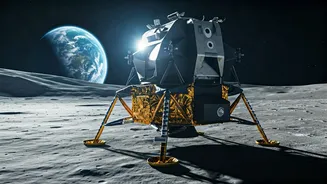
The Chandrayaan-3 mission wasn't just a success; it was a masterclass in frugal innovation, reportedly costing less than the production budget of the movie *Gravity*. As the fourth nation to land on the moon—and the first to reach the unexplored south polar region—India cemented its status as a major space power. Schools across the country live-streamed the landing, and celebrations erupted in cities and villages alike. For hundreds of millions of young Indians, this wasn't a distant Cold War-era achievement seen in black-and-white. It was a high-definition, real-time victory that made a cosmic dream feel suddenly, tangibly within reach.
From Government Monopoly to Startup Boom
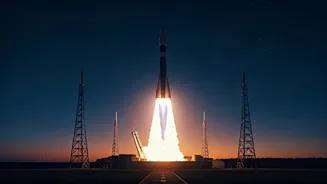
For decades, space in India was the exclusive domain of the Indian Space Research Organisation (ISRO), a deeply respected but state-controlled entity. That’s changing, fast. In 2020, the government opened the sector to private companies, creating a landscape that feels more like Silicon Valley than a rigid bureaucracy. The result has been an explosion of space-tech startups, often founded by young engineers and entrepreneurs who once might have sought jobs at NASA or in America's tech hubs. Companies like Skyroot Aerospace, which launched India's first privately built rocket, and Agnikul Cosmos, which specializes in 3D-printed rocket engines, are leading the charge. These startups are not just building launch vehicles; they're developing satellites, creating new data analytics platforms, and designing components for global clients. The moon landing served as the ultimate proof-of-concept, signaling to investors and aspiring founders that India's space ecosystem is ready for business.
The Groundswell in Schools and Colleges
The excitement isn't just happening in corporate boardrooms; it's palpable in classrooms and on college campuses. The national pride from the lunar mission has translated into a powerful recruitment tool for STEM (Science, Technology, Engineering, and Mathematics) fields. Educators report a surge in students inquiring about courses in aerospace engineering, astrophysics, and robotics. Extracurricular rocket clubs and astronomy societies are booming. This grassroots enthusiasm is crucial. India has the world's largest youth population, with more than half its citizens under the age of 30. Channeling even a fraction of that demographic dividend into high-tech fields could have a transformative impact on the country's economy and its role in the world. The celebrity status of ISRO scientists, now treated like rock stars, provides a powerful new set of role models for children who see that a career in science can bring not just knowledge, but national glory.
More Than Just Rockets
Ultimately, this stellar ambition is about more than just outer space. It's a potent symbol of India's broader aspirations. The same energy driving the space-tech boom is fueling innovation in artificial intelligence, biotechnology, and green energy. A young, digitally-native generation is leveraging low-cost data and a massive domestic market to build solutions for India and the world. This is a country that is consciously and strategically aiming to become a developed nation by 2047, the 100th anniversary of its independence. The confidence born from planting a flag on the moon is now being applied to solving problems here on Earth. For American observers, this trend is a critical development. It signals the rise of a formidable new hub of technological talent and a partner—and competitor—in the industries that will define the 21st century.