

The Billion-Person Palate Problem
Imagine trying to franchise a barbecue restaurant in the United States. Now imagine the Kansas City, Texas, Carolina, and Memphis versions all have to taste not just good, but authentically local to each region, all while being served from the same branded
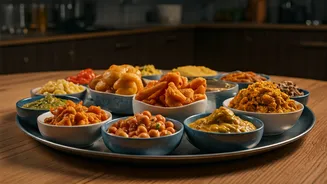
kitchen. That’s the challenge facing Indian food tech companies, but magnified a hundredfold. India doesn’t have one single cuisine; it has dozens. A biryani in Hyderabad is vastly different from one in Kolkata. A sambar in Tamil Nadu has a different spice profile from one in neighboring Karnataka. For the average consumer, ‘authenticity’ isn't a vague notion—it’s a precise memory of how a dish is supposed to taste in their specific city or state. When a customer orders a familiar dish from a national chain via an app like Zomato or Swiggy, their expectations are incredibly high and incredibly specific. Failing to meet that hyper-local palate is the fastest way for a brand to lose credibility and customers.
The Rise of the 'Cloud Kitchen'
This challenge has been supercharged by the explosion of food delivery and the business model that powers it: the cloud kitchen. Also known as ghost kitchens, these are delivery-only cooking facilities with no storefront or seating. Companies like Rebel Foods, which operates dozens of virtual brands from a single kitchen, have built empires on this model. Their entire business is scalability. They need to be able to open a new kitchen in a new city and deliver the exact same chicken tikka masala or dal makhani that customers in another city are raving about.
Unlike a traditional restaurant, which can rely on a single star chef, a cloud kitchen network relies on process. The system has to be the star. This creates an urgent, billion-dollar need to codify flavor and remove the variability that comes from individual chefs working by feel. For these companies, predictable taste is the foundation of their entire growth strategy.
What 'Flavour Optimization' Really Means
This is where 'flavour optimization' comes in. It’s a sanitized business term for a complex process of deconstructing, standardizing, and replicating taste. It's not simply about making food delicious; it's about making it delicious in the exact same way, every single time, across hundreds of locations. This involves several key components:
1. Data Analysis: Food tech companies meticulously analyze customer reviews and ratings, using AI to parse feedback for keywords related to taste, spice levels, and texture. Is a dish 'too spicy' in Mumbai but 'too bland' in Delhi? The data tells them.
2. Standardized Ingredients: This is the most critical element. Instead of shipping raw spices, central commissaries create proprietary 'masala' blends, sauces, and marinades. These are precisely measured, vacuum-packed, and shipped to individual kitchens. A local cook's job is then not to create a flavor profile from scratch, but to execute a recipe using these pre-optimized components.
3. Process Control: Cooking becomes a form of light assembly. Recipes are broken down into foolproof steps with precise timings and temperatures, often guided by smart kitchen equipment. The goal is to minimize human error and ensure a cook in Pune can produce an identical dish to one in Bengaluru.
The Technology Behind the Taste
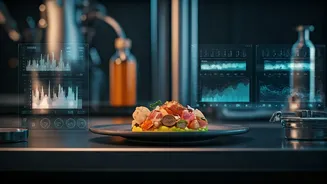
The engine of this optimization is technology. Rebel Foods, for instance, has developed its own full-stack operating system to manage everything from inventory and supply chain to cooking processes. A cook might be prompted by a tablet: 'Add Gravy Packet A, cook for 4 minutes at 200°C, then add Marination Packet B.' This removes the guesswork and ensures that even with high staff turnover, the taste of the final product remains stable.
This approach allows for both consistency and flexibility. A company can create a 'North Indian' flavor profile for its butter chicken and deploy it across the country. But it can also develop a spicier, tangier 'South Indian' version of a dish to launch in specific markets, all based on data-driven insights. It's the industrialization of culinary art, turning taste from an abstract concept into a replicable, scalable product.
A Business Imperative, Not a Luxury
In the fiercely competitive Indian food delivery market, worth tens of billions of dollars, flavor optimization isn't just a smart idea—it's a matter of survival. The companies that master it can scale rapidly, maintain quality control, and build powerful national brands. Those that can't are stuck as small, local players or fail completely when customers reject their inconsistent or 'inauthentic' offerings.
For U.S. observers, this might seem like an extreme version of what McDonald's does to ensure its fries taste the same everywhere. But the complexity of Indian cuisine and the specificity of consumer tastes make it a far greater challenge. It's a high-tech solution to an age-old culinary problem, and the key to unlocking one of the largest food markets in the world.