




A Clockwork Cosmos on Display
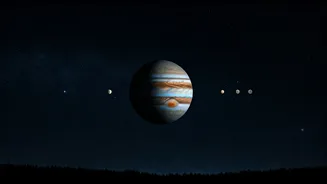
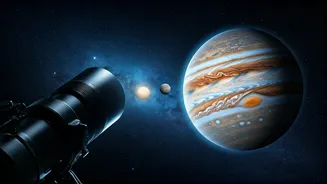
So what is a transit, exactly? In astronomical terms, a transit occurs when one celestial body passes in front of another from the observer's perspective. When we talk about Jupiter, this almost always refers to one of its four largest moons—Io, Europa,
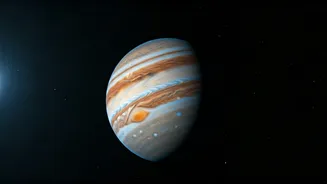
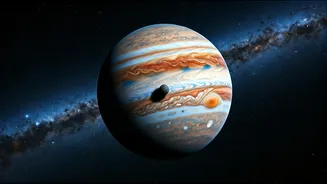
Ganymede, and Callisto, collectively known as the Galilean moons after their discoverer, Galileo Galilei. From our vantage point on Earth, we can see these moons cross directly in front of the giant planet. Sometimes, you might see the moon itself as a tiny, slightly different colored disc against Jupiter’s cloudy bands. But the real show often comes from the moon’s shadow. When a moon passes between the sun and Jupiter, it casts an inky black shadow that glides across the planet’s face. This is called a shadow transit, and it’s a stunningly distinct and surprisingly easy event to spot. Watching a tiny, perfect black dot journey across the vast expanse of Jupiter is a profound experience, connecting you directly to the mechanics of our solar system.
The Right Gear for the Jovian Show
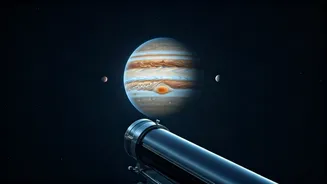
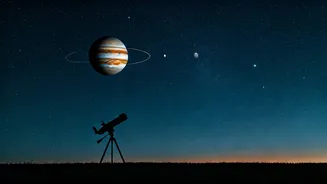
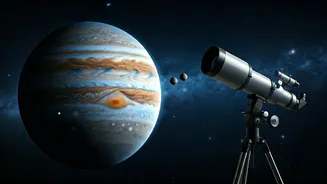
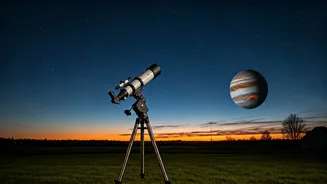
The phrase “simple backyard telescope” can be vague, so let's get specific. While you can spot Jupiter’s moons as tiny pinpricks of light with good binoculars, you’ll need a telescope to resolve the detail of a transit. The good news is you don’t need a Hubble-sized budget. A quality 4-inch refractor telescope or a 6-inch reflector telescope is more than capable of providing spectacular views. These are common and relatively affordable amateur scopes. What’s often more important than sheer aperture is the quality of your optics and, crucially, the stability of your mount. A wobbly telescope is the enemy of planetary observation. A solid, steady tripod and mount will prevent frustrating vibrations and allow you to track the planet smoothly as it moves across the sky. Don’t worry about high-tech computerized features at first; a basic, sturdy setup is your best ticket to the show.
Timing Is Everything: Finding Transit Schedules
Unlike a meteor shower, which you can just show up for, a transit is a specific, timed event. You need to know exactly when to look. Fortunately, predicting these events is a solved problem, and the information is readily available to the public. The go-to resource for many amateur astronomers is Sky & Telescope magazine's website, which offers a handy tool called “Transit Times of Jupiter's Moons.” You simply enter your date, and it generates a graphical chart showing the positions of the four moons and any upcoming transits or shadow transits. Other fantastic tools include popular astronomy apps like SkySafari or Starry Night, which allow you to see celestial events in real-time or fast-forward to a specific date. NASA also provides data through various mission pages and astronomical almanacs. A few minutes of planning is the key to ensuring you don't miss the main event.
Your Night With Jupiter: A Viewing Guide
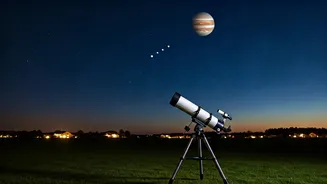
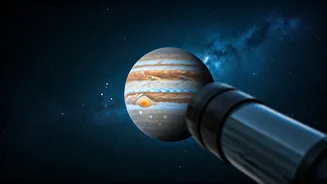
Once you have your date and time, it’s all about execution. First, give your telescope time to acclimate to the outside temperature, usually about 30 minutes. This prevents air currents inside the tube from distorting your view. When you’re ready, start by finding Jupiter with a low-power eyepiece—it will be one of the brightest objects in the night sky. Once centered, switch to a higher-magnification eyepiece to get a closer look. Don’t expect to see a NASA-quality image instantly. Your eyes need time to adjust to the subtle details. Be patient. Look for the planet's faint cloud bands and then scan for the moon or its shadow. The shadow will appear as a tiny, impossibly black dot. Watching it slowly creep across the planet over the course of an hour or two is the reward. You're observing the same phenomenon that helped 17th-century astronomers measure the speed of light—a true cosmic spectacle happening in real time.