



More Than Just Jerk Spice
When you hear “Caribbean food,” your mind might jump to jerk chicken. But the culinary landscape of the islands is vastly more complex, and its plant-based traditions are deep and flavorful. This new movement isn't just about slapping some jerk marinade
on a block of tofu. It’s a holistic “personality upgrade” for veggie menus, infusing them with the bright, bold, and sun-drenched flavors that define the region. Think sweet plantains, savory breadfruit, creamy coconut-based stews, and the distinctive, fruity heat of the scotch bonnet pepper. Chefs are digging into their heritage to build entire menus that are plant-based by design, not by modification. It's a shift from imitation—creating a veggie version of a meat dish—to origination, celebrating vegetables in their own right with a distinctly Caribbean point of view.
The Roots of the Movement
This isn't a trend that appeared out of nowhere. It’s built on a long and rich history, most notably the Ital tradition of the Rastafari movement. Originating in Jamaica in the 1930s, Ital (from the word “vital”) is a natural, plant-based diet intended to increase life force. It traditionally avoids processed foods, salt, and meat. For decades, Ital food has been a cornerstone of wellness in many Caribbean communities, offering a blueprint for delicious, hearty, and entirely plant-based eating. What we're seeing now is a second-generation culinary renaissance. American chefs with Caribbean roots are taking inspiration from the Ital food of their elders and presenting it in modern, restaurant-ready formats that appeal to a broad audience of vegans, vegetarians, and curious omnivores alike.
Meet the New Guard
Across the country, restaurants are bringing this vision to life. Take Ras Plant Based in Brooklyn, a restaurant founded by a husband-and-wife team with Ethiopian and Jamaican roots. Their menu is a vibrant showcase of what’s possible, featuring dishes like “Patties,” a classic Jamaican street food made with savory plant-based fillings, and a signature “Jerk C-Flower” that treats cauliflower with the reverence usually reserved for meat. In cities like Miami, Atlanta, and Los Angeles, similar spots are popping up, run by chefs who see food as a form of cultural ambassadorship. They are not just cooking; they are telling stories of migration, identity, and heritage on a plate. They’re challenging the perception that vegan food is exclusively the domain of health-food stores and showing it can be soulful, satisfying, and deeply connected to tradition.
The Flavors on Your Plate
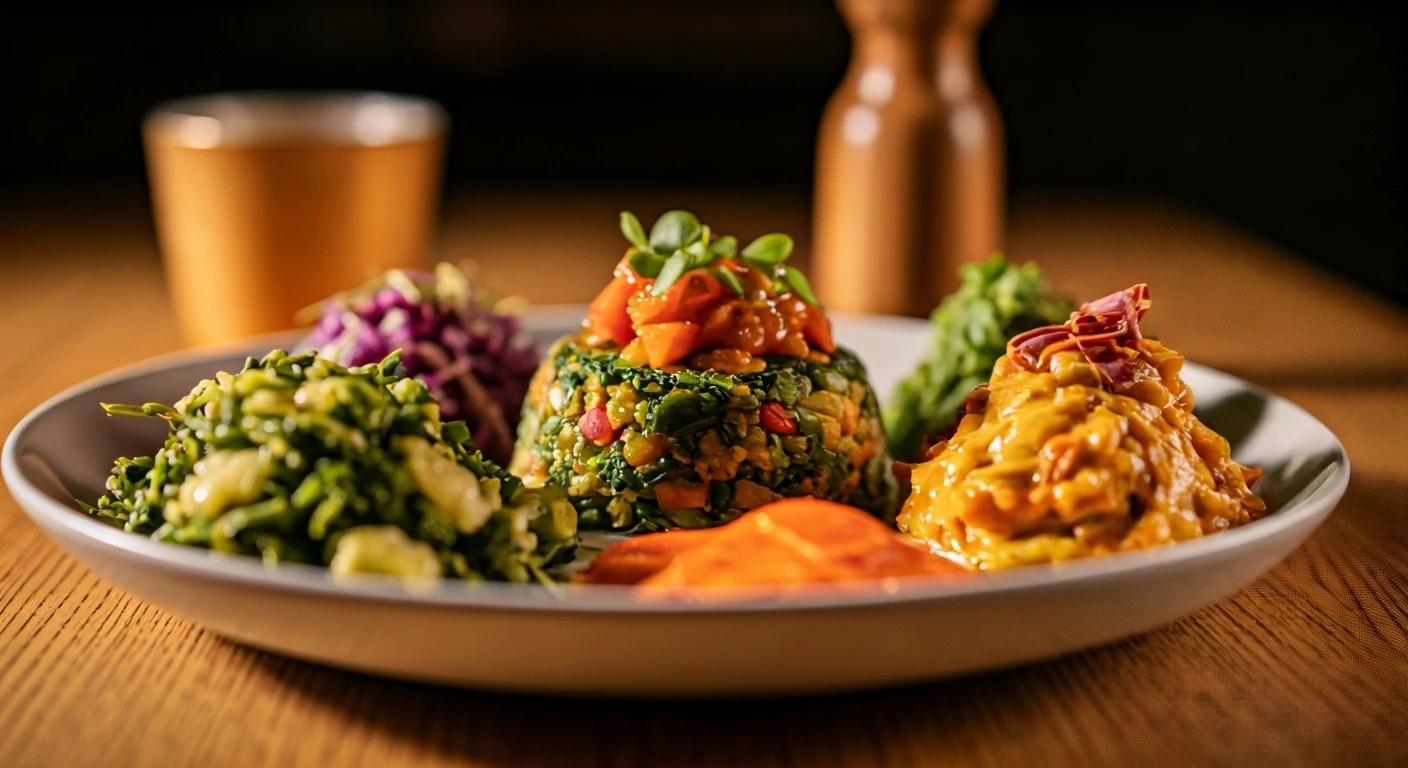
So, what does this taste like? It tastes like a revelation. Instead of a predictable veggie burger, you might find a breadfruit “taco” filled with seasoned lentils. Instead of scrambled eggs for brunch, you’ll discover ackee, a savory Jamaican fruit that, when sautéed with onions, peppers, and spices, has a remarkably similar texture and richness. You’ll find callaloo, a hearty green leafy vegetable, simmered in a creamy coconut broth. You’ll encounter heart of palm transformed into a stunning substitute for saltfish in the classic dish Ackee and Saltfish. And you’ll taste the complex, smoky-sweet heat of allspice, thyme, and scallions in a proper jerk marinade that can make anything, from mushrooms to jackfruit, sing. These dishes aren’t just good “for vegan food”—they are simply great food, period.