

The New Urban Equation
In American cities, we talk about the squeeze of a 500-square-foot studio. Now, imagine that reality amplified. In Indian megacities like Mumbai, Delhi, and Bengaluru, explosive urban migration has created some of the highest population densities on Earth.
For millions, the dream of homeownership or even a stable rental means embracing a footprint of 300 square feet or less. This isn't the minimalist-chic 'tiny home' trend seen in the U.S.; it's a fundamental reality born of economic necessity. But out of this constraint, an incredible wave of design ingenuity is emerging. Architects and interior designers are no longer just decorating spaces; they are engineering them for maximum function, dignity, and comfort, turning what could be claustrophobic boxes into dynamic, livable homes.
The Rise of Transformer Furniture
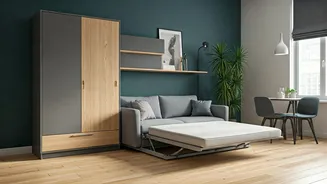
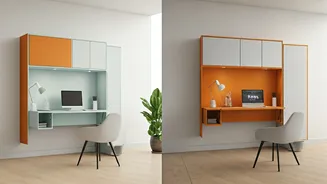
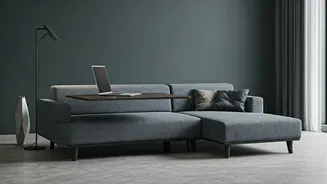
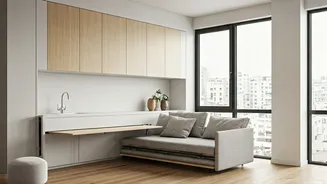
The first rule of the modern Indian micro-apartment is that nothing is ever just one thing. A wall isn’t just a wall; it’s a potential bed. A coffee table isn’t just a surface; it's a dining table in disguise. This 'transformer' approach is at the heart of making these homes work. Designers are creating custom, built-in furniture that fluidly adapts to the rhythms of the day. A Murphy bed that folds seamlessly into a shelving unit is standard practice. But the innovation goes deeper. Think of a raised platform for a desk and chair that, when not in use, slides away to reveal a sunken living room seating area. Or a kitchen counter that extends to become a dining space for six. This isn't about simply buying clever furniture from a store; it's about integrating mechanical ingenuity directly into the architecture of the home itself.
Mastering the Art of Verticality
When you can't build out, you build up. Indian designers have become masters of exploiting every inch of vertical space. This goes beyond just tall bookshelves. In many small apartments, you'll find split-level layouts within a single room. A compact staircase might lead to a cozy sleeping loft suspended over the main living area, instantly doubling the usable square footage. This move creates clear psychological separation between public and private zones without erecting a single wall. Storage is built into stair risers, under floorboards, and above door frames. By drawing the eye upward with vertical storage or design elements, these layouts create a sense of volume and height that makes a small footprint feel surprisingly spacious and organized.
Walls That Move and Disappear
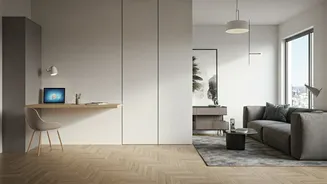
In a home under 400 square feet, permanent interior walls are a luxury you can’t afford. They block light, impede movement, and lock a space into a single, inflexible function. The solution? Walls that adapt. Sliding partitions, often made of fluted glass or wood slats, are a common feature. They allow a homeowner to close off a kitchen for cooking, create a private guest room from a corner of the living area, or hide a work-from-home setup at the end of the day. These panels can glide into hidden pockets within the walls, creating a completely open-plan feel when desired. This flexibility is crucial. It means a single room can serve as a living room, dining room, office, and bedroom at different times, transforming itself to suit the family's needs.
The Psychology of Light and Illusion
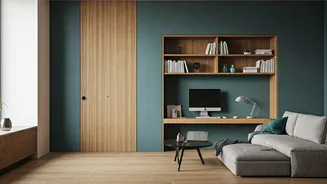
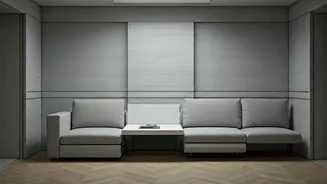
Beyond the clever mechanics, these smart layouts deploy powerful psychological tricks to make spaces feel bigger. A light, neutral color palette—think whites, beiges, and soft grays—is almost a given. It reflects natural light and creates an airy, uncluttered backdrop. But it’s the strategic use of materials that truly elevates the design. A single, unbroken flooring material used throughout the apartment creates a sense of flow and continuity. Large, well-placed mirrors can visually double the size of a room and bounce light into darker corners. By minimizing visual clutter and maximizing light, both natural and artificial, designers craft an atmosphere of calm and openness that defies the home’s actual dimensions.