



The Popeye Problem
We all grew up hearing that spinach makes you strong. It’s the leafy green icon, packed with vitamins A, C, and K, plus folate, magnesium, and, most famously, iron. But here’s the catch Popeye never told you about: the iron in spinach isn’t the easiest
for your body to use. Spinach contains what’s known as non-heme iron, the type found in plant-based foods. Unlike heme iron from animal sources (like red meat), non-heme iron is less bioavailable, meaning your body has a harder time absorbing it. Furthermore, spinach contains compounds called oxalates, which can bind to minerals like iron and further inhibit their absorption. So, while a cup of spinach technically contains a good amount of iron, you’re not getting the full benefit by eating it on its own. It’s like having a winning lottery ticket but being unable to cash it.
Enter the Citrus Sidekick
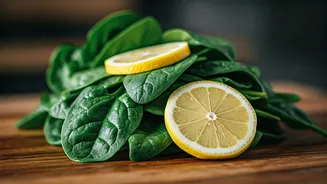
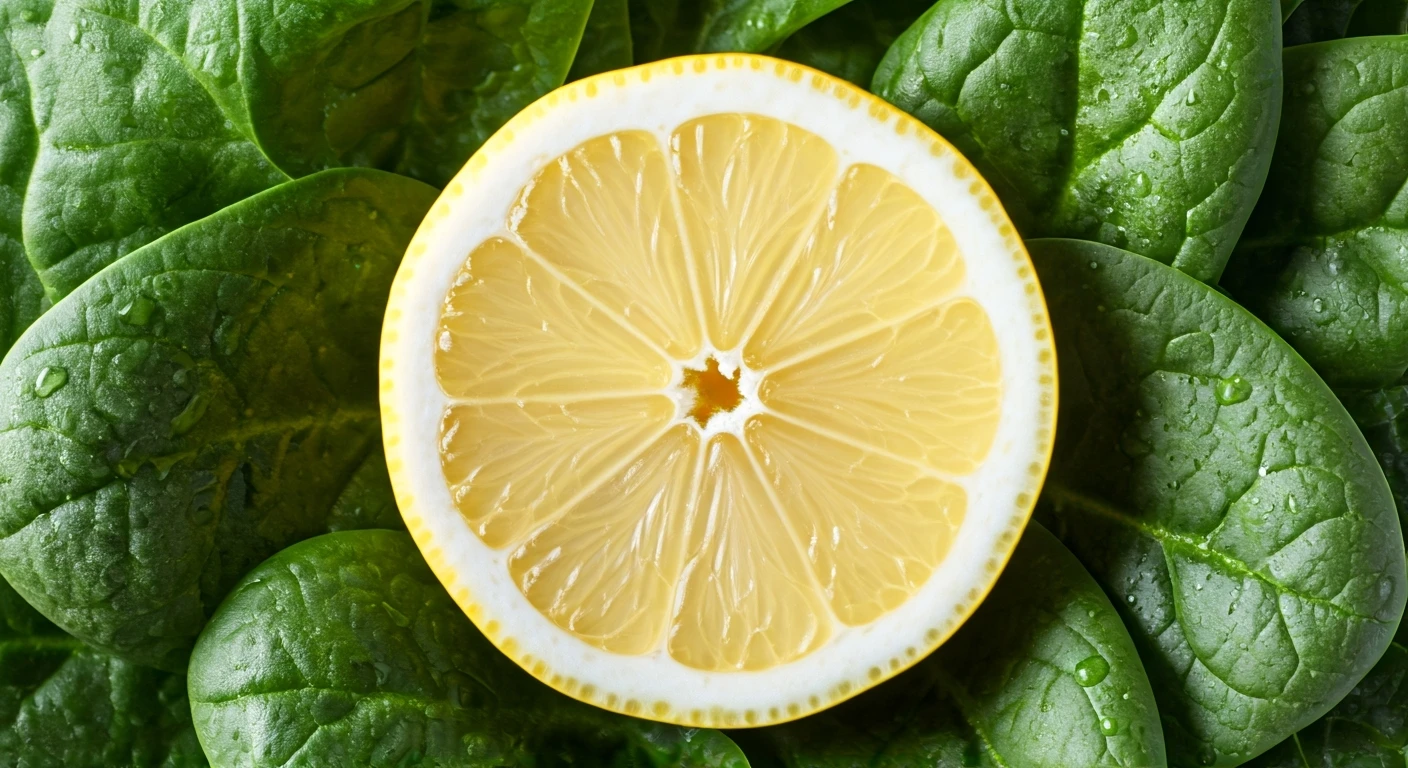
This is where the lemon comes in. That bright, acidic squeeze of citrus is more than just a flavor enhancer; it's a biochemical key that unlocks spinach's full potential. Lemons are loaded with Vitamin C (ascorbic acid), a powerful antioxidant that works wonders on non-heme iron. When you consume Vitamin C alongside a source of non-heme iron, it captures the iron and transforms it into a form that’s much more easily absorbed by your small intestine. Studies have shown that Vitamin C can increase non-heme iron absorption several-fold. It essentially counteracts the inhibiting effects of oxalates and other plant compounds, ensuring that the iron you’re consuming actually makes it into your system where it can help transport oxygen, boost energy levels, and support overall vitality. This simple food synergy is why the pairing is such a brilliant, low-effort health hack.
More Than Just an Iron Boost
While enhanced iron absorption is the star of the show, the benefits of combining spinach and lemon don’t stop there. Both foods are nutritional powerhouses in their own right. Lemons are packed with flavonoids, which are compounds that have antioxidant and anti-inflammatory effects. Spinach is rich in lutein and zeaxanthin, antioxidants crucial for eye health. When you combine them, you’re getting a broader spectrum of nutrients working together. On a more practical level, the bright acidity of lemon juice cuts through the slightly earthy, sometimes metallic taste of spinach, making it more palatable for many people. If a squeeze of lemon encourages you to eat a bigger serving of leafy greens, that’s a significant health win all on its own. It makes healthy eating feel less like a chore and more like a delicious, intelligent choice.
Easy Ways to Make It Happen
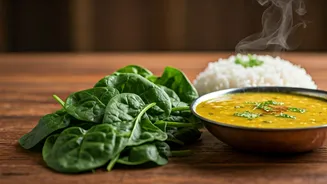
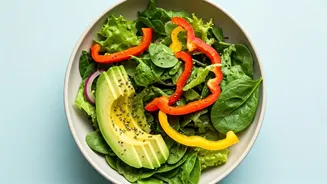
Incorporating this power couple into your diet is incredibly easy. You don't need a special recipe or a complicated meal plan. The beauty of this “flex” is its simplicity. * **The Simple Sauté:** The next time you sauté or steam spinach, finish it with a generous squeeze of fresh lemon juice right before serving. The heat will have wilted the spinach, and the lemon will brighten the flavor instantly. * **The Ultimate Salad Base:** Build your salads on a bed of raw baby spinach and use a simple vinaigrette made with olive oil, lemon juice, a pinch of salt, and pepper. The lemon in the dressing does the work for you. * **The Green Smoothie Upgrade:** When blending a green smoothie, add a large handful of spinach and the juice of half a lemon. It balances the “green” taste and ensures you’re absorbing the maximum amount of iron from your morning drink. * **The Finishing Touch:** Wilt a few handfuls of spinach into soups, stews, or pasta sauces at the end of cooking. Turn off the heat and stir in a squeeze of lemon to liven up the entire dish.