


What You’re Looking For
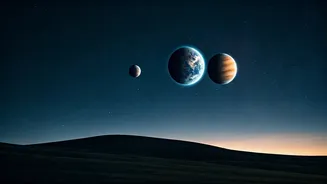
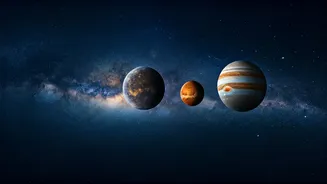
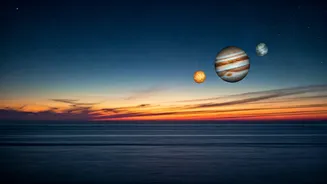
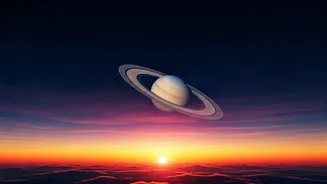
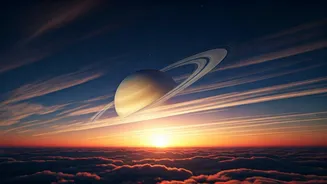
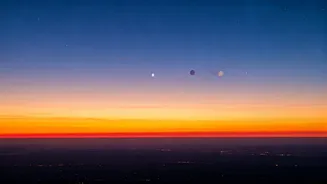
This isn't just a random assortment of stars; you're seeing three of our solar system neighbors cozying up in the same small patch of sky. The trio consists of Mercury, Mars, and Saturn. They won't be twinkling like stars but will shine with a steadier,
more focused light. Mars will be the easiest to spot, thanks to its distinct reddish-orange hue. Saturn will appear as a calmer, yellowish-white point of light nearby. The trickiest target is Mercury. As the innermost planet, it never strays far from the sun's glare, making it visible only for a brief window in the twilight. It will look like a small, bright star, likely the dimmest of the three and lowest on the horizon.
The Perfect Time to Watch
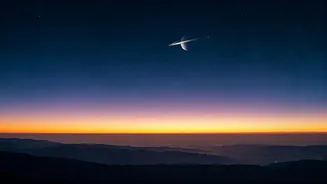
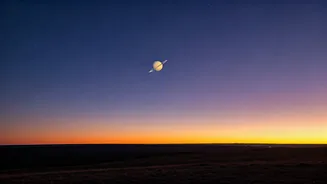
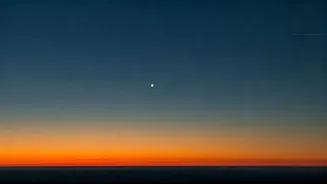
Timing is everything, especially when Mercury is involved. The best viewing window opens about 30 minutes after your local sunset and lasts for roughly an hour. Head out too early, and the sun’s remaining brightness will wash out the planets. Wait too long, and the planets—especially low-hanging Mercury—will have already set below the horizon. The ideal moment is during that deep blue phase of twilight, when the sky is dark enough for the planets to pop but still holds a faint glow from the departed sun. Use a weather app to check your local sunset time and set a reminder for half an hour later. You’ll want to be in position and ready to start scanning the sky.
Find a Clear Western Horizon
Your viewing location is just as important as your timing. Since this alignment is happening low in the sky right after sunset, you need an unobstructed view of the western horizon. Trees, buildings, and even nearby hills can easily block the show. Find a spot that offers a clear, flat sightline to where the sun just set. This could be a west-facing beach, the top of a parking garage, an open field, or even a second-story window if you're lucky. The less visual clutter you have on the horizon, the better your chances of spotting all three planets before they disappear. Light pollution from cities can also make faint objects harder to see, so if you can get to a darker location just outside of town, your view will be even more rewarding.
Tips for the Best View
You don't need a telescope to enjoy this celestial event—your naked eye is perfectly sufficient. However, a simple pair of binoculars will dramatically enhance the experience. Binoculars will make the planets appear brighter, sharper, and more distinct. You might even be able to glimpse Saturn's rings as a tiny, non-circular bulge, a sight that never fails to inspire awe. When you first get outside, give your eyes a few minutes to adjust to the darkness. Avoid looking at your phone screen, as the bright light will ruin your night vision. If you need a light, use a red flashlight, which is much gentler on your eyes. Patience is key; scan the area slowly just above the sunset point until you lock onto the planetary trio.
Why This Moment Is Special
While planets often appear in our night sky, seeing three of them grouped so tightly is a relatively uncommon treat. Each planet orbits the sun on its own path and at its own speed. From our vantage point on Earth, these paths sometimes appear to intersect, creating an alignment, or conjunction. It’s a beautiful illusion of perspective—in reality, the planets remain hundreds of millions of miles apart. These events are a powerful reminder of the dynamic, clockwork nature of our solar system. They connect us to the grand cosmic dance happening all around us, turning a simple evening glance into a moment of genuine wonder.