

The Mud Magnet Misconception
Your first reaction is probably skepticism. Why invest time cleaning a dog that’s about to gleefully roll in the nearest puddle? It feels like washing your car before a dust storm. However, the common-sense approach—letting a slightly dirty dog go out,
since it’s going to get dirtier anyway—is what sets you up for a much bigger cleanup job later. A coat that’s already carrying a layer of dust, loose fur, and minor tangles is essentially primed to capture more debris. Think of it like a dry, coarse sponge. When it hits the mud, those existing particles and knotted hairs grab onto the wet dirt and hold it deep within the coat, creating a dense, clumpy mess that’s difficult to remove. The pre-existing dirt provides more surface area for the new mud to cling to, turning a simple muddying into a deep-coat disaster.
The Science of a Clean Coat
The secret lies in the structure of the hair itself. A clean, well-conditioned dog coat is naturally more resilient. Each hair shaft is smoother, and the coat’s natural oils are properly distributed. This creates a slicker, less porous surface. When a dog with a clean coat encounters mud, the dirt has a harder time penetrating and adhering. Instead of getting trapped in a web of tangles and existing grime, much of the mud stays on the surface of the fur. Professional groomers have long understood this principle. A well-maintained coat doesn't just look better; it functions better. It can repel water more effectively and sheds dirt more easily. By contrast, a dry, dirty, or matted coat loses this protective quality, soaking up moisture and mud instead of deflecting it. Your dog’s fur is its first line of defense against the elements, and keeping it in good shape enhances its natural abilities.
Your New Pre-Walk Prep Routine
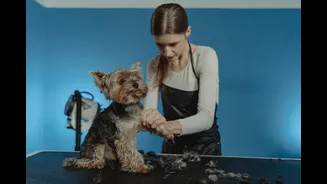
This doesn't mean you need to give your dog a full-on bath before every trip to the park. The goal is strategic maintenance, not sterilization. The most important step you can take is a quick but thorough brushing. Just five minutes with the right brush for your dog’s coat type can work wonders. This removes loose fur, gets rid of minor tangles that act as mud traps, and distributes those helpful natural oils. For dogs with longer or thicker fur, consider using a coat conditioning or detangling spray before brushing. These products add an extra layer of slip to the hair, making it even more difficult for mud to latch on. Think of it as waxing your car; you're creating a protective barrier that makes future cleaning a simple wipe-down instead of a major scrubbing session. This small upfront effort is the key to minimizing the post-walk headache.
Making the Cleanup Effortless
Here’s where you see the real payoff. When your well-brushed dog returns from a muddy adventure, the cleanup is dramatically different. Because the mud is mostly on the surface, you can often let it dry completely and then simply brush it out. The dirt will fall away easily, without leaving behind that deep-seated grime that requires a bath. For wetter messes, a quick wipe with a towel or a rinse of just the paws and underbelly is often sufficient. You've prevented the mud from becoming one with the fur. This approach not only saves you time and effort but is also better for your dog's skin. Constant, heavy-duty bathing can strip the coat of its natural oils, leading to dryness, irritation, and even more grooming problems. By focusing on preventative brushing, you support a healthier coat while keeping your home cleaner.