






The Ultimate Anti-Trend
Let’s be honest: drinking water isn’t exciting. It doesn’t come in a sleekly branded bottle with influencer endorsements. It doesn’t promise to “biohack” your life overnight. It has no marketing team, no subscription model, and no scarcity to drive up
its value. And that is precisely its superpower. While other health trends come and go, hydration is the foundational pillar upon which nearly every bodily function rests. It’s the quiet, consistent background process that allows everything else—from thinking clearly to working out effectively—to happen. Dismissing it as “boring” is like calling a solid foundation for a skyscraper uninteresting. It may not be the flashiest part, but without it, the entire structure collapses.
More Than Quenching Thirst
We associate water with thirst, but its role goes far beyond that simple signal. In fact, by the time you feel thirsty, you are often already mildly dehydrated. The impacts are subtle but significant. Studies have shown that even 1-2% dehydration can impair cognitive performance, affecting everything from your mood and concentration to your short-term memory. That 3 p.m. slump you blame on a long workday or a carb-heavy lunch? It could very well be your brain crying out for fluid. Proper hydration is linked to fewer headaches, better mood regulation, and higher energy levels. Before reaching for another cup of coffee to power through the afternoon, a tall glass of water might be the more effective, and far simpler, solution.
Your Body’s Unsung Hero
Think of water as your body’s internal logistics and maintenance crew. It’s the primary component of blood, which transports oxygen and essential nutrients to every cell. It helps your kidneys function efficiently, flushing out waste products and preventing the buildup that can lead to kidney stones and other issues. Water regulates your internal thermostat, cooling you down through sweat when you’re hot and helping maintain a stable core temperature. It lubricates your joints, cushions sensitive tissues like the brain and spinal cord, and is essential for healthy digestion. These are not glamorous, Instagram-worthy benefits. They are the silent, critical operations that define what it means to feel healthy and functional from the inside out.
Debunking the '8 Glasses' Rule
For decades, the standard advice has been to drink eight 8-ounce glasses of water a day. It’s a simple, memorable rule, but it’s also an oversimplification. The truth is, your hydration needs are unique. They depend on your age, sex, body size, activity level, climate, and overall health. An athlete training in the Florida heat needs far more water than an office worker in a climate-controlled building. The U.S. National Academies of Sciences, Engineering, and Medicine offer a broader guideline: about 15.5 cups (3.7 liters) of fluids a day for men and 11.5 cups (2.7 liters) for women. The key word is “fluids.” This includes water from food—fruits and vegetables like watermelon, cucumber, and strawberries are incredibly hydrating—and other beverages. While water is the best choice, unsweetened tea and even coffee in moderation contribute to your daily tally.
Making the Boring Habit Stick
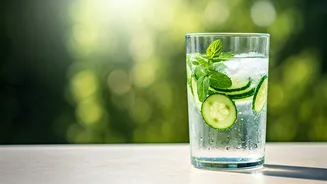
Knowing water is good for you is one thing; actually drinking enough is another. The trick is to remove friction and make it enjoyable. Start by getting a reusable water bottle you love and keeping it within arm’s reach throughout the day. If you find plain water unappealing, “infuse” it by adding slices of lemon, cucumber, mint, or berries. Set reminders on your phone or use an app to track your intake until the habit becomes second nature. You can also “eat” your water by incorporating more hydrating foods into your diet. The goal isn’t to force down a gallon of water in an hour. It’s about building a consistent rhythm of sipping throughout the day, turning this boring but essential task into a seamless, automatic part of your routine.