





The Old Way vs. The New Flex
For decades, travel planning followed a simple, rigid formula: Pick a destination, pick a date, and hope for the best. You wanted to see Paris, so you booked a flight for July, resigning yourself to the sweltering heat and shoulder-to-shoulder crowds.
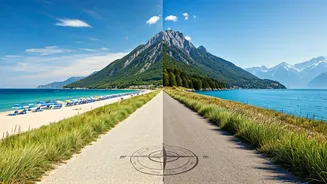
The destination was the main character; your actual comfort was just a supporting actor, often written out of the script entirely. But as summer temperatures in traditionally popular spots soar to historic, and sometimes dangerous, highs, that model is breaking. Enter the “temperature-first” approach. Instead of asking, “Where do we want to go?” the smart traveler now asks, “What weather do we want to have?” It’s a fundamental shift in priorities. You’re no longer a passive recipient of whatever climate a destination serves up. You’re actively curating your environment. It’s less about conquering a bucket-list city in miserable conditions and more about finding your personal paradise, wherever it may be. This is the new travel flex: not just where you went, but how brilliantly you enjoyed it.
Why It's a Smarter Strategy
Beyond the obvious benefit of not melting while trying to enjoy a croissant, planning by temperature unlocks a host of other advantages. First, it’s a budget-friendly move. When you’re not tethered to a specific, in-demand location during its peak (and hottest) season, you open yourself up to a world of shoulder-season deals and under-the-radar locales. The same algorithm that pushes prices for Rome to astronomical heights in July might point you toward a gorgeous, affordable, and perfectly temperate destination you’d never have considered. Second, it’s a crowd-control tactic. Extreme heat and peak tourist season go hand-in-hand. By seeking out milder climates, you’re often naturally steering away from the biggest bottlenecks. You’ll find more locals, more breathing room, and a more authentic experience. Finally, it just leads to a better vacation. A trip where you’re comfortable enough to walk for hours, dine al fresco without wilting, and sleep soundly without blasting the AC is objectively more restorative and enjoyable than one spent hiding in museums for the air conditioning.
Your Temperature-First Toolkit
This isn’t some abstract concept; it’s a practical strategy enabled by modern technology. Several travel-booking platforms now cater to this flexible mindset. Google Flights’ “Explore” feature is a great starting point. You can leave the destination blank, select your dates, and then filter by interests, price, and—crucially—weather. You can literally tell it you want places that are “mild” or “warm” in July and see your options populate on a world map. Kayak has a similar “Explore” tool and has even promoted the idea of a “therma-vacation.” Other apps and sites, like Nomad List (aimed at remote workers but useful for everyone), allow deep filtering by dozens of metrics, including average temperatures, humidity, and air quality. The key is to embrace flexibility. Start with your ideal conditions—say, “sunny and 75°F in August”—and let the tools show you the possibilities. You might be surprised by what pops up.
Summer Scenarios: 75° and Sunny
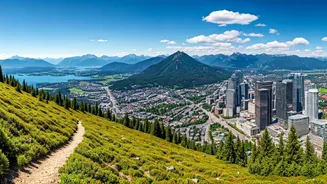
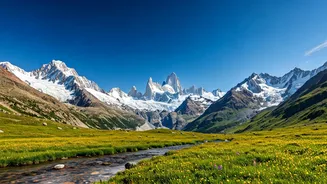
So what does this look like in practice? Let’s say your dream is a perfect 75-degree day in the middle of a scorching American summer. Instead of Orlando, think Oregon. The Oregon coast, from Astoria down to Brookings, offers dramatic cliffs, charming towns, and daytime highs that often hover in the 60s and 70s all summer long. Instead of the French Riviera, think the Great Lakes. A trip exploring the shoreline of Lake Michigan in Wisconsin or Michigan offers beaches, wineries, and pleasant breezes when the rest of the Midwest is sweltering. Craving an international escape without the heatstroke? While southern Europe bakes, consider the Canadian Rockies, where you can hike through Banff and Jasper in stunningly beautiful, crisp mountain air. Or look to Scandinavia; cities like Stockholm or Copenhagen are vibrant and alive in July and August, with long, sunlit days and temperatures that are perfect for exploring on foot or by bike. The goal is to decouple the idea of “summer vacation” from the reality of “unbearable heat.”