






From Yoga Mats to Weight Racks
For decades, the global wellness narrative surrounding India has been dominated by yoga, meditation, and Ayurveda—ancient practices centered on flexibility, mindfulness, and holistic balance. While these traditions remain deeply embedded in the culture,
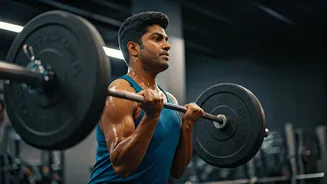
a noisier, grittier, and more muscular movement has taken over the urban landscape. In cities like Mumbai, Delhi, and Bangalore, the clanging of weights is drowning out the meditative 'oms.' Glossy, state-of-the-art gyms are mushrooming in metropolitan neighborhoods and newly developed suburbs, catering to a population eager to build muscle, not just inner peace. This isn't a rejection of the old ways but a powerful new addition. The modern Indian fitness enthusiast might start their day with sun salutations and end it with deadlifts, embodying a hybrid identity that’s both globally connected and distinctly Indian.
The Bollywood and Instagram Effect
You can’t understand this trend without looking at the screen—both the silver screen and the one in your pocket. The lean, boy-next-door Bollywood hero of the 1990s has been replaced by a chiseled, eight-pack-baring superstar. Actors like Hrithik Roshan, Tiger Shroff, and Vidyut Jammwal have normalized a hyper-masculine, muscular physique that has become the new aspirational standard for millions of young men. This 'fit-ideal' is amplified and democratized by Instagram. A new class of Indian fitness influencers—nutritionists, trainers, and bodybuilders—have amassed huge followings by sharing workout tips, transformation photos, and meal plans. They make the celebrity body seem attainable, providing a roadmap for their followers. This visual, aspirational culture has turned the gym from a place of simple exercise into a stage for self-improvement and social signaling.
An Aspirational Middle Class
The rise of the squat rack is directly tied to the rise of India's new middle class. With growing disposable incomes, millions of young, urban professionals can now afford what was once a luxury: gym memberships, personal trainers, expensive supplements, and branded athletic wear. A gym membership is no longer just about health; it's a status symbol. It signals that you have the time, money, and discipline to invest in yourself. In a country undergoing rapid economic and social change, physical strength has become a metaphor for personal success and upward mobility. This has fueled a multi-billion dollar fitness industry, with domestic and international gym chains, supplement companies, and fitness tech startups all vying for a piece of this booming market.
A New Definition of Strength
Beyond aesthetics and economics, the embrace of strength training reflects a deeper cultural shift. For many young Indians, building physical strength is an act of empowerment and self-definition. In a society where traditional paths were often predetermined, choosing to transform one’s body is a powerful expression of individual agency. For women, in particular, lifting weights can be a radical act, challenging deep-seated notions of femininity that have historically prized softness and delicacy. Today’s female lifters are proudly showcasing their strength, redefining what it means to be a strong Indian woman. This new 'flex' is about more than just showing off biceps; it's about projecting confidence, resilience, and a modern identity that is ready to compete on a global stage, both physically and metaphorically.