




The Legacy of a 'City of Nawabs'
To understand Lucknow’s revival, you first have to understand its history. Located in northern India, Lucknow was the capital of the state of Awadh, ruled for over a century by the Nawabs—cultured, art-loving, and fabulously wealthy Muslim viceroys of the Mughal
Empire. Their court was a center of poetry, music, dance, and extravagant cuisine. The city became synonymous with a refined, leisurely elegance known as ‘Nawabi tehzeeb,’ a sophisticated way of life that permeated every aspect of culture. However, with the arrival of the British in the 19th century and the eventual dissolution of princely states after India’s independence, Lucknow's political and cultural prominence faded. It became just another provincial capital, its gilded past more a memory than a living reality.
A King Among Fruits
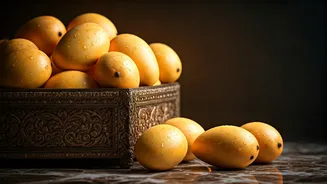
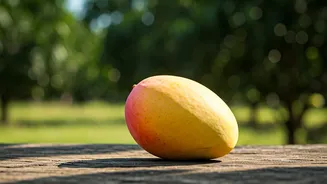
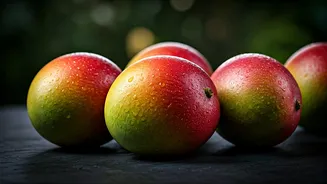
But one legacy of the Nawabs never faded: their mangoes. The rulers of Awadh were connoisseurs who cultivated vast orchards, or ‘baughs.’ Just outside Lucknow lies the Malihabad mango belt, a sprawling region that produces some of the world's most sought-after varieties. Chief among them is the Dussehri, a mango so legendary it has its own origin story. Slender, golden-yellow, and almost completely fiberless, the Dussehri is intensely sweet with a heady aroma. It’s a mango you can practically drink, its pulp melting in your mouth. For generations, this fruit was a symbol of Lucknow's high culture, a delicacy reserved for elites and a cornerstone of the region’s agricultural identity, even as the city’s political star waned.
From Local Delicacy to Global Brand
The turning point for Lucknow’s mango-led renaissance came in 2009. The Indian government awarded the Malihabadi Dussehri a Geographical Indication (GI) tag. For an American audience, think of it like the protections afforded to Champagne from France, Parmesan cheese from Italy, or even Napa Valley wine. The GI tag legally certifies that a true Dussehri can only come from this specific region. This single act transformed the mango from a generic commodity into a premium, protected brand. It gave farmers immense pricing power, cracked open international export markets, and put a legal shield around their most precious agricultural heritage. Suddenly, Lucknow’s mango wasn't just a local treat; it was a globally recognized luxury product with a verifiable story.
The Mango as Cultural Ambassador
Armed with the GI tag, Lucknow has begun marketing its story, not just its fruit. The city now promotes mango tourism, inviting visitors for orchard tours and tastings, directly connecting the experience of the fruit to the history of the Nawabs. Annual mango festivals are major events, drawing foodies, chefs, and buyers from across India and beyond. The mango has become Lucknow's most effective cultural ambassador. Every crate of Dussehri mangoes exported to the U.S., the Middle East, or Europe carries with it the story of the Nawabs, of refined taste, and of a city reclaiming its identity. It’s a powerful form of soft power, rebuilding Lucknow's brand not through monuments or museums alone, but through a sensory experience that is both authentic and irresistible.