

A Spectacle of Unbound Faith
Every year in the coastal city of Puri in the eastern Indian state of Odisha, an incredible event unfolds. Millions of Hindu devotees converge for Rath Yatra, which translates to "Chariot Journey." The air thrums with the sound of gongs, conch shells,
and ecstatic chants. The focal points are three colossal chariots, meticulously constructed anew each year. These are not mere floats; they are considered mobile temples carrying the deities Jagannath—the “Lord of the Universe”—his elder brother Balabhadra, and their sister Subhadra. Devotees surge forward, eager for the chance to grasp one of the thick ropes and help pull the massive structures, believing the act to be a path to salvation.
The Journey of the Gods
At its heart, the Rath Yatra is a divine vacation. For most of the year, the sacred wooden idols of Jagannath, Balabhadra, and Subhadra reside deep within the sanctum of the 12th-century Jagannath Temple, accessible only to Hindus. But for this one festival, they emerge for all to see. The procession marks their annual journey from their main temple to the Gundicha Temple, about two miles away, said to be their aunt's home. They remain there for nine days before making the return trip. This act of bringing the divine out into the public sphere is profoundly symbolic, allowing people from all walks of life, regardless of caste or creed, to have a direct, personal encounter—a *darshan*, or auspicious viewing—with the deities.
Building the Divine Vehicles
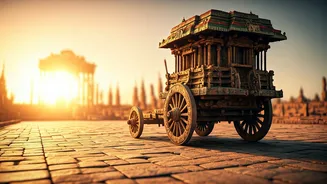
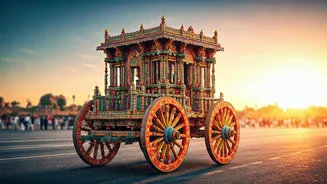
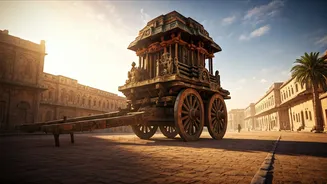
The chariots themselves are marvels of traditional craftsmanship. Their construction begins months in advance, following strict, ancient protocols passed down through generations of artisan families. Everything is done by hand, using specified types of wood from designated forests, and no metal nails are used in the primary structure. Each chariot has a distinct design, color scheme, and name. Jagannath's chariot, Nandighosha, is the largest, standing about 45 feet tall with 16 massive wheels. Draped in red and yellow cloth, it dwarfs the surrounding buildings. Balabhadra's chariot, Taladhwaja, is covered in red and green, while Subhadra's, Darpadalana, uses red and black. Once assembled, they are living art, temporary homes for the gods consecrated through elaborate rituals.
An Ocean of Humanity
For an American observer, the scale can be difficult to comprehend. It’s more than a parade; it’s a kinetic, devotional organism. The main thoroughfare of Puri, the Bada Danda, transforms into a solid mass of people. Managing a crowd that swells to over a million is a monumental logistical challenge, involving tens of thousands of police officers and volunteers. Yet, amidst the crush, there is a palpable sense of shared purpose and joy. People sing, dance, and offer prayers. The atmosphere is electric, a mix of intense devotion, community celebration, and sensory overload. It is a powerful reminder of how faith can mobilize humanity on a scale that few other forces can match.