





1. Squeeze, Don’t Rub
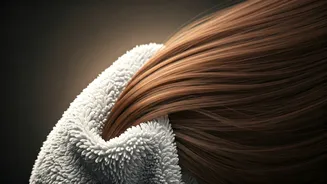
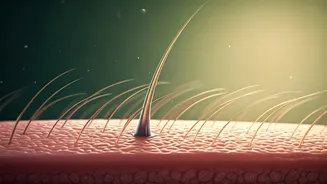
The single biggest mistake most people make is vigorously rubbing their hair with a coarse towel. When hair is wet, its protein structure is swollen and weakened, making it incredibly susceptible to damage. The friction from a rough towel rub lifts the hair’s
outer layer—the cuticle—causing it to look frizzy and dull. Worse, it can stretch the hair past its breaking point. Instead, gently squeeze and blot sections of your hair with your towel. This absorbs excess water without the damaging friction, preserving the integrity of the hair shaft.
2. Upgrade Your Towel
Not all towels are created equal. That plush, terrycloth bath towel might feel luxurious on your skin, but its rough loops can snag and pull at fragile wet strands. For healthier hair, make the switch to a microfiber towel or even a simple, clean cotton T-shirt. These materials have a smoother surface and are highly absorbent, allowing them to draw water out of the hair quickly and gently. This simple swap significantly reduces friction, which in turn minimizes frizz and prevents the mechanical damage that leads to split ends.
3. Detangle From the Bottom Up
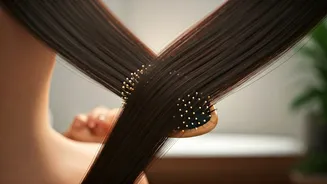
Attacking knots by raking a brush from root to tip is a recipe for disaster. When you hit a tangle, you put immense tension on the hair shaft, often causing it to snap at its weakest point—the root. The correct method is to detangle from the ends up. Start by gently combing through the last few inches of your hair. Once that section is smooth, move a few inches higher and repeat, gradually working your way to the scalp. This technique removes tangles incrementally without yanking or stretching the hair.
4. Use the Right Tools (and Your Fingers)
A standard bristle brush is not your friend when your hair is wet. The bristles can be too harsh, tearing through tangles rather than gently separating them. Instead, opt for a wide-tooth comb. The ample space between the teeth allows it to glide through hair with minimal resistance. Better yet, start with your fingers. Gently separate large knots before going in with a comb. For extra help, apply a leave-in conditioner or detangling spray first. This adds “slip,” creating a protective barrier that helps your comb or fingers move through the hair without friction.
5. Go Easy on the Heat
Applying high-heat styling tools like a flat iron or curling wand to damp hair is one of the most destructive things you can do. The intense heat instantly boils the water trapped inside the hair shaft, causing it to expand and burst through the cuticle. This creates a tiny explosion that permanently damages the hair’s structure, leading to brittleness and breakage. Always let your hair air-dry or blow-dry it until it is 100% dry before using any high-heat tools. No exceptions.
6. Blow-Dry with a Strategy
If you must blow-dry, do it strategically. First, never skip a heat protectant spray, which creates a buffer between your hair and the heat. Begin by rough-drying your hair on a medium heat and low speed setting until it’s about 80% dry. Keep the dryer moving constantly to avoid concentrating heat on one spot. Use the nozzle attachment, as it helps direct the airflow down the hair shaft, which smooths the cuticle for a shinier finish. Finally, end with a “cool shot” to seal the cuticle, lock in your style, and add shine.
7. Never Sleep on Soaking Wet Hair
Going to bed with a wet head might seem like a time-saver, but it can cause problems for both your hair and scalp. Tossing and turning creates friction between your wet, fragile hair and your pillowcase, leading to breakage and a frizzy mess in the morning. Furthermore, the damp, warm environment against your scalp can encourage the growth of fungus or bacteria, potentially leading to dandruff or other scalp irritations. If you wash your hair at night, let it air-dry at least partially or give it a quick, gentle blow-dry before hitting the pillow.