



Myth: Solar Storms Can Directly Make You Sick
The claim circulating online is that intense solar activity—solar flares and coronal mass ejections (CMEs)—can directly cause physical ailments in people on Earth. You may have seen posts linking them to everything from migraines and fatigue to heart
palpitations and a mysterious “solar flu.” The idea is that the charged particles and radiation from the sun are bombarding our bodies and disrupting our internal systems.
Reality: Earth's Shields Do Their Job
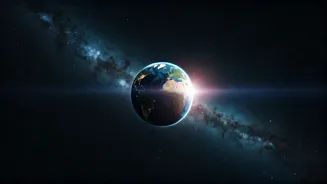
Fortunately, we live on a planet with a very effective security system. Earth’s magnetic field (the magnetosphere) and dense atmosphere deflect and absorb the vast majority of solar radiation and charged particles. According to NASA, the amount of radiation that makes it to the ground during even a severe geomagnetic storm is negligible and poses no threat to human health. While these storms can induce electrical currents in long conductors like power lines and pipelines, they don't have the power to directly affect the human body’s biochemistry. There is no credible, large-scale scientific evidence linking solar activity to specific health symptoms in the general population.
Myth: You’re At Risk Just by Being Outside
Another common fear is that simply being outdoors during a solar storm exposes you to dangerous radiation. This leads to advice—often accompanied by a sales pitch—to stay inside, avoid sunlight, or even wear special protective gear. It frames a celestial event as a personal, immediate physical danger, similar to a hurricane or a heatwave.
Reality: The Real Risks are Technological and Specific
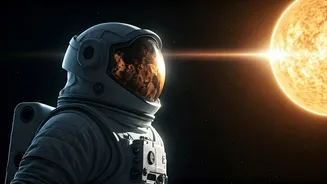
The primary risks from solar storms are to our technology, not our biology. The geomagnetic disturbances can disrupt satellite communications, damage GPS systems, and, in a worst-case scenario, overload national power grids. That’s why agencies like NOAA’s Space Weather Prediction Center exist—to give utilities and satellite operators a heads-up. The only humans who face a direct radiation risk are astronauts in space, who are outside the protection of much of the magnetosphere. Passengers and crew on certain high-altitude, high-latitude flights (e.g., over the polar regions) may receive a slightly elevated radiation dose, equivalent to a dental X-ray, but airlines monitor space weather and can reroute flights to mitigate this.
Myth: Anxiety and Insomnia are Caused by the Storm
Some theories suggest that even if the physical impact is nil, solar storms can disrupt our circadian rhythms or trigger anxiety and mood swings by subtly affecting Earth's magnetic field. This is often presented as a scientific-sounding explanation for why you might feel “off” or have trouble sleeping during a period of high solar activity.
Reality: Correlation Isn't Causation
While a few small, older studies have explored a potential link, the scientific consensus has not found a causal relationship between geomagnetic storms and psychological symptoms. A more likely explanation is the “nocebo” effect: if you read online that a solar storm is happening and that it might make you feel anxious or unwell, you are more likely to interpret any normal feelings of anxiety or fatigue through that lens. Hearing about a massive, powerful, and invisible force can be anxiety-inducing in itself, without the storm having to do any direct work.