




What Is That Magical Glow?
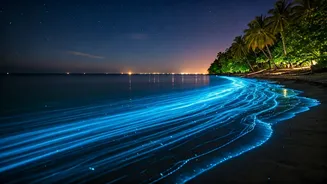
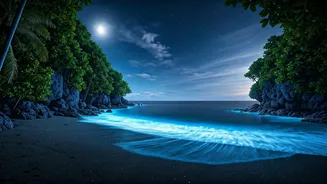
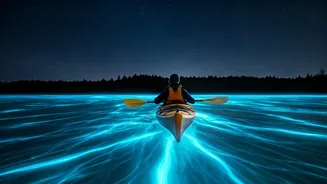
The ethereal light show isn't magic, but it might as well be. The glow comes from millions of single-celled organisms called dinoflagellates. These tiny plankton have a built-in defense mechanism: when disturbed by a paddle, a swimming fish, or even a splashing
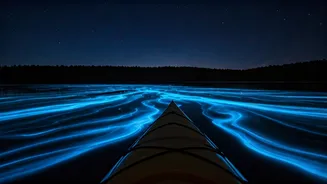
hand, they emit a flash of blue-green light. It’s a biological burglar alarm, meant to startle predators. When millions of them react at once, the effect is breathtaking. The water itself seems to come alive, transforming into a swirling, shimmering galaxy. Unlike the steady chemical burn of a glow stick, this light is organic and fleeting, a direct response to your movement. Each stroke of the paddle doesn’t just propel you; it creates a temporary work of art, a brushstroke of liquid light against the dark canvas of the water.
Paddling Through Liquid Stars
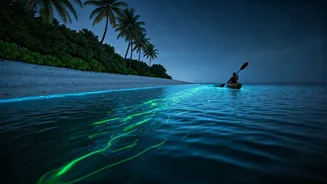
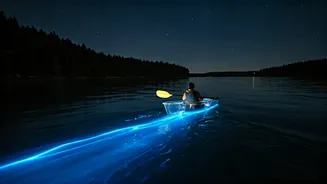
The experience of bioluminescence kayaking is profoundly cinematic. You typically launch just after sunset, paddling out into a bay or lagoon as the last colors fade from the sky. At first, you see nothing. The water is black, reflecting only the moon and stars, if they’re visible. But then your guide tells you to dip your paddle and swirl it. The first time you see that burst of incandescent blue, it feels like a special effect. As you paddle farther, your wake becomes a glowing trail. Fish, spooked by your kayak, dart away like blue-green torpedoes. A jumping mullet might create a splash of light. In places like Florida's Indian River Lagoon, a manatee or dolphin might glide beneath you, their entire bodies outlined in a ghostly, glowing aura. This is the “flex”—a moment of pure, unedited wonder. It’s a silent, personal conversation with a natural phenomenon that feels both ancient and impossibly futuristic. You aren't just observing nature; you are actively participating in its light show.
Where to Find This Watery Light Show
While bioluminescence exists in oceans all over the world, only a few places offer concentrations high enough for this kind of spectacular display. In the United States, the undisputed champion is Florida’s “Space Coast.” The Indian River Lagoon and Mosquito Lagoon near Titusville are famous for their “dino” blooms, especially during the warm summer months from June to October. On the West Coast, Tomales Bay in Northern California offers a cooler but equally mesmerizing experience, often with a backdrop of coastal fog that adds to the mystique. Other spots include Washington's San Juan Islands and select bays in the Carolinas. For those willing to travel, the holy grail is Puerto Rico, home to three of the world's most brilliant bioluminescent bays: Mosquito Bay in Vieques, Laguna Grande in Fajardo, and La Parguera in the southwest. These are so bright and reliable that they have become global destinations in their own right.
Your Guide to the Perfect Glow
Timing is everything. The best viewing conditions occur during the warmest months, when the dinoflagellate populations are at their peak. Most importantly, you need darkness. Check the lunar calendar and book your tour for a night during the new moon phase, or at least when the moon is not visible in the sky. Any ambient light, even from a bright moon, can wash out the delicate glow. Always go with a reputable tour operator. They know the safest and most active spots, provide all the necessary equipment, and are trained to navigate the waters at night. They also educate visitors on how to experience the phenomenon without harming the fragile ecosystem. Leave your phone in a dry bag; a standard phone camera can't capture the low-light magic anyway. This is one of those experiences that’s meant to be lived, not just recorded.