

The Monsoon's Green Makeover
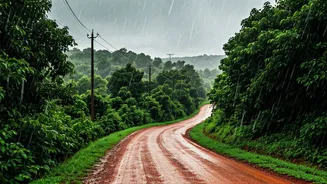
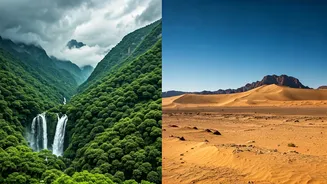
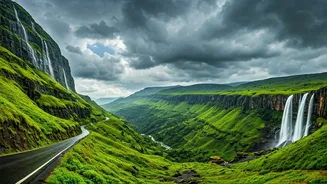
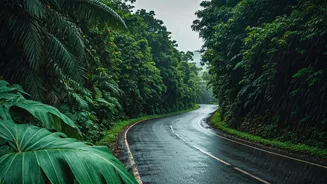
For much of the year, the hills of the Western Ghats—a UNESCO World Heritage Site that runs parallel to India’s western coast—are a dusty, sun-baked brown. But when the monsoon arrives around June, a startling transformation occurs. The landscape explodes
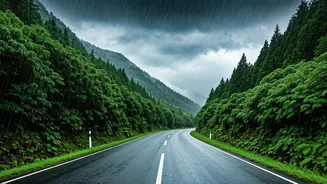
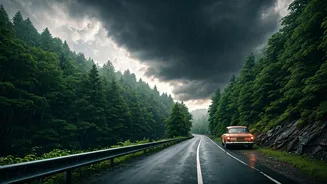
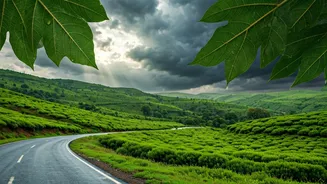
into an impossible spectrum of greens, from deep emerald to vibrant lime. The parched earth becomes a lush carpet, and every tree branch drips with life. This isn't just a change of scenery; it's a complete rebirth of an entire ecosystem. The first glimpse of this verdant paradise after hours in traffic feels like stepping from a black-and-white film into Technicolor. The air, thick with the smell of wet soil and fresh foliage, is an immediate antidote to the exhaust fumes you just left behind.
A Theater of Mist and Clouds
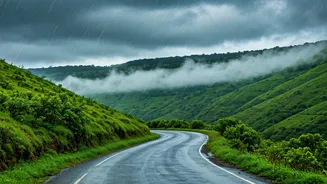
The scenic lookouts in places like Lonavala, Khandala, and Malshej Ghat aren’t just points to see a view; they are front-row seats to an atmospheric drama. The monsoon brings with it a thick, rolling mist that drifts through the valleys and envelops the mountains. One moment, you’re gazing at a panoramic vista of deep gorges and distant plateaus. The next, a blanket of white cloud moves in, obscuring everything and creating a feeling of serene isolation. Standing at a viewpoint like Tiger Point in Lonavala, you can literally watch the clouds crawl up the cliffside and swirl around your feet. It’s a humbling, almost mystical experience that makes you feel like you’re floating above the world, far removed from the terrestrial frustrations of the highway below.
Chasing Spontaneous Waterfalls
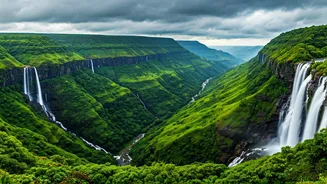
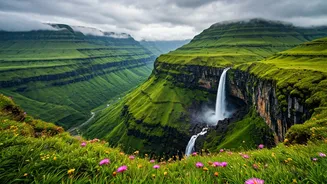
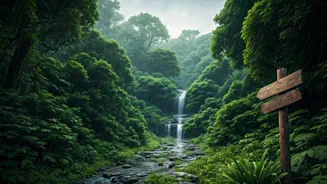
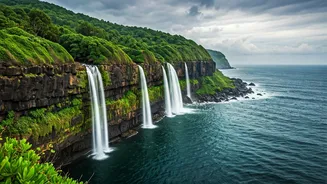
The true superstars of a monsoon road trip in Maharashtra are the waterfalls. They are everywhere. What were dry rock faces just weeks before become thunderous cascades of white water, gushing down the mountainside and often right over the road itself. Driving through a region like Amboli Ghat or Malshej Ghat is like navigating a corridor of waterfalls. Families pull over to splash in the cool spray, and the sound of roaring water replaces the din of traffic. Unlike the predictable geysers of a national park, these falls are wild, temporary, and magnificently powerful. The thrill isn't just seeing them; it’s the joy of their sudden, spectacular appearance, a powerful reminder of nature’s raw energy.
The Joy of Roadside Chai and Corn
The journey is punctuated by small, perfect moments of culinary comfort. As the rain patters on the roof of a roadside shack, there is no greater pleasure than a steaming cup of masala chai—sweet, milky tea spiced with ginger and cardamom. It’s the perfect antidote to the damp chill. Alongside it, vendors roast ears of corn, or 'bhutta,' over hot coals, rubbing them with salt, chili, and a squeeze of lime. The smoky, spicy, and sweet flavor is the quintessential taste of the Indian monsoon. These aren't gourmet meals; they are simple, elemental pleasures that turn a pit stop into a cherished memory. Huddled under a tin roof, watching the downpour with a hot snack in hand, the traffic jam feels a million miles away.
The Serenity Is Earned, Not Given
Ultimately, the reason the lookouts feel so special is because you have to work for them. This isn't an easy, breezy drive to a scenic spot. It’s an ordeal. The bumper-to-bumper crawl, the endless honking, the sheer test of patience—it all serves as a filter. By the time you finally step out of your car and breathe in the cool, misty air, you’re not just a tourist; you’re a pilgrim who has completed a trying journey. The peace that washes over you isn't just a result of the beautiful scenery. It's the profound sense of release and relief. The silence of the mountains is made more powerful by the memory of the noise, and the stillness of the fog feels more sacred after the chaos of the road. You’ve earned this view, and that makes it infinitely more beautiful.