




First, A Pani Puri Primer
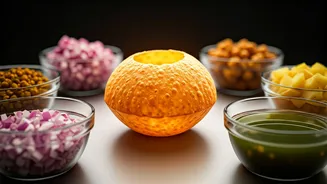
For the uninitiated, pani puri is more than just a snack; it's a national obsession in India and an explosive, multi-sensory experience. Imagine a small, hollow, crispy sphere, about the size of a ping-pong ball. The vendor, with astonishing speed, pokes
a hole in the top, stuffs it with a savory mixture of potatoes, chickpeas, and spices, and then dunks the entire thing into a vat of chilled, herb-infused spicy and tangy water called 'pani'. You're meant to eat it in one go, resulting in an unforgettable explosion of crunch, spice, tang, and coolness. Known as golgappe in Delhi, phuchka in Kolkata, and pani puri in Mumbai, its universal appeal lies in its fleeting perfection. You can’t pre-make them, you can’t take them to-go, and you definitely can’t eat just one. It’s a moment, not a meal.
Now, Let’s Add Some Feelings
Enter the viral sensation. A street food vendor in Jaipur, Shubham, decided to innovate on this classic formula. Instead of offering just one type of 'pani', he created a menu of different flavored waters, each corresponding to a different human emotion. Feeling angry? He’s got an extra-spicy, red-chili-infused pani for that. Feeling happy or romantic? Try the sweet and tangy version. Other “moods” on offer included jealous, sad, and shy, each with its own unique flavor profile. The concept is brilliantly simple and absurdly relatable. A video of Shubham’s stall, “Jaipur ke Golgappe,” shows him expertly quizzing customers on their emotional state before crafting the perfect bite to match. It transforms a simple transaction into a personalized, almost therapeutic, food experience. It’s not just “what do you want to eat?” but “how do you feel?”
The Anatomy of a Viral Hit
So why did this particular idea capture the internet’s heart? It was a perfect storm. First, it’s incredibly visual and shareable, tailor-made for the short-form video world of Instagram Reels and YouTube Shorts. The sight of different colored waters and the vendor’s rapid-fire process is mesmerizing. Second, it taps into the universal language of moods and memes, making it instantly understandable even to those who’ve never tried pani puri. We’ve all seen mood rings; this is just the edible, far more delicious version. Finally, it’s a story about human-centered innovation. In a world of faceless chains and delivery apps, here was a small business owner using creativity and a deep understanding of his customers to create something unique. Food vloggers flocked to his stall, and their videos racked up millions of views, turning a local novelty into a national phenomenon.
What 'Peak Indian Internet' Means
The headline’s claim that this is “Peak Indian Internet” is more than just hyperbole. It perfectly encapsulates several key aspects of India's digital landscape. There's the deep-seated love for street food, a genre of content that dominates Indian YouTube and Instagram. There's the spirit of 'jugaad'—a Hindi term for frugal, clever innovation or a 'hack'—applied here to a culinary tradition. And finally, there's the sheer scale and enthusiasm of India’s mobile-first internet users, who champion hyper-local stories and turn street-side vendors into overnight celebrities. This isn't a trend manufactured by a corporate marketing team; it’s an organic, grassroots phenomenon born at the intersection of food, culture, and technology. It’s authentic, a little quirky, and speaks volumes about what resonates with millions of people online.