



More Than Just a Rainstorm
For Americans, a summer storm might mean a canceled barbecue or a cozy afternoon indoors. But in India and across South Asia, the monsoon is a season, a mood, and a lifeline. After months of oppressive heat that can parch the land and fray tempers, the arrival
of the monsoon clouds brings a collective sigh of relief. It’s a dramatic, soul-stirring event that replenishes rivers, nourishes crops, and transforms the dusty brown landscape into a lush, vibrant green. This arrival is often met with spontaneous joy—children dancing in the streets, families gathering on verandas, and a deep, shared sense of renewal. The air cools, the world feels clean, and the season of abundance begins. This feeling, known as ‘petrichor’—the earthy scent of rain on dry soil—is deeply embedded in the cultural psyche, inspiring poetry, music, and, of course, food.
Meet Malpua: The Perfect Rainy Day Pancake
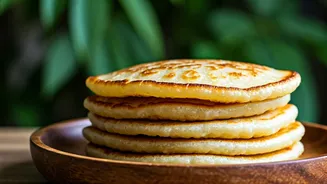
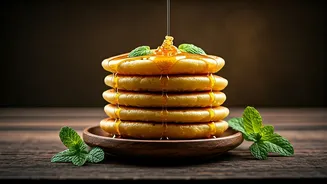
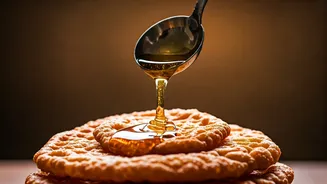
Enter malpua, the traditional sweet pancake in question. Forget the fluffy, maple-syrup-drenched American breakfast staple. Malpua is an entirely different experience. These are small, decadent pancakes, often made with flour, semolina, or milk solids (khoya), and lightly flavored with aromatics like cardamom or fennel. They are pan-fried in ghee (clarified butter) until the edges are delightfully crispy while the center remains soft and chewy. The magic happens next: the warm pancakes are dunked into a fragrant sugar syrup infused with saffron and rose water. The result is a glistening, jewel-like dessert that’s rich, sweet, and unbelievably satisfying. Enjoyed across the Indian subcontinent, malpua is a festive food, frequently appearing during holidays like Holi and Diwali, but it holds a special place as a comfort food craved during the rainy monsoon season. It’s the perfect warm, sweet indulgence to enjoy while listening to the rain fall outside.
An Easy Recipe for Your Kitchen
Bringing this tradition home is simpler than you might think. This recipe uses common pantry staples to create an authentic-tasting malpua. **Ingredients:** *For the Pancakes:* - 1 cup all-purpose flour - 1/4 cup fine semolina (or rice flour for a crispier edge) - 1/4 cup milk powder (or 1/2 cup crumbled khoya/mawa) - 1 teaspoon crushed fennel seeds or 1/2 teaspoon cardamom powder - A pinch of salt - 1 cup whole milk (plus more as needed) - Ghee or neutral oil for frying *For the Syrup:* - 1 cup sugar - 1/2 cup water - 4-5 saffron strands - 1/2 teaspoon cardamom powder - 1 teaspoon rose water (optional) **Instructions:** 1. **Make the syrup first.** In a small saucepan, combine sugar and water. Bring to a boil, stirring until the sugar dissolves. Reduce the heat and simmer for 4-5 minutes until the syrup thickens slightly (you’re looking for a “one-string” consistency, where a drop between your thumb and forefinger forms a single thread when pulled apart). Stir in the saffron and cardamom powder. Remove from heat and add rose water, if using. Set aside. 2. **Prepare the batter.** In a mixing bowl, whisk together the flour, semolina, milk powder, salt, and your chosen spice (fennel or cardamom). Slowly pour in the milk, whisking continuously to form a smooth, lump-free batter. It should be the consistency of American pancake batter—thick but pourable. If it's too thick, add a tablespoon of milk at a time. Let the batter rest for 20-30 minutes. 3. **Fry the malpua.** Heat about an inch of ghee or oil in a wide, shallow pan over medium heat. Once hot, pour about 1/4 cup of batter into the pan to form a small pancake. Don't overcrowd the pan. Fry for 2-3 minutes until the edges are golden and crisp. Gently flip and cook the other side for another 1-2 minutes. 4. **Soak and serve.** Using a slotted spoon, remove the fried pancake, let the excess oil drip off, and immediately immerse it in the warm sugar syrup. Let it soak for a minute on each side. Transfer to a serving plate.
Serving and Savoring
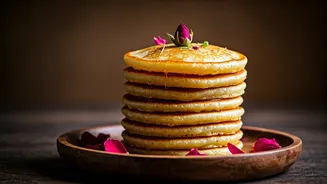
Malpua are best served warm, straight from the syrup. For an extra layer of decadence, top them with a sprinkle of chopped pistachios and almonds for crunch and color. A few dried rose petals also add a beautiful, fragrant touch. For the ultimate traditional experience, serve the malpua with a dollop of rabri—a thickened, sweetened milk that’s slow-cooked until it’s creamy and rich. The cool, creamy rabri provides a perfect contrast to the warm, syrupy pancake. But even on their own, these sweet treats are a fantastic way to end a meal or enjoy with a cup of chai on a lazy, rainy afternoon. They’re a taste of comfort, tradition, and the simple joy of a season’s change.