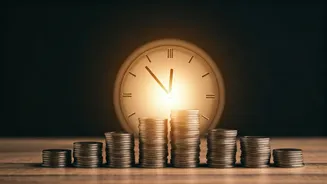










The Slow Burnout of Hustle Culture
The ethos of 'rise and grind' once dominated the American workplace. It was a badge of honor to be the first one in, the last one out, and always connected. This hustle culture promised that relentless work would inevitably lead to financial prosperity
and, by extension, happiness. But for millions, that promise has curdled. Widespread burnout, exacerbated by the pressures of the pandemic, has exposed the steep personal cost of being 'always on.' The constant connectivity demanded by modern jobs has blurred the lines between work and life, leading to what psychologists call 'time poverty'—the persistent feeling of having too much to do and not enough time to do it. This isn't just a feeling of being busy; it's a chronic stressor linked to lower life satisfaction, anxiety, and poor health outcomes. The collective exhaustion has forced a reckoning, pushing people to question whether the relentless pursuit of a higher salary is worth the sacrifice of their personal time and well-being.
The Rise of 'Time Affluence'
In response to time poverty, a new status symbol has emerged: time affluence. The term, coined by social scientists, describes the feeling of having control over your time and possessing enough of it to pursue what you value, whether that's hobbies, family, or simple rest. Unlike financial wealth, which can be hoarded, time is finite and democratic. Research from institutions like Harvard Business School and the University of British Columbia consistently shows that people who prioritize time over money report greater happiness. Valuing time is associated with more positive social relationships and higher career satisfaction. This isn't about rejecting ambition or financial stability. Instead, it's a re-prioritization. Given the choice between a higher-paying job that demands 60-hour weeks and a slightly lower-paying one that offers a four-day workweek or true flexibility, a significant portion of the workforce is now choosing the latter. They are effectively 'buying' time back from their employers, and they see it as the best investment they can make in themselves.
How Companies Are Responding
Smart companies are paying close attention to this shift. The 'Great Resignation' was an early signal that compensation alone could no longer secure loyalty. To attract and retain top talent today, businesses are being forced to compete on the axis of time and flexibility. This has fueled widespread experiments with policies that were once considered radical. The four-day workweek, for instance, has moved from a fringe idea to a viable strategy, with studies showing it can boost productivity and employee morale without cutting output. Other organizations are embracing 'results-only work environments' (ROWE), where employees are judged on their performance, not the hours they sit at a desk. Remote and hybrid models have become standard, giving workers the autonomy to integrate life and work on their own terms. Even the much-maligned 'unlimited' paid time off policy, when implemented with a culture that genuinely encourages taking breaks, signals a move toward treating employees as trusted adults who can manage their own energy and schedules.
A New Definition of Wealth
This movement goes beyond workplace perks; it represents a fundamental redefinition of wealth and success for the 21st century. If the 20th-century American Dream was about material accumulation—the big house, the fancy car—the emerging dream is about experiential richness and personal autonomy. It's the freedom to take a walk in the middle of a Tuesday, to coach a child's soccer team without feeling guilty, or to pursue a creative project just for the joy of it. This mindset challenges the very foundation of how we measure a successful life. It suggests that a person with a modest income but ample free time might be 'richer' in a meaningful way than a high-earning executive who has no time to enjoy their wealth. As this value system takes deeper root, it will continue to reshape not just corporate culture but also consumer behavior, community engagement, and the very structure of our economy.