

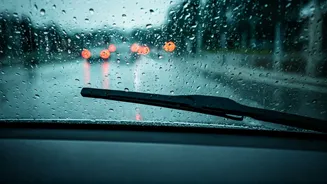

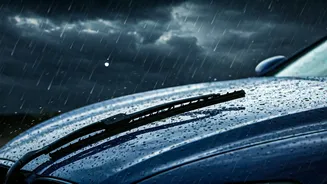


1. Wiper Blades: Your Window to the Road
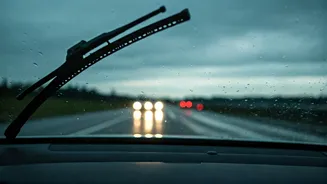
This is the most obvious, and often most neglected, safety feature for rainy weather. Your ability to see what’s ahead of you is paramount. Worn-out wiper blades don’t clear water; they smear it, creating a blurry, distorted view that’s especially dangerous
at night when facing oncoming headlights. **How to inspect:** Lift the blades off your windshield and run your finger along the rubber edge. If you feel nicks, cracks, or hardened, brittle spots, they need replacing. Look for signs of the rubber pulling away from the blade frame. When you use them, do they chatter, skip, or leave streaks? Those are all clear indicators that their time is up. Wiper blades are inexpensive and easy to replace yourself, with most auto parts stores helping you find the right size and even installing them for free. Experts recommend replacing them every 6 to 12 months.
2. Tire Tread and Pressure: Your Grip on Reality
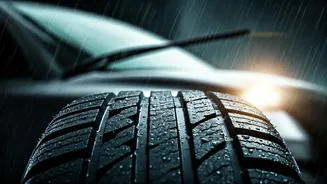
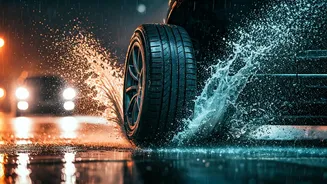
Your tires are your car's only connection to the road, and in the rain, that connection is fragile. The deep grooves in your tires are designed to channel water away, allowing the rubber to maintain contact with the asphalt. When those grooves are worn down, your tires couldn’t disperse water fast enough. The result is hydroplaning—where your car essentially floats on a thin layer of water, leading to a total loss of steering and braking control. **How to inspect:** Use the classic penny test. Insert a penny into your tire's tread with Lincoln's head upside down and facing you. If you can see all of Honest Abe’s head, your tread is worn below the safe limit of 2/32 of an inch, and it's time for new tires. Also, check your tire pressure. Underinflated tires can worsen hydroplaning risk and affect handling. Find the recommended PSI on the sticker inside your driver's side doorjamb (not on the tire itself) and check it with a simple pressure gauge.
3. Lights: See and, Crucially, Be Seen
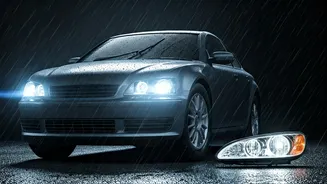
In a heavy downpour, visibility drops dramatically for everyone. Your headlights, taillights, and brake lights are not just for you to see the road, but for other drivers to see you. A burned-out bulb that seems like a minor annoyance in clear weather can make your vehicle nearly invisible from the back or side in a storm, dramatically increasing the risk of a collision. **How to inspect:** This is a simple walk-around check you can do in a minute. With your car on, turn on your headlights (both low and high beams), and walk to the front to ensure both are working. Then, have a friend stand behind the car while you press the brake pedal to confirm all three brake lights (left, right, and center) illuminate. Don't forget your turn signals, front and back. Many states have laws requiring headlights to be on whenever wipers are in use, a good rule to follow everywhere.
4. The Defroster and HVAC System
The danger isn’t always outside the car. When it's raining and cool, humidity builds up inside your vehicle, causing the windows to fog up almost instantly. This can blind you just as effectively as a muddy windshield. Your car’s heating, ventilation, and air conditioning (HVAC) system is your primary tool for combating this. The defroster directs dry air (using the A/C compressor, even with the heat on) onto the windshield to clear condensation rapidly. **How to inspect:** Turn on your front and rear defrosters to make sure they're working properly. Can you feel air blowing forcefully onto the windshield? Does the rear defroster’s grid heat up to clear moisture? If the fan is weak or doesn't work, you could have a blower motor issue. If the air isn't clearing fog effectively, your A/C system might need servicing.
5. Brakes: Your Ultimate Safety Net
Wet roads significantly increase your car's stopping distance—sometimes by two to three times that of dry pavement. This means your brakes need to be in top condition to provide the stopping power you need, when you need it. Worn brake pads or low brake fluid can be the difference between a safe stop and a serious accident. **How to inspect:** While a full brake inspection is best left to a professional, you can be alert for warning signs. Listen for high-pitched squealing, scraping, or grinding sounds when you apply the brakes. Does the pedal feel spongy or go too far to the floor? Does the car pull to one side when you brake? These are all signs that your brake system needs immediate attention from a qualified mechanic.