




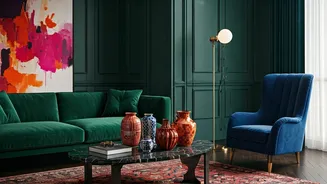
Why Big Art Makes a Big Statement
For years, the dominant trend in wall decor was the gallery wall—a carefully curated chaos of small frames, mirrors, and objects. It was personal, sure, but also busy. The shift toward oversized art is a reaction to that visual noise. A single, large-scale
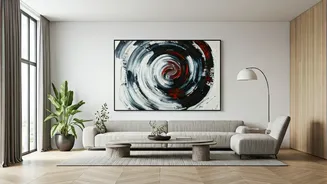
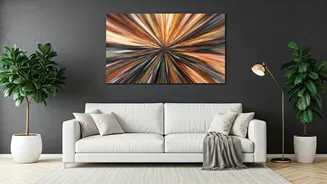
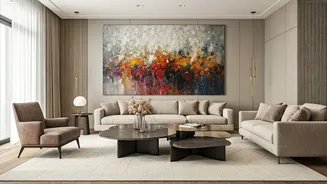
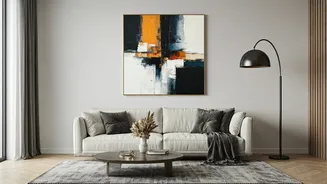
piece commands attention without shouting. It creates an immediate focal point, anchoring a room and making it feel more intentional and cohesive. This isn't about filling a wall; it's about defining a space. The 'flex' isn't about the price tag of the art itself, but the confidence it takes to dedicate so much visual real estate to one statement. It says, 'I know my style, and I'm not afraid to go bold.' In a world of digital clutter and endless choice, this kind of simplicity feels both luxurious and decisive.
The Psychology of Scale
There's a fascinating psychological effect at play with large-scale art. While it might seem counterintuitive, a massive piece can actually make a small room feel bigger. By drawing the eye and covering a significant portion of a wall, it minimizes the perception of cramped boundaries. The art becomes a window into another world, adding depth and dimension. In a larger room, an oversized piece provides balance and prevents furniture from looking like it's floating in an empty void. It brings human scale to cavernous spaces with high ceilings. More than just decoration, it's a tool for manipulating perception and crafting the mood of a room, whether you're aiming for serene tranquility with a vast landscape or dynamic energy with a bold abstract.
How to Choose Your Centerpiece
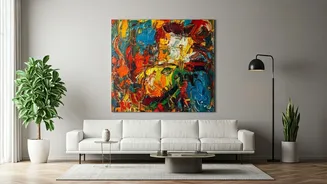
The key to nailing the oversized art trend is choosing a piece that truly resonates with you. This isn't the time to pick something generic just to fill a space. Think about the feeling you want to evoke. Do you want calm and collected? Look for large abstract paintings with a minimalist color palette or massive-scale black-and-white photography. Want something more energetic and conversation-starting? A vibrant, colorful canvas or a dramatic piece of fiber art or a tapestry can bring texture and warmth. Don't be afraid of subject matter. A portrait, a landscape, or even a graphic print can work, as long as its scale is impressive. The rule of thumb: if it doesn't make you feel something, it's not the right piece for a starring role on your wall.
Getting Placement and Proportion Right
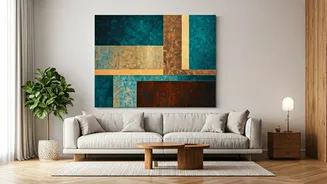
Hanging a huge piece of art can be intimidating, but a few simple guidelines make it easy. The goal is balance, not perfect symmetry. A common mistake is hanging art too high. The center of the piece should be at about eye level, which is typically 57-60 inches from the floor. When placing art over a sofa or a console table, leave about 6-10 inches of breathing room between the bottom of the frame and the top of the furniture. As for size, the art should ideally be about two-thirds the width of the furniture it's hanging above. For a blank wall, let the art fill the space confidently, leaving a generous border of negative space around it to let it breathe. Measure twice, and don't be afraid to use painter's tape to outline the dimensions on the wall before you start drilling holes.
Where to Find Affordable Large Art
The biggest myth about oversized art is that it has to be prohibitively expensive. While original gallery pieces can cost a fortune, there are countless ways to get the look for less. Online marketplaces like Etsy and Society6 are treasure troves of large-scale prints from independent artists. You can often buy the digital file and have it printed locally at a print shop for a fraction of the cost. Look for vintage textiles, quilts, or even beautiful rugs that can be hung as tapestries. Another pro-tip: create your own. Buy the largest canvas you can find and create a simple, modern abstract piece using just a few colors. The focus is on the scale and impact, not on technical perfection. This is your flex, and you get to define what it looks like.