








The Hyper-Personalized Resume
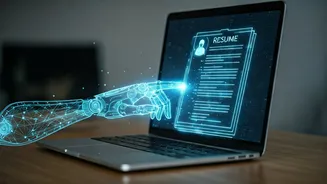
Forget the one-size-fits-all resume. Today’s students are using AI to transform their applications from a generic summary into a targeted weapon. They feed a job description into a tool like ChatGPT and ask it to optimize their existing resume for that
specific role. The AI acts like an expert recruiter, identifying crucial keywords and skills mentioned in the posting and suggesting ways to rephrase bullet points to align perfectly. Instead of saying they 'led a team project,' the AI might suggest they 'spearheaded a 5-person project, delivering a comprehensive market analysis that informed departmental strategy,' borrowing language directly from the job description. This isn't about inventing experience; it's about framing it in the exact language a company's applicant tracking system (ATS) is programmed to find. The result is a resume that doesn't just list qualifications but speaks directly to a hiring manager's needs.
Cover Letters Without the Agony
The cover letter has long been the most dreaded part of any job application—a high-stakes exercise in sounding professional, passionate, and unique, all at once. AI is now serving as the ultimate cure for writer's block. Students are providing AI platforms with their resume, the job description, and a few personal anecdotes, then asking for a first draft. This initial output, while often a bit generic, provides a solid structure and saves hours of staring at a blinking cursor. The smart student doesn't just copy and paste. They use the AI-generated draft as a starting point, injecting their own voice, specific stories, and genuine enthusiasm. The 'edge' comes from speed and confidence; by outsourcing the boring parts, they can focus their energy on the personalization that actually makes a difference.
A 24/7 Interview Coach
University career centers offer mock interviews, but they aren't available at 2 a.m. the night before a big meeting. AI is filling that gap, acting as a tireless, on-demand interview coach. Students can practice answering common questions like 'Tell me about a time you faced a challenge' or 'What is your biggest weakness?' and receive instant feedback. Some platforms analyze tone of voice, use of filler words like 'um' and 'like,' and even body language through a webcam. By running through dozens of simulated interviews, students can walk into the real thing with polished answers and reduced anxiety. It’s a form of digital muscle memory, building the confidence needed to make a strong impression when it actually counts.
Beyond the Application: Finding the Gaps
Perhaps the most sophisticated use of AI is not for the application itself, but for long-term career planning. Students are feeding AI their 'dream job' descriptions—say, a Product Manager at a top tech company—and asking it to analyze their current resume to identify skill gaps. The AI can then act as a guidance counselor, recommending specific online courses, certifications, or types of projects that would make them a stronger candidate in the future. For example, it might notice a student's resume is heavy on marketing but light on data analysis, a key skill for the target role. It could then suggest specific SQL or Python courses on platforms like Coursera or edX. This transforms AI from a simple application tool into a strategic partner for career development.
The Recruiter's Reality Check
While students embrace these tools, recruiters are quickly learning to spot the difference between AI-assisted and AI-dependent. An application that is too perfect, too generic, or filled with buzzwords without substance is an immediate red flag. Hiring managers are still looking for authenticity and personality. They can tell when a cover letter lacks a human touch or when an interview answer sounds rehearsed and impersonal. The consensus among employers is clear: AI is a fantastic tool for preparation and efficiency. But the 'career edge' disappears the moment it replaces genuine thought, personal experience, and a candidate's unique voice. The students who truly get ahead are the ones who use AI as a co-pilot, not an autopilot.