
Start with the Right Canvas
Before the food even comes into play, consider the plate. Most restaurant chefs prefer classic white plates for a reason: they make colors pop and act as a neutral backdrop, ensuring the food is the star. While you don’t need to replace your entire dish
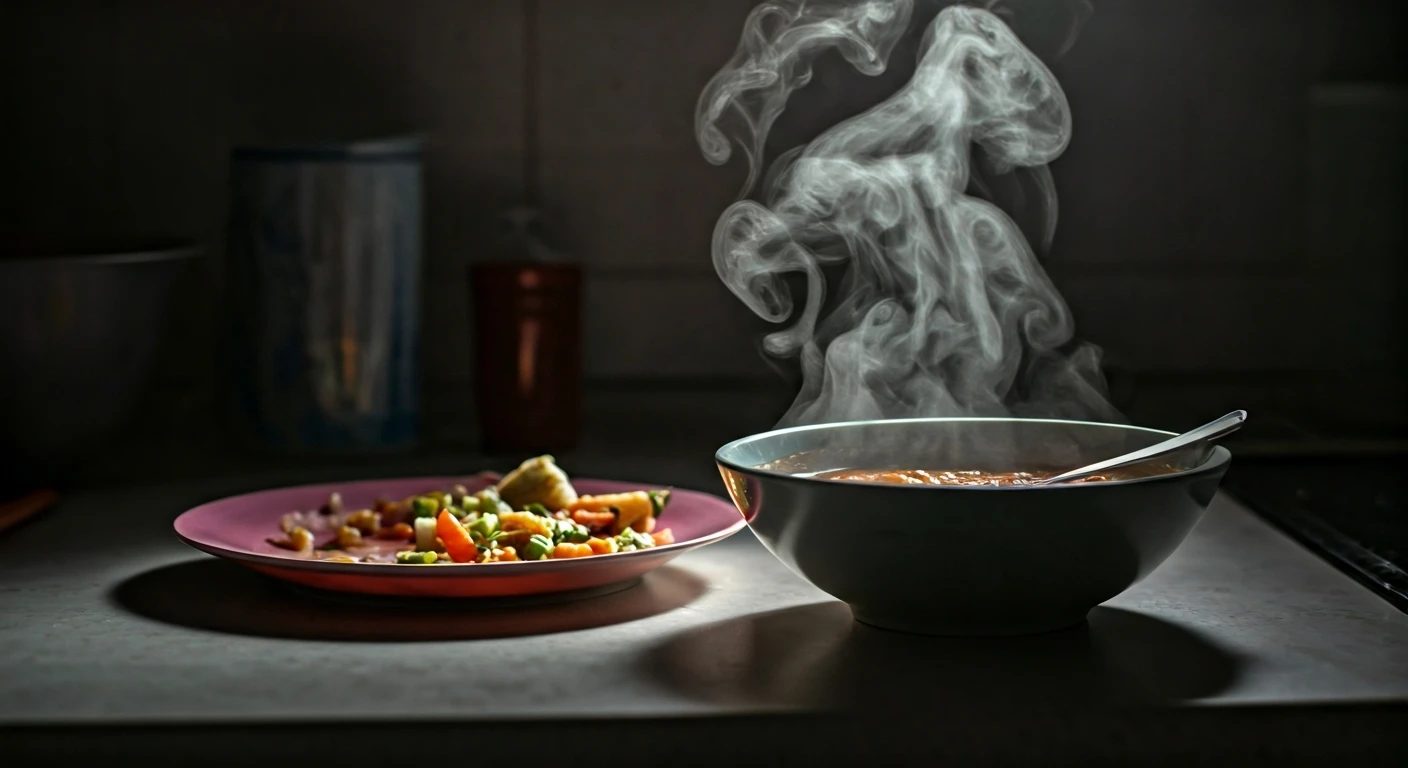
collection, think about what a particular plate communicates. A large plate with a wide rim instantly creates a sense of importance and makes a smaller portion look intentional and elegant. A rustic, stoneware bowl can make a simple soup feel hearty and comforting. The goal is to create contrast. A vibrant curry or a colorful salad will look incredible on a clean white or dark charcoal plate, while a pale dish like fish with a cream sauce might get lost on a white plate but stand out on a darker one. Switching from your everyday, pattern-heavy dishes to a simple, solid-colored plate is the single easiest step to a more premium feel.
Embrace Negative Space
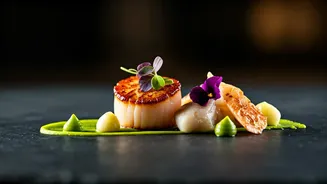
One of the biggest differences between home cooking and restaurant plating is the use of space. At home, we tend to fill the plate to the brim. In a professional kitchen, empty space—or “negative space”—is a crucial design element. It gives the eye a place to rest and draws focus to the components of the dish. Instead of piling everything in the center, try placing your main protein slightly off-center. Arrange vegetables next to it, not on top of it, leaving a clean border around the edge of the plate. This simple act of de-cluttering your plate immediately signals care and intention. It tells the diner that every element has been thoughtfully placed, transforming a simple serving of food into a composed dish.
Build Height, Not Width
Our eyes are naturally drawn to height. A flat landscape of food can look boring and unappetizing, even if it tastes great. Instead of spreading things out, think about building them up. You can achieve this easily. For pasta, use a pair of tongs or a carving fork to twirl the noodles into a neat nest in the center of the plate, rather than letting them spread out. When serving a pile of greens, try to mound them high instead of letting them lie flat. If you have a piece of protein like a chicken breast or fish fillet, consider placing it on top of a bed of grains or mashed potatoes rather than beside it. This creates dimension and visual interest, making the dish look more substantial and professionally assembled.
Garnish with Purpose
The sad sprig of parsley on the side of a diner plate gave garnishes a bad name, but when used correctly, they are transformative. A good garnish should do more than just add color; it should add flavor, texture, or an aroma that complements the dish. Forget the decorative-only mindset. On a creamy soup, a drizzle of high-quality olive oil, a sprinkle of toasted seeds, or a few fresh herbs adds a finishing touch that elevates the entire experience. A scattering of fresh chives over scrambled eggs, a lemon wedge next to a piece of fish, or some flaky sea salt on a steak are all functional garnishes. They provide a final pop of flavor and a visual cue about what’s in the dish, making the food feel complete and considered.
Sauce Like an Artist
How you apply sauce can completely change the perception of a dish. Instead of ladling gravy or sauce over everything and hiding the beautiful components beneath, use it more strategically. You can pool the sauce on the plate first and then place the main item on top, allowing it to peek out from underneath. This technique works wonderfully for proteins with a crispy skin you want to protect. Alternatively, you can use a squeeze bottle (a cheap and invaluable kitchen tool) to create elegant dots or lines. Even a simple drizzle from a spoon, done with a confident flick of the wrist, can create a dynamic, appealing pattern that’s far more interesting than a static pool. This small change makes the dish look active and deliberate.