

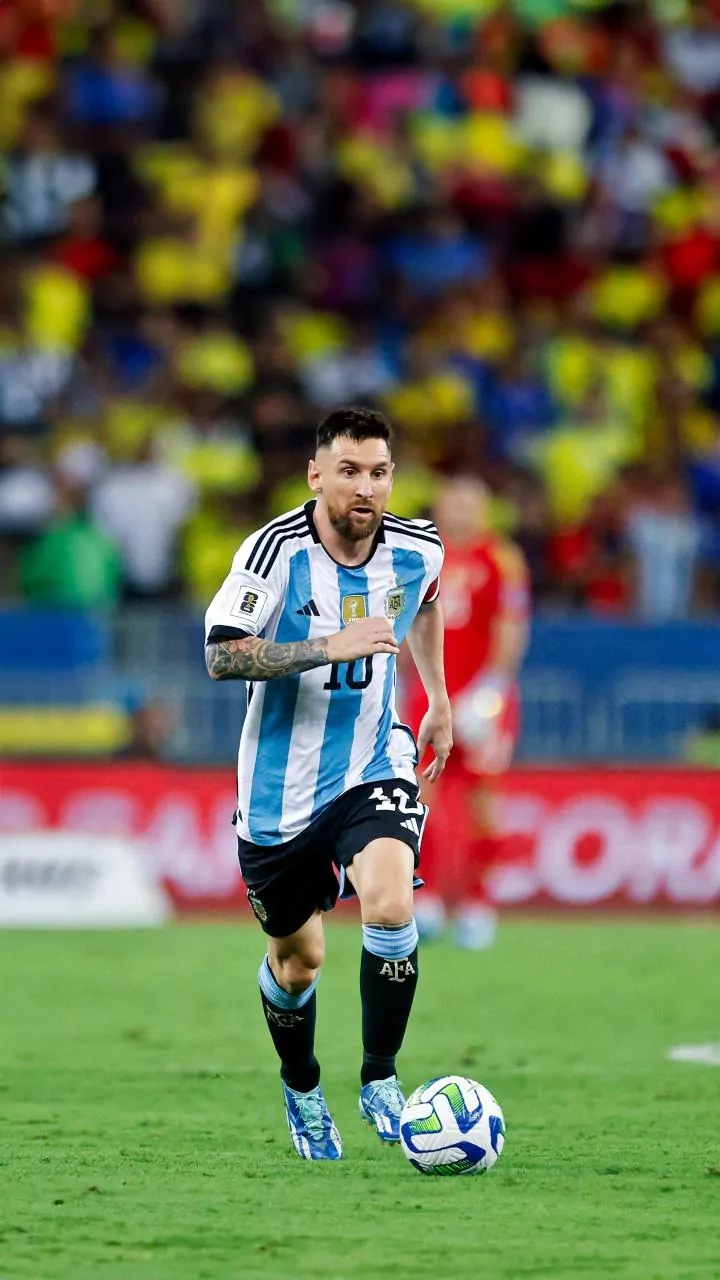


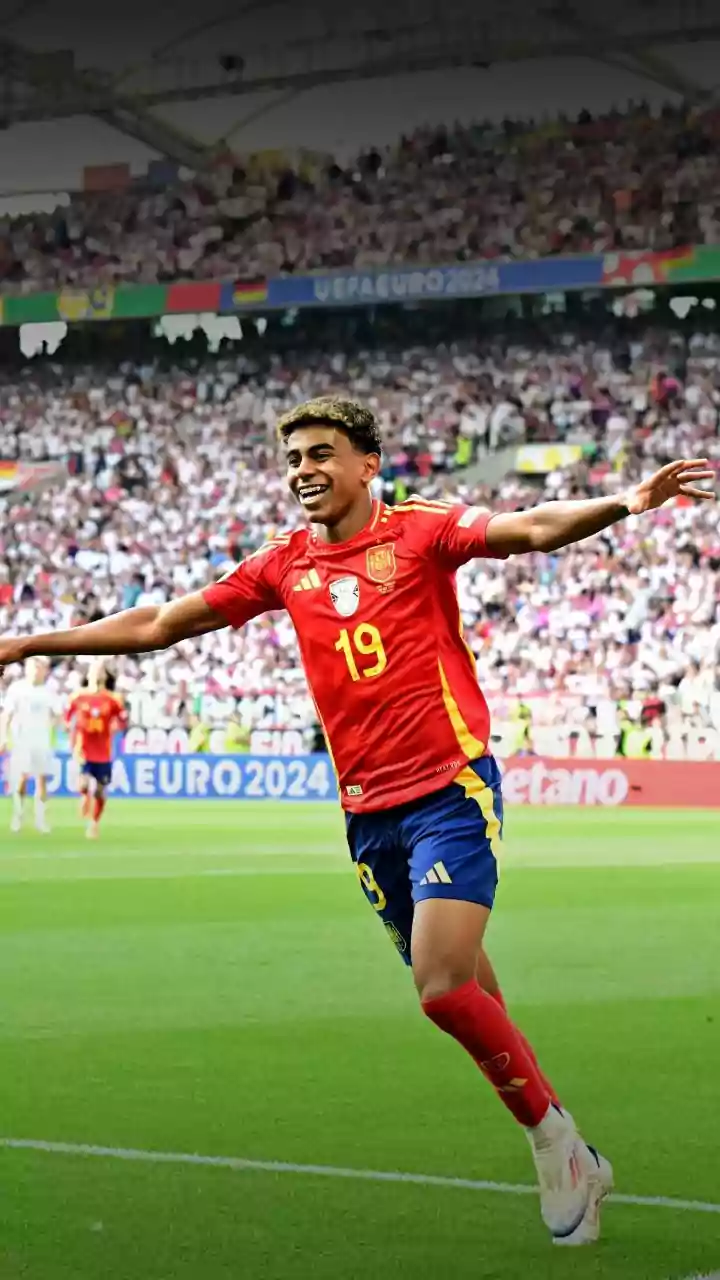




1. Maradona's Divine & Diabolical Goals (1986)
You can’t talk about World Cup history without talking about Diego Maradona’s performance against England in the 1986 quarterfinals. It contained, in the span of four minutes, the two most famous goals ever scored. First came the “Hand of God.” As the ball
looped into the English penalty area, the 5’5” Maradona out-jumped 6’1” goalkeeper Peter Shilton, punching the ball into the net. The referee, unsighted, awarded the goal. It was an act of audacious, unsporting genius. But what came next was pure, undisputed brilliance. Picking up the ball in his own half, Maradona slalomed through half the English team, a whirlwind of impossible balance and control, before rounding Shilton to score the “Goal of the Century.” The two goals perfectly captured the man himself: the cunning rogue and the sublime artist, forever linked in a single, unforgettable match that sent Argentina on its way to winning the trophy.
2. Zidane's Headbutt Heard 'Round the World (2006)
It was supposed to be a fairytale ending. Zinedine Zidane, one of the greatest players of his generation, was playing his final professional match in the 2006 World Cup final. France and Italy were tied 1-1 in extra time, and Zidane had already scored a penalty. Then, in the 110th minute, came the moment no one saw coming. After a verbal exchange with Italian defender Marco Materazzi, Zidane turned, walked back, and violently headbutted Materazzi in the chest, sending him to the ground. The referee, after consulting his fourth official, showed Zidane a red card. The image of the French captain walking past the World Cup trophy in shame became an instant, tragic icon. Italy went on to win the final on penalties. The incident remains one of the most shocking and debated moments in sports, a stunning fall from grace on the grandest stage imaginable.
3. The USA's 'Miracle on Grass' (1950)
Long before the U.S. Women’s National Team became a global powerhouse, the men’s team pulled off one of the greatest upsets in all of sports. In 1950, a ragtag American team of part-timers—a mailman, a hearse driver, a teacher—faced the mighty English, the self-proclaimed “Kings of Football,” in Brazil. England was a 3-1 favorite to win the whole tournament; the U.S. was a 500-1 longshot. Yet, in Belo Horizonte, the impossible happened. A 37th-minute header from Haitian-born forward Joe Gaetjens was all it took. The U.S. team, anchored by a heroic performance from goalkeeper Frank Borghi, held on for a 1-0 victory. The result was so unbelievable that some newspapers in England assumed the telegraphed score was a typo and printed it as a 10-1 England win. For decades, it was a forgotten footnote, but the “Miracle on Grass” stands as a foundational myth for American soccer.
4. Brazil's 7-1 Humiliation on Home Soil (2014)
A national trauma played out in real time. Brazil, the host nation, was expected to lift the 2014 World Cup trophy. The country ground to a halt for the semifinal against Germany, a sea of yellow, green, and blue ready to celebrate. But what unfolded was a nightmare. Missing their injured superstar Neymar and their suspended captain Thiago Silva, the Brazilian team completely collapsed. Germany scored. Then scored again. And again. And again. By the 29th minute, it was 5-0. The final score was a staggering 7-1, Brazil’s worst-ever defeat and their first competitive loss at home in 39 years. The cameras panned to Brazilian fans in the stands, weeping uncontrollably. The game, dubbed the “Mineirazo,” wasn’t just a loss; it was the brutal, public dismantling of a footballing identity, a humiliation so profound it still echoes in the sport today.
5. A 17-Year-Old Pelé Conquers the World (1958)
Before he was a global icon known by a single name, Edson Arantes do Nascimento was a skinny 17-year-old kid making his World Cup debut. Pelé arrived at the 1958 tournament in Sweden as an unknown quantity. He left as a legend. His breakout moment came in the final against the host nation. With the world watching, Pelé announced his genius. He scored two goals, the first of which was a masterpiece: he controlled a high pass on his chest, audaciously flicked it over a defender’s head, and volleyed it into the net. After scoring a second with a looping header in the final minute, the teenager burst into tears on the shoulder of his teammate Didi. It was a raw, beautiful image of youthful exuberance and the birth of soccer’s first global superstar. Brazil had its first World Cup, and the world had its king.