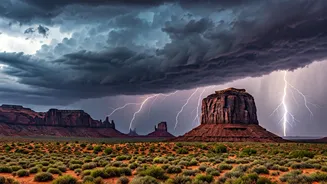






Tucson, Arizona: The Monsoon Epicenter
If there’s one city that embraces the monsoon, it’s Tucson. From late June through September, locals eagerly await the afternoon buildup of colossal clouds that roll in over the surrounding mountain ranges. The experience is a full sensory immersion:
the sudden drop in temperature, the wind whipping through saguaro cacti, and the unmistakable, earthy scent of rain hitting dry creosote bushes—a smell so beloved it’s often called the “smell of the desert.” For the perfect viewing spot, head to Gates Pass overlook just before sunset. You can watch storms move across the valley, backlit by a spectacular, fiery sky. Saguaro National Park also offers incredible vistas, but be sure to check trail conditions, as washes can flood quickly. The city's many patios and restaurants with large windows offer a comfortable alternative for watching the light show with a craft beer in hand.
Sedona, Arizona: Red Rocks Meet Stormy Skies
Sedona's iconic red rock formations are stunning on a clear day, but they become otherworldly during monsoon season. The contrast between the deep ochre of the sandstone and the bruised purple-grey of an approaching storm cloud is a photographer’s dream. The storms here are often fast and intense, followed by brilliant sunshine that makes the wet rocks gleam. A drive up Oak Creek Canyon can be beautiful, but extreme caution is advised due to rockfall and flash flood risks. A safer bet is to find a high viewpoint like Airport Mesa Overlook. From here, you can safely watch multiple storm cells develop and dissipate across the vast landscape. The bolts of lightning that frequently connect the clouds to famous formations like Cathedral Rock or Bell Rock create a truly primal and unforgettable spectacle.
Santa Fe, New Mexico: High-Desert Drama
At 7,200 feet, Santa Fe offers a different kind of monsoon experience. The high-altitude setting means the air is crisper and the storms feel closer, more intimate. Afternoons are typically punctuated by short, powerful downpours that wash the adobe buildings clean and leave the air feeling refreshed. The city’s unique architecture and historic plaza take on a new character under stormy skies. After a brief shower, rainbows frequently arc over the Sangre de Cristo Mountains, providing a picture-perfect moment. The monsoon season also coincides with a vibrant cultural calendar, including the Santa Fe Opera and numerous art markets. An afternoon thunderstorm provides the perfect excuse to duck into one of the dozens of world-class galleries on Canyon Road or explore the rich history at the New Mexico Museum of Art.
Chiricahua National Monument: A Volcanic Wonderland
For a more rugged and remote adventure, head to the Chiricahua Mountains in southeastern Arizona. This “sky island”—a mountain range isolated by surrounding desert plains—creates its own weather patterns, making it a hotspot for monsoon activity. The monument is a breathtaking landscape of ancient volcanic rock spires, known as hoodoos. During the monsoon, waterfalls cascade down these rock formations, and the canyons echo with the rumble of distant thunder. Hiking here requires careful planning. The key is to start early in the morning and be off the trails by early afternoon when storms typically build. The Echo Canyon Loop is a popular choice, offering incredible views of the rock pinnacles against a backdrop of dramatic clouds. It’s a powerful reminder of nature's ability to sculpt and reshape the land.
Safety First: How to Chase Storms Responsibly
The monsoon is beautiful, but it demands respect. Flash floods are the number one danger. Never drive through a flooded roadway—a mere six inches of moving water can knock you off your feet, and a foot can sweep a vehicle away. In the desert, these floods occur in dry riverbeds known as washes or arroyos, which can fill with a wall of water with little warning. Heed all posted warnings and road closures. Second, lightning is a serious threat. The rule of thumb is: "When thunder roars, go indoors." If you’re caught outside, avoid high ground, open spaces, and isolated trees. Wait at least 30 minutes after the last clap of thunder before resuming activities. Always check the daily forecast from the National Weather Service before heading out, especially if you plan on hiking.