






1. Check Your Tires for Tread and Pressure
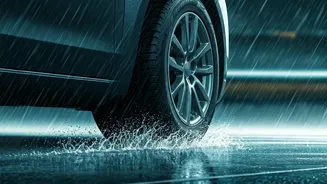
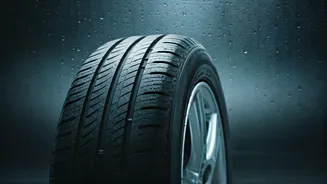
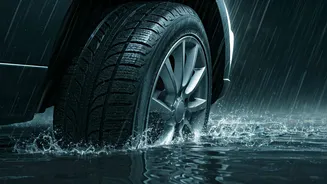
Your tires are your car’s only connection to the road, and on wet pavement, their condition is critical. Before the first major storm, inspect your tire tread. The classic trick works: insert a penny into the tread with Lincoln's head upside down. If
you can see the top of his head, your treads are worn and it’s time for new tires. Insufficient tread depth dramatically increases the risk of hydroplaning. Equally important is tire pressure. Under-inflated tires can overheat and don't handle properly, while over-inflated tires have a smaller contact patch with the road. Check your pressure when the tires are cold (before driving) and inflate them to the manufacturer's recommendation, found on a sticker inside the driver’s door jamb.
2. Replace Your Windshield Wipers
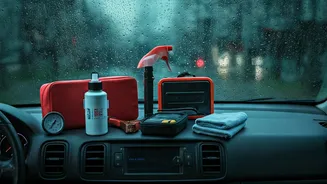
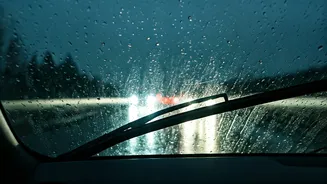
If you can't see, you can't drive safely. Windshield wipers are often neglected until they're desperately needed. Over the summer, sun and heat can cause the rubber to crack and harden. If your wipers are smearing water, skipping across the glass, or leaving streaks, they are no longer effective. Replacing them is one of the cheapest and easiest pieces of pre-season maintenance you can perform. Most can be swapped out in minutes without any tools. Don't forget to check your rear wiper if you have one, and top off your windshield washer fluid with a solution designed to repel rain if possible.
3. Test All Your Exterior Lights
In a downpour, being seen is just as important as seeing. Walk around your car and check that all your lights are functioning correctly: headlights (both low and high beams), taillights, brake lights, and turn signals. In many states, it's legally required to have your headlights on whenever your wipers are in use. Functioning lights ensure that other drivers can see you through the spray and gloom, especially during daytime storms when visibility is poor. A burned-out bulb is a simple fix that significantly enhances your safety profile on the road.
4. Know the Signs of Hydroplaning
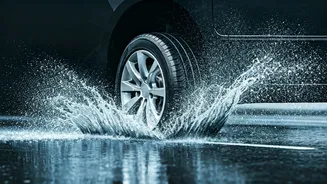
Hydroplaning occurs when a layer of water builds up between your tires and the road surface, leading to a loss of traction and control. It can happen at speeds as low as 35 mph with worn tires. The key to surviving it is to know what to do—and what not to do. If you feel the car begin to hydroplane (a light, disconnected feeling in the steering wheel), do not slam on the brakes or jerk the wheel. Instead, ease your foot off the accelerator and steer gently in the direction you want the car to go. As the car slows, the tires should regain contact with the pavement, restoring your control.
5. Adjust Your Driving Mindset
The most important safety feature in any car is a careful driver. Driving in the rain requires a fundamental shift in behavior. First and foremost, slow down. Posted speed limits are for ideal, dry conditions. Reducing your speed gives you more time to react and increases your tires' ability to grip the road. Second, double your following distance. It takes longer to stop on wet pavement. A three-second rule in the dry should become a six-second rule in the wet. Finally, avoid using cruise control. If you hydroplane while cruise control is engaged, the system may try to accelerate, making a bad situation worse. Stay alert, minimize distractions, and be prepared for the unexpected.
6. Refresh Your Knowledge of Brakes
Wet roads mean longer stopping distances. Be aware of how your brakes feel and respond. If your car has an Anti-lock Braking System (ABS), you should press the brake pedal firmly and steadily in an emergency stop; do not pump the brakes. The system will do that for you, and you'll likely feel a pulsing sensation in the pedal, which is normal. If you have an older car without ABS, you may need to pump the brakes gently to avoid locking the wheels and skidding. The first rainfall after a dry spell is often the most dangerous, as oil and debris on the road mix with water to create an exceptionally slick surface. Be extra cautious during these initial storms.