
Anatomy of a Memory
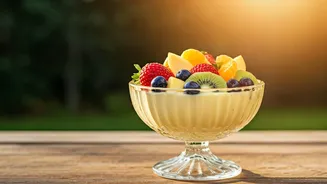
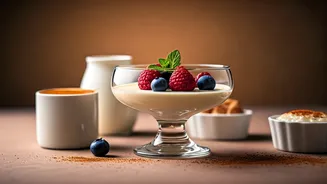
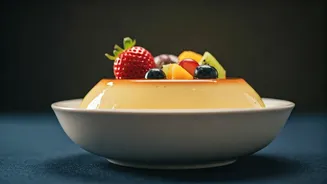
Before we talk about why it feels like a memory, let’s talk about what it is: a study in glorious simplicity. At its heart, fruit custard is nothing more than a creamy, wobbly, vanilla-scented custard, often made from a simple powder mix like Bird's,
which is a legend in its own right. This custard is chilled until it’s just firm enough to hold a spoon, providing a cool, soothing canvas. Then comes the fruit. It’s not a single, curated fruit, but a technicolor medley. Bright red pomegranate seeds, sweet chunks of banana, crisp apple cubes, juicy grapes, and slices of mango or whatever is in season. The textures are the point. You get the pillowy softness of the custard, the crisp pop of a grape, the slight crunch of an apple, and the soft give of a banana. It’s a party where everyone is invited and no single flavor or texture is meant to dominate. It’s harmonious chaos, served cold.
The Potluck and Party Staple
Fruit custard isn't a dessert you typically find on a restaurant menu next to a molten lava cake or a deconstructed tiramisu. Its natural habitat is the home. It’s the star of the potluck table, the reliable fixture at a family barbecue, and the comforting dish brought out during holidays and celebrations. In many South Asian and British households, fruit custard is synonymous with community and generosity. It’s made in a giant bowl, never in precious individual ramekins. It’s designed for sharing, for second helpings, for kids to sneak spoonfuls of when they think no one is looking. This context is key to its nostalgic power. The dessert is inextricably linked to moments of togetherness, laughter, and low-stakes celebration. It tastes like an afternoon spent with cousins or a lazy Sunday evening with family. It’s the flavor of being cared for.
America's Nostalgic Cousins
For many Americans who didn't grow up with it, the concept might seem a bit foreign—a pudding with fruit chunks? But the feeling it evokes has plenty of U.S. parallels. Think of the cultural space occupied by a good old-fashioned banana pudding with its Nilla Wafers slowly softening into the vanilla cream. Or consider the Midwestern potluck icon, the Ambrosia salad, with its mix of canned fruit, marshmallows, and coconut in a creamy dressing. Even a simple Jell-O salad, studded with fruit cocktail and topped with Cool Whip, taps into that same vein of unpretentious, crowd-pleasing, childhood-centric sweetness. These aren't chef-driven creations; they are culinary folk art. They are dishes built on accessibility, affordability, and the pure, simple goal of making people happy. Fruit custard is a cousin to these dishes, all belonging to a family of foods that value comfort over complexity.
An Antidote to Complicated Food
We live in an era of hyper-curated food experiences. We photograph our meals, chase viral food trends, and debate the merits of sourdough starters. And that’s all fine. But there’s a quiet rebellion in a dessert as honest as fruit custard. It asks for nothing. It isn't trying to be photogenic for Instagram, though its colors are lovely. It isn’t hiding a surprise yuzu-infused foam inside. It is exactly what it appears to be: sweet, creamy, fruity, and cold. Its simplicity is its superpower. The joy it delivers is direct and uncomplicated, much like the joys of childhood itself. There are no hidden notes to detect, no complex techniques to admire. You just eat it, and you feel good. In a world that often feels overwhelmingly complex, that straightforward pleasure is a rare and beautiful thing.