

The Legend of the Valley
In the Garhwal region of the Indian Himalayas lies a place steeped in myth and spectacular beauty: the Valley of Flowers National Park. A UNESCO World Heritage Site, this alpine meadow is no ordinary hiking destination. For about nine months of the year,
it lies dormant, buried under a thick blanket of snow. But as the summer monsoon rolls in around late June, the valley undergoes a miraculous transformation. The melting snow and persistent rain awaken a subterranean garden, giving rise to an explosion of over 500 species of wildflowers. This brief, vibrant period, typically from July to early September, is the “bloom-splashed window” that has become a holy grail for botanists, photographers, and adventure trekkers. Hindu mythology claims it’s the place from which the deity Hanuman collected a magical herb to save a life, and local legend long held that it was inhabited by fairies, a belief that kept it pristine and largely unexplored for centuries.
The Journey is the Destination
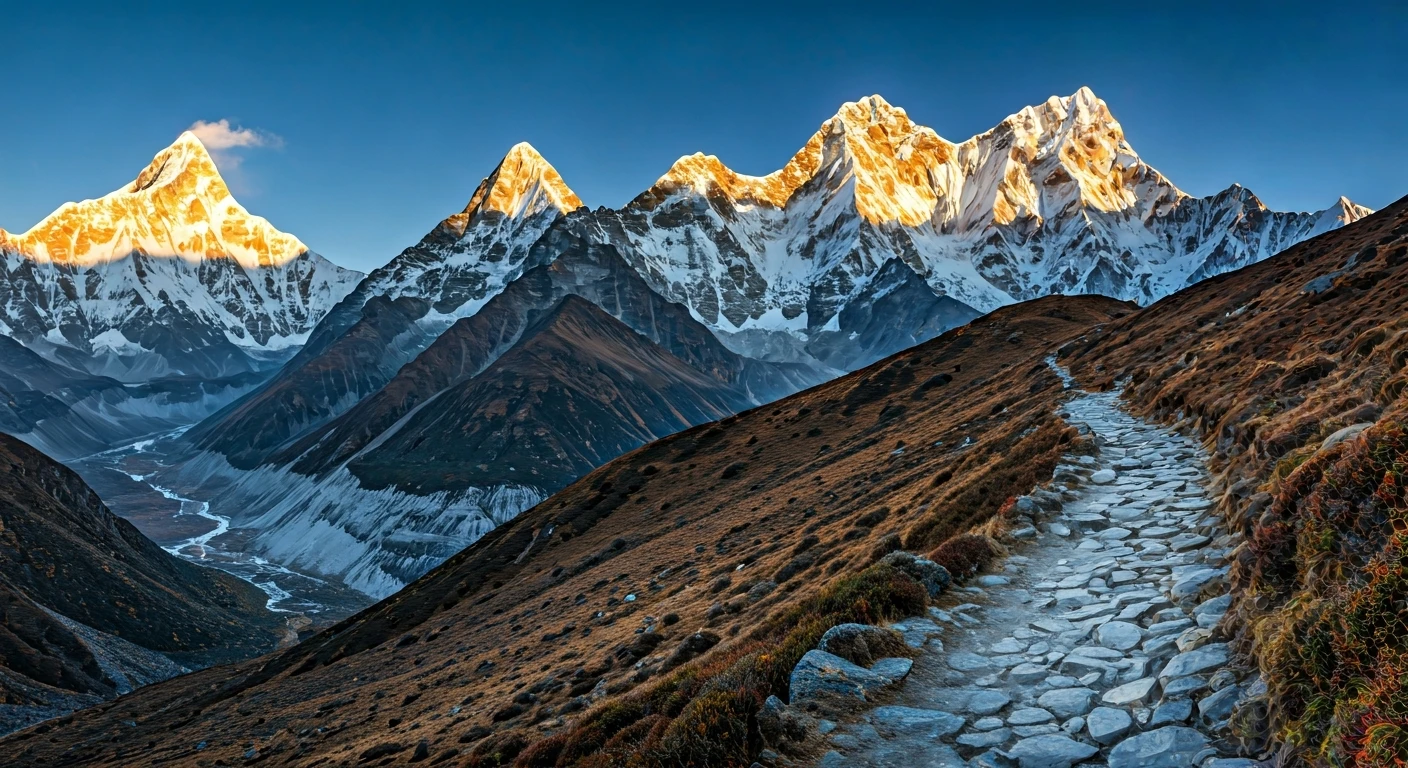
Reaching this floral paradise is an adventure in itself. The trek is a multi-day commitment that tests your endurance while rewarding you with staggering mountain scenery. The journey typically begins in the dusty town of Govindghat. From there, it’s a strenuous uphill trek of about 8 miles to the small base village of Ghangaria. This path, shared by pilgrims heading to the Sikh shrine of Hemkund Sahib, follows the roaring Pushpawati River and offers constant, humbling views of the surrounding peaks. Ghangaria is the last outpost of civilization, a cluster of guesthouses and small restaurants catering to weary travelers. It serves as the critical acclimatization point before the final push. The air is thin, the weather is fickle, and the trail can be challenging, but this pilgrimage-like effort is precisely what makes the final reveal of the valley so profoundly impactful. It’s a journey that strips away the non-essential, focusing your mind and body on the elemental goal ahead.
A Carpet of Alpine Color
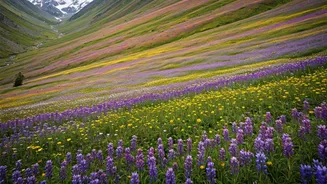
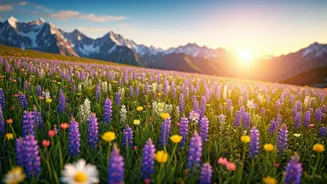
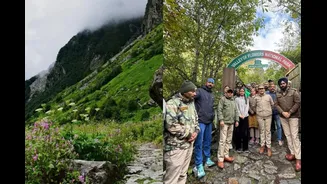
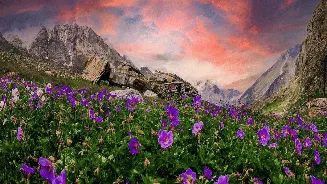
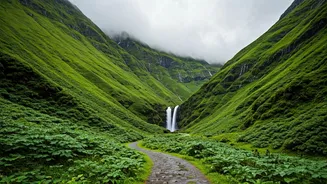
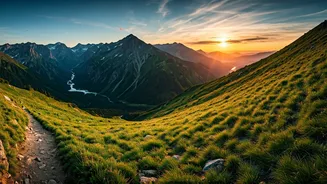
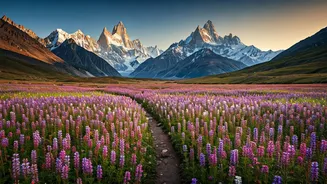
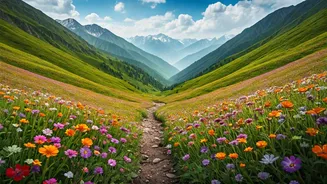
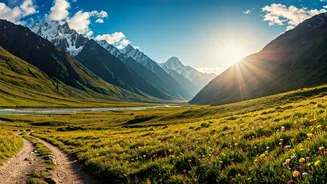
After a night in Ghangaria, a further two-mile hike brings you to the official entrance of the Valley of Flowers. The moment you step past the checkpoint, the landscape changes. The rugged trail softens into a gentle path that winds through an impossibly vibrant meadow. A riot of blue poppies, pink potentillas, yellow marsh marigolds, and scarlet geraniums blankets the valley floor. The air is thick with the scent of blossoms and damp earth. You’ll see the otherworldly Brahma Kamal, the state flower of Uttarakhand, which blooms only at high altitudes, and perhaps the elusive Cobra Lily. Glaciers cling to the mountainsides above, and waterfalls cascade down sheer rock faces, feeding the streams that meander through the flowers. It’s an immersive, sensory overload. Unlike a manicured garden, this is nature at its most raw and untamed, a sprawling canvas of life that exists for only a moment in time.
Planning for Paradise
Experiencing this natural wonder requires careful planning. The window is tight: the park is generally open from June 1 to October 31, but the peak bloom is from mid-July to mid-August. This is also peak monsoon season, so waterproof gear is non-negotiable. Trekkers need to be prepared for rain, fog, and rapidly changing conditions. You must obtain a permit to enter the national park, which can be purchased at the trailhead. While you can trek independently, hiring a local guide is highly recommended. They not only ensure your safety but also enrich the experience by pointing out rare flowers and sharing local folklore. Accommodations in Ghangaria are basic, so book in advance. Most importantly, manage expectations. The valley's popularity means you won't have it to yourself. But the sheer scale of the landscape and the profound sense of peace it inspires are more than enough to share.