


Coneflower (Echinacea)
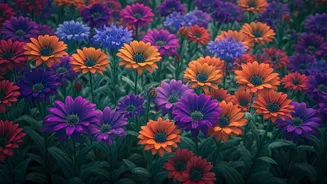
If summer had a signature flower, it might be the coneflower. This North American prairie native is built to withstand tough conditions. Its deep taproot helps it find water during dry spells, and its sturdy stems hold up daisy-like blooms in shades of
purple, pink, white, and orange right through the season’s peak heat. Coneflowers are not just tough; they're also a magnet for pollinators like bees and butterflies. Plant them in a spot with full sun and well-drained soil, and they will reward you for years with minimal fuss. Once established, they are impressively drought-tolerant, asking for little more than an occasional watering during the most extreme heat waves.
Black-Eyed Susan (Rudbeckia)
For a guaranteed burst of golden-yellow sunshine, look no further than the Black-Eyed Susan. These cheerful, prolific bloomers are practically synonymous with late-summer gardens. They are incredibly adaptable, thriving in average soil and tolerating both heat and periods of drought with ease. Rudbeckia species come in various heights, from compact border plants to towering background beauties, but they all share that iconic dark central cone and bright petals. They readily self-seed, meaning a small patch can evolve into a glorious drift over a few years, filling your garden with effortless color when other plants are starting to fade.
Sedum (Stonecrop)
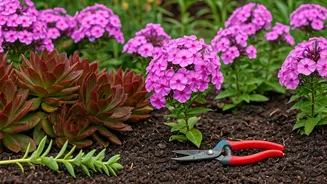
When the going gets hot and dry, sedums get going. As succulents, their fleshy leaves are designed to store water, making them one of the most drought-resistant choices for a garden. There are two main types: low-growing groundcovers that create a dense, textured mat, and upright varieties like the popular 'Autumn Joy' that form handsome clumps. Upright sedums are particularly valuable for providing four-season interest. They emerge with neat foliage in spring, develop broccoli-like flower heads in summer that bloom into dusty pink or red in the fall, and provide structure in the winter garden. They demand almost nothing but sun and soil that doesn't stay soggy.
Yarrow (Achillea)
Don’t let its delicate, fern-like foliage fool you—yarrow is one of the toughest perennials you can plant. It thrives in hot, sunny locations and shrugs off poor soil and drought. In fact, it often performs poorly in overly rich or wet soil, making it a perfect candidate for those challenging spots in the yard. Its distinctive flat-topped flower clusters come in a spectrum of colors, from traditional white and yellow to cultivated shades of pink, red, and terracotta. These flowers are not only long-lasting in the garden but also excellent for cutting and drying. Yarrow is a true low-maintenance workhorse that provides texture and color with minimal input.
Russian Sage (Perovskia atriplicifolia)
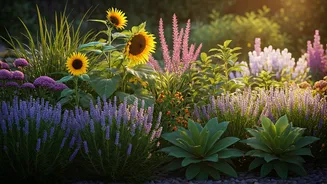
For a cooling splash of silvery foliage and airy lavender-blue flowers, Russian Sage is an unbeatable summer performer. It has a shrub-like presence but is technically a perennial, creating a beautiful haze of color from mid-summer until fall. This plant adores full sun and heat, and once established, it is exceptionally drought-tolerant. Its aromatic leaves also make it resistant to deer and rabbits, a major bonus for many gardeners. The fine texture and upright form of Russian Sage make it a perfect companion for bolder plants like coneflowers and sedums, adding a touch of grace and movement to any sun-drenched border.
Daylily (Hemerocallis)
Often called “the perfect perennial,” the daylily earns its reputation by being beautiful, adaptable, and incredibly forgiving. While individual flowers last only a day, a mature plant produces a succession of blooms for weeks on end. Modern hybrids have extended this bloom time significantly. Daylilies tolerate a wide range of soil conditions, handle summer heat and humidity with grace, and are rarely bothered by pests or diseases. They come in a staggering array of colors, sizes, and forms, from petite miniatures to towering giants. Plant them in a sunny spot, give them a little water to get established, and prepare for a reliable show year after year.