



The Danger in a Dense Canopy
That period of explosive growth, when a plant’s foliage rapidly expands and becomes incredibly dense, is what many growers dream of. Whether you call it the “monsoon,” the “stretch,” or the flowering explosion, this phase looks like pure success. But
it creates a dangerous microclimate. Inside that thick canopy, humidity spikes as thousands of leaves release water vapor through transpiration. With nowhere to go, this moisture hangs in the air, creating a stagnant, tropical environment. While your plants might look like they’re thriving in a jungle, you’re inadvertently rolling out the welcome mat for the very pathogens that can wipe out an entire crop.
Humidity's Unholy Trinity
Without consistent air movement, stagnant humidity becomes a breeding ground for disaster. The three most common threats are directly linked to poor circulation. First is Powdery Mildew, a fungal disease that appears as white, flour-like spots on leaves, stunting growth and ruining the quality of your harvest. Second, and far more sinister, is Botrytis cinerea, or bud rot. This gray mold thrives in the dense, moist cores of developing flowers or fruits, turning them into a mushy, unusable mess from the inside out. By the time you see it, it’s often too late. Finally, stagnant air is an open invitation for pests like spider mites and fungus gnats, which prefer undisturbed environments where they can breed and feed without interruption. Good airflow disrupts their life cycles and makes your canopy a far less hospitable home.
Conduct a Simple Airflow Audit
Before you can fix a problem, you have to find it. Take a few minutes to observe your grow space. Don't just look; feel. Are there corners of your tent or greenhouse where the air feels completely still? These are your “dead zones.” A simple test is to watch the leaves. In a well-ventilated space, all the leaves on your plants should be trembling or rustling ever so slightly, from the top of the canopy to the bottom. If the top leaves are getting a hurricane-force blast while the lower ones are perfectly still, your circulation is inefficient. Your goal isn't to create a windstorm; it's to ensure a gentle, consistent exchange of air throughout the entire volume of the canopy, dislodging pockets of stale, humid air and replacing them with fresh, CO2-rich air.
Optimize Your Fan Strategy
Simply adding a fan isn't enough; placement is everything. Most growers need at least two types of fans. First are the oscillating circulation fans. Instead of pointing them directly at your plants, which can cause windburn, aim them at a wall or just over the top of the canopy. This creates a more gentle, indirect vortex of air. It’s also crucial to have one fan creating movement *below* the canopy to address the humid air that gets trapped under the foliage. Second is your exhaust fan system. This is your most powerful tool for controlling humidity. An appropriately sized inline exhaust fan, connected to a carbon filter if odor is a concern, should be running consistently to pull old, humid air out of the space, creating negative pressure that draws fresh, drier air in from your intake vents. This constant exchange is non-negotiable for a healthy environment.
Prune for Air, Not Just Light
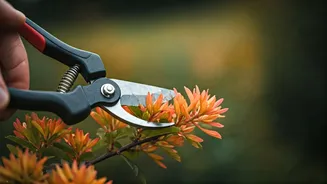
Your best fans will be useless if the air has nowhere to go. This is where strategic pruning, or defoliation, comes in. Many growers prune to expose lower bud sites to more light, but its role in promoting airflow is just as important. By selectively removing large, overlapping fan leaves, especially in the dense middle and lower sections of the plant, you create channels for air to move freely through the canopy. This technique, sometimes called “lollipopping” when focused on the lowest branches, prevents the formation of stagnant moisture pockets deep within the plant structure where bud rot loves to start. Think of it as creating highways for the air to travel, ensuring every part of your plant can breathe.