




A Fleeting Golden Age
Imagine walking down a street in Delhi or Mumbai in May. The air is thick, hot, and heavy with anticipation. But overhead, the canopy is on fire. Not with flames, but with flowers. The Amaltas, or Indian laburnum, hangs in brilliant, weeping clusters
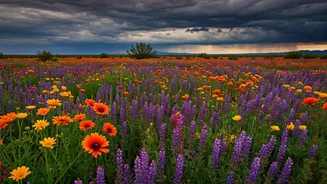
of canary yellow, earning it the name 'golden shower tree.' Elsewhere, the Gulmohar, or 'flame of the forest,' sets the horizon ablaze with its fiery scarlet-orange blossoms. These aren't subtle pastel blooms; they are a defiant, almost impossibly vibrant spectacle against the dusty, parched landscape. For a few weeks, these trees transform urban environments and wild spaces into something out of a painting—a final, glorious burst of color before the sky turns a uniform, heavy gray.
Nature's Final Flourish
This spectacular display is not a coincidence. It’s a brilliantly evolved survival strategy. For American observers accustomed to spring blossoms after winter rains, this pre-monsoon flowering can seem backwards. But in a monsoon climate, the logic is flipped. The long, dry season, stretching from winter through the scorching heat of early summer, puts immense stress on plant life. These flowering trees have adapted to make their move in the final, hottest weeks before the rains. By flowering and producing seed pods just before the monsoon, they ensure that when the downpour finally comes, their seeds will be dispersed and watered by the ensuing deluge, giving the next generation the best possible start in the moist soil. It is, in essence, a calculated gamble—a last, energy-intensive push for reproduction before the environment changes completely.
The Gathering Storm
The same conditions that trigger the blooms signal a more ominous shift. While the flowers provide visual relief, the pre-monsoon period is one of oppressive, suffocating heat. Temperatures regularly soar above 100°F (38°C), and humidity climbs daily, making the air feel like a wet blanket. The sky takes on a hazy, whitish tint. Locals know these signs intimately. The languid beauty of the blooming trees is juxtaposed with the growing tension on the ground. People start preparing. Street vendors cover their stalls with extra layers of plastic sheeting. Households check for leaky roofs. In coastal cities, fishermen secure their boats. The vibrant flowers are a calendar, a clock ticking down to the moment the 'chaos' in the headline arrives. They are both a celebration and a warning.
When the Rains Arrive
And then, it happens. The monsoon doesn't just start; it breaks. The first rains are often violent, accompanied by thunder, lightning, and gale-force winds that tear the last of the beautiful blossoms from their branches. What was a golden canopy just days before becomes a carpet of sodden petals on the ground. The relief from the heat is immediate and profound, a collective sigh rippling through tens of millions of people. But this relief comes at a cost. The 'chaos' is real. In cities like Mumbai, the deluge can overwhelm antiquated drainage systems within hours, turning roads into impassable rivers and flooding low-lying neighborhoods. In the Himalayan foothills and the Western Ghats, the same rains that give life can trigger devastating landslides. Transportation grinds to a halt. Power grids fail. For a period, life is dictated by the rhythm of the downpour. The rain is both a giver of life, essential for agriculture and refilling reservoirs, and a source of immense disruption and danger.