




The Land Where Clouds Come to Rest
First things first: you’re probably seeing its local name, Sohra, just as often. Located in the state of Meghalaya in Northeast India—whose name literally translates to “Abode of the Clouds”—Cherrapunji has a legendary reputation. For decades, it held
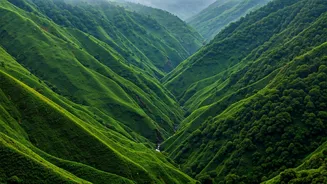
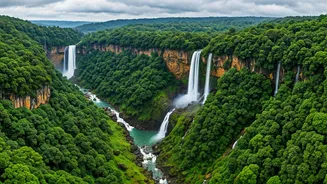
the title of the wettest place on Earth. While a neighboring village, Mawsynram, now often claims that record, the effect is the same: this region receives a staggering amount of rainfall, especially during the monsoon season (roughly June to September). But this isn't the dreary, gray drizzle of a Seattle winter. This is a dramatic, life-giving deluge that transforms the entire landscape into a hyper-saturated, emerald-green world. The rain feeds a complex network of rivers that carve through the Khasi Hills, ultimately plunging over cliffs in hundreds of spectacular waterfalls.
Why Your Camera Loves It Here
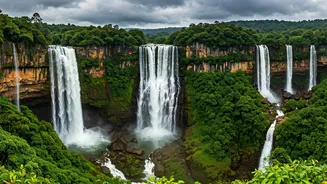
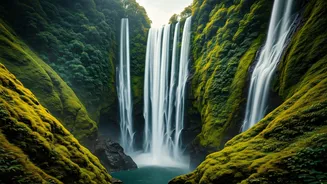
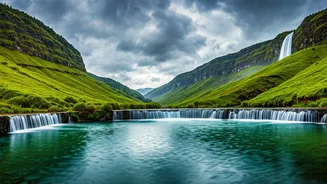
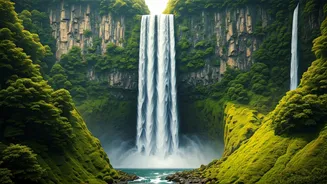
The reason Cherrapunji dominates visual platforms is simple: it offers a kind of raw, untamed beauty that feels almost CGI. The geology of the area creates dramatic gorges and plateaus, perfect stages for water to perform. During the peak monsoon, water doesn't just fall—it gushes, roars, and veils the landscape in a fine spray. The contrast between the deep green of the foliage, the dark rock of the cliffs, and the brilliant white of the cascades is a photographer’s dream. Add the ever-present mist that rolls through the valleys, and you get photos that aren't just scenic; they’re atmospheric and moody. It’s a place that does the work for you, turning a simple snapshot into something epic.
The Star Player: Nohkalikai Falls
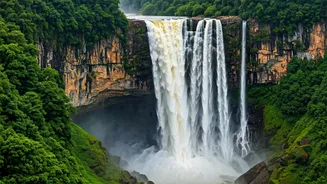
If Cherrapunji has a headliner, it’s Nohkalikai Falls. This is India’s tallest plunge waterfall, dropping an astonishing 1,115 feet in a single, uninterrupted stream. The water freefalls from a lush, forested cliff into a turquoise plunge pool below. The name carries a grim local legend of a woman named Likai who leaped from the cliff after a family tragedy, giving the falls a haunting backstory. But its visual power is what makes it a must-see. On a clear day, the contrast of the white water against the green and the impossibly blue-green pool is breathtaking. On a misty day, the falls seem to appear from the clouds themselves, adding a layer of mystery.
The Panoramic Showstopper: Seven Sisters Falls
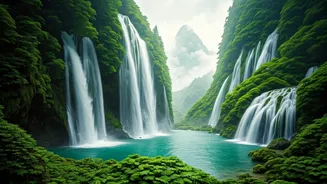
While Nohkalikai is about a singular, powerful plunge, the Nohsngithiang Falls—better known as the Seven Sisters Falls—is about scale and grandeur. This isn’t one waterfall, but a series of seven distinct streams that cascade side-by-side down a wide limestone cliff. During the monsoon, they merge into a formidable curtain of water, roaring into the valley below. It’s a panoramic spectacle best viewed from a distance, where you can appreciate the sheer breadth of the scene. It’s particularly famous for catching the evening light, and a sunset shot of the Seven Sisters is one of the most coveted images for any visitor.
Beyond the Waterfalls: Living Root Bridges
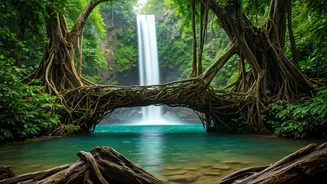
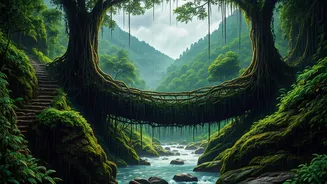
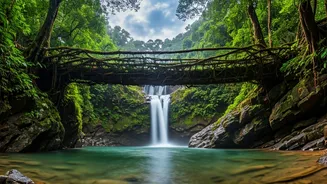
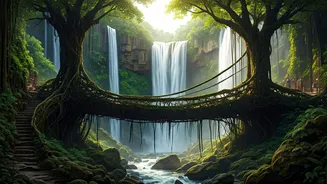
While the headline is waterfalls, any trip to the Cherrapunji region would be incomplete without seeing the living root bridges. These aren't built; they're grown. For centuries, the indigenous Khasi and Jaintia peoples have guided the aerial roots of rubber fig trees across rivers and streams, weaving them together until they form sturdy, living bridges. The most famous example, the Umshiang Double-Decker Root Bridge, is a marvel of bio-engineering that looks like something straight out of Pandora from *Avatar*. These ancient, moss-covered structures are often a short trek away from the main waterfalls, offering a completely different but equally stunning visual that’s become just as iconic on social media.