


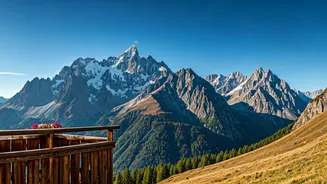


The Himalayan Theater
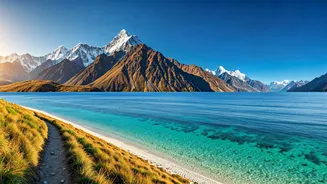
Deep in the northern Indian state of Uttarakhand lies the Kumaon region, a spectacular landscape of verdant foothills rolling up to meet some of the world's most formidable mountains. Dotted with serene lakes and colonial-era hill stations like Nainital
and Almora, Kumaon is often seen as a tranquil escape. But during the monsoon months, from roughly June through September, this tranquility gives way to one of nature’s most dramatic displays. This isn’t the tornado-chasing of the American Midwest. This is a different kind of pursuit, one focused on capturing the sublime beauty of weather interacting with an epic landscape. The region’s unique geography, where the first major ramparts of the Himalayas rise sharply from the plains, creates a perfect stage for atmospheric drama.
A Symphony of Clouds
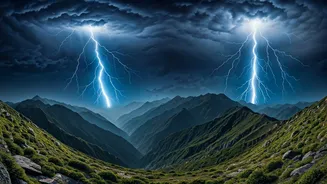
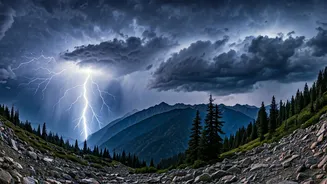
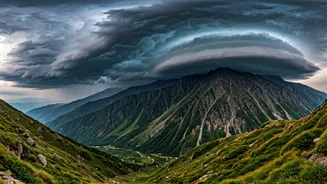
The magic of Kumaon’s storms lies in the monsoon winds. As moisture-laden clouds sweep north from the Bay of Bengal, they collide with the towering Himalayan wall. Unable to pass, they are forced upward, condensing and stacking into colossal, multi-layered formations that defy belief. Photographers are treated to a visual feast: low-lying valley clouds, a mid-layer of turbulent storm systems, and high-altitude cirrus clouds all performing in the same frame. This creates an incredible sense of depth and scale. The pre-monsoon and monsoon periods are particularly coveted for their dynamic light. Moments before a storm, the sun might pierce through a gap, illuminating a single peak in gold while the sky behind it bruises to a deep indigo. Then comes the lightning—not just flickers, but brilliant spiderwebs of electricity that arc across the entire sky, backlighting the cloud architecture and revealing the immense power being unleashed.
The Photographer's Quest
For the landscape photographers who make the pilgrimage here, this is the ultimate challenge of patience and timing. It’s not about getting a simple snapshot of a lightning bolt. It's about composition, anticipation, and storytelling. The goal is to capture the relationship between the storm and the ancient mountains—the fleeting drama of the weather against the eternal stillness of the peaks. This often means spending hours, or even days, at a single viewpoint, watching the sky, and waiting for the perfect confluence of light, cloud, and raw energy. They use long exposures to paint the path of lightning across the frame or capture the ghostly movement of clouds swirling around a summit. It’s an art form that requires both technical skill and a deep appreciation for the natural world. Each successful image feels less like a photo taken and more like a moment earned.
More Than Just a Storm
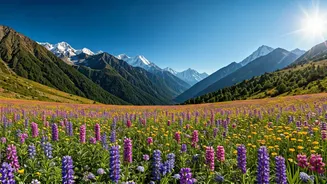
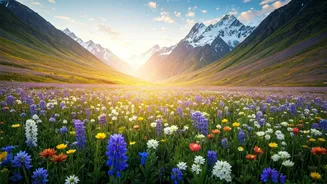
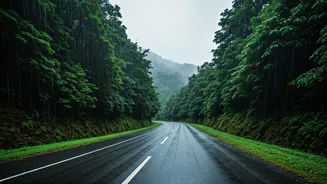
Unlike the purely destructive connotations storms can have elsewhere, the monsoon in India is a celebrated, life-giving event. It breaks the oppressive heat of summer, replenishes the rivers, and turns the landscape a dazzling, saturated green. This cultural context adds another layer to the photographic pursuit. Capturing a Kumaoni storm is not just about documenting meteorological violence; it's about capturing a moment of profound renewal. The photographers are chronicling a cycle that has defined life in this region for millennia. The dramatic skies and rain-washed vistas represent a land being reborn, and that feeling permeates the images. The scent of rain on dry earth, the chorus of frogs after a downpour, and the vibrant colors of the rejuvenated flora are all part of the experience that makes chasing these storms so compelling.