



The Promise on Your Plate
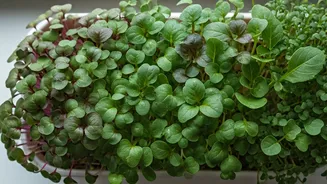
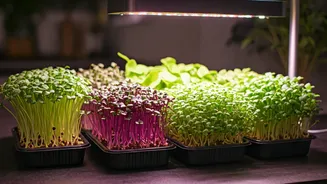
First, let's be clear about what we're growing. Microgreens are not sprouts. They are the young seedlings of edible vegetables and herbs, harvested just after the first true leaves have developed. Think of them as vegetable confetti: tiny, intensely flavorful,
and packed with a concentrated dose of nutrients. A pinch of radish microgreens can deliver a peppery kick that transforms a simple salad, while a sprinkle of sunflower microgreens adds a nutty, fresh crunch to your morning avocado toast. They are the perfect intersection of culinary delight and nutritional powerhouse, and they grow incredibly fast, often going from seed to harvest in just one to three weeks.
Embracing the Dark Side
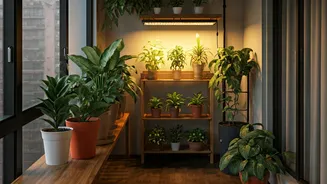
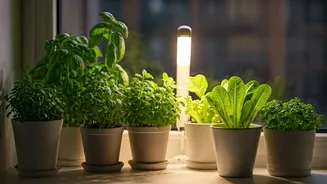
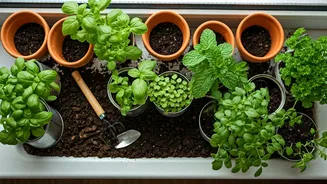
The classic image of indoor gardening involves a row of terracotta pots basking in a sun-drenched window. But for millions of Americans living in apartments, townhouses, or homes with less-than-ideal light, that picture feels like a fantasy. Most vegetables require at least six to eight hours of direct sunlight to thrive, a luxury many of us simply don't have. This is where the myth that you can't grow your own food without a sunny spot gets debunked. Many microgreens, ironically, begin their life in complete darkness. A 'blackout period' of a few days after seeding encourages seeds to germinate uniformly and develop strong roots. They are, in a sense, pre-adapted to starting in the dark. The trick is what comes next.
Your Secret Weapon: The Grow Light
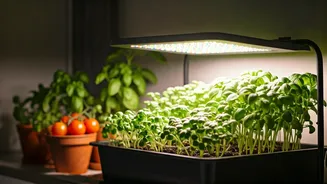
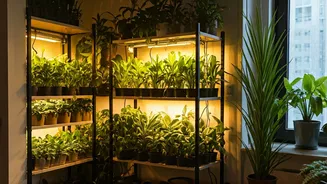
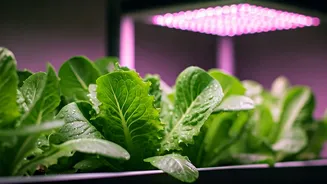
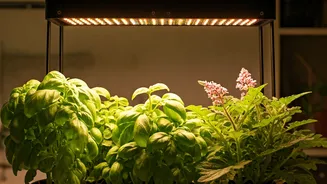
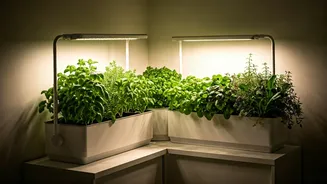
The hero of our low-light story is the modern LED grow light. Forget the clunky, hot, and energy-guzzling lamps of the past. Today's options are sleek, affordable, and incredibly efficient. For a simple microgreens setup, you don't need a professional-grade fixture. A simple, full-spectrum LED strip light mounted under a kitchen cabinet or on a wire shelf is more than enough to do the job. 'Full-spectrum' simply means the light provides the necessary blue and red wavelengths that plants need for healthy vegetative growth, mimicking the sun's natural output. A basic T5 or T8 LED fixture from a hardware store, often sold as a shop light, can provide brilliant results for a minimal investment. Set it on a simple timer for 12-16 hours a day, and you've just created a perfect, artificial sun for your tiny indoor farm.
Choosing Your Champions
While most microgreens will grow under artificial lights, some are particularly well-suited for beginners and low-light setups. These varieties are vigorous, fast-growing, and don't require the intense light that fruiting plants like tomatoes would. Start with these reliable winners: * **Pea Shoots:** Sweet, crunchy, and substantial. They grow quickly and are very forgiving. * **Radish (Daikon or China Rose):** Incredibly fast, with a satisfying spicy bite. You can have a harvest in as little as 7-10 days. * **Sunflower:** A crowd favorite for their nutty flavor and thick, satisfying texture. They require a bit more attention to soil moisture but are well worth it. * **Broccoli & Kale:** These brassicas grow easily and provide a milder, classic 'green' flavor packed with all the nutrients you'd expect from their full-sized counterparts.
Your First Harvest in 5 Steps
Ready to get started? It's easier than you think. You'll need a shallow tray (a takeout container with holes poked in the bottom works), some potting mix or a coco coir mat, your seeds, and your grow light. 1. **Prep Your Tray:** Fill the tray with about an inch of moistened soil, and gently firm it down. 2. **Seed Densely:** Unlike a traditional garden, you want to scatter your seeds very thickly across the entire surface of the soil. Don't bury them; just press them lightly into the soil. 3. **Blackout Time:** Lightly mist the seeds with water and cover the tray with another tray or a dark lid. Place it in a cupboard for 2-4 days. This encourages germination. 4. **Introduce Light:** Once you see yellowish shoots emerging, it's time for their 'sun.' Uncover the tray and place it a few inches beneath your grow light. Set your timer for 12-16 hours of light per day. 5. **Water & Harvest:** Water your microgreens daily, preferably from the bottom by placing your seed tray into a larger tray of water for a few minutes. When the greens are 2-3 inches tall and have developed their first set of true leaves, use scissors to harvest them just above the soil line. Enjoy immediately.