





The Allure of the Monsoon
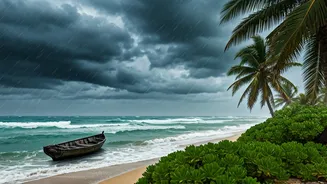
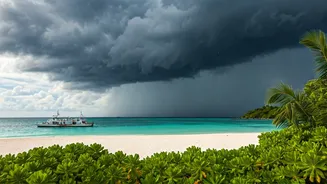
For a certain type of traveler, the Andaman and Nicobar Islands are never more beautiful than during the monsoon, which typically runs from May through September. The seasonal rains wash the dust from the landscape, transforming the islands into a canvas
of a thousand shades of green. The skies become a spectacle of rolling, dramatic clouds that create breathtaking sunrises and sunsets. The crowds of the high season (December to March) are gone, replaced by a quiet, contemplative atmosphere. Hotels offer steep discounts, and you might find yourself walking along a world-famous beach like Radhanagar on Havelock Island (now Swaraj Dweep) with only a handful of other people. It’s an immersive, raw, and intensely romantic version of paradise, where the sound of the rain on a tin roof becomes the soundtrack to your escape.
The Reality of the Rains
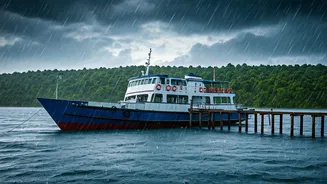
This lush beauty comes with a significant price: unpredictability. The monsoon doesn't just mean gentle showers; it can bring torrential downpours and high winds for days on end. The biggest casualty of this weather is inter-island transport. The entire Andaman experience for most tourists relies on a network of government and private ferries connecting the main hub of Port Blair to popular islands like Havelock (Swaraj Dweep) and Neil (Shaheed Dweep). When the sea gets rough—which it frequently does during the monsoon—these ferry services are summarily canceled. There are no other options. This isn't a minor inconvenience; it means you could be stranded on an island for days, missing your flight home, or stuck in Port Blair, unable to start your island-hopping adventure.
Know Before You Go: The Logistics
Understanding the geography of the Andamans is key to grasping the risk. You fly into Veer Savarkar International Airport in Port Blair, the capital city on South Andaman Island. From there, the jewels of the archipelago—the pristine beaches, diving spots, and rainforests—are mostly on other islands. A typical itinerary involves taking a 90-minute to 2-hour ferry to Havelock or Neil. During the monsoon, sea conditions are graded, and if the warning level is high, all sailings are grounded. This decision is made for safety and is non-negotiable. Furthermore, rough seas make many water activities like snorkeling and scuba diving unsafe or impossible, with poor visibility and strong currents. Even on land, heavy rains can lead to localized flooding and power outages, testing the patience of even the most seasoned traveler.
Is a Monsoon Trip Right for You?
The answer depends entirely on your travel style and tolerance for uncertainty. A monsoon trip to the Andamans is a fantastic idea if: you have a flexible schedule, you’re not on a tight timeline, you find beauty in dramatic weather, and your main goal is to relax, read, and soak in the atmosphere rather than tick off a long list of activities. It’s for the novelist finishing their manuscript or the couple looking for a secluded, moody retreat. However, you should absolutely avoid a monsoon trip if: you have a fixed number of vacation days, you have a non-refundable flight home you cannot miss, you are traveling with small children, or your heart is set on sunny skies, calm blue water, and a guaranteed schedule of diving and island hopping. For you, the high season is a much safer bet.
Tips for the Daring Traveler
If you’ve weighed the risks and still want to chase the monsoon’s beauty, smart planning can be your best defense. First and foremost, build buffer days into your itinerary—at least two or three extra days on either end of your island-hopping segments. Book your inter-island ferries as soon as you arrive, but be mentally prepared for them to be canceled. Stay in touch with the ferry operators daily. Pack diligently: fast-drying clothes, a high-quality rain jacket, waterproof bags for electronics, and plenty of bug spray are essential. Finally, download books and movies onto a tablet and embrace the downtime. The most successful monsoon travelers are the ones who see a canceled ferry not as a disaster, but as an excuse for another cup of chai and one more chapter.