






1. Canna Lily
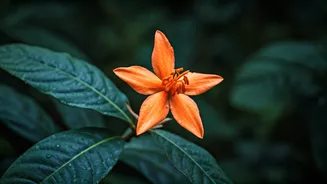
With their massive, banana-like leaves and show-stopping flowers in shades of red, orange, and yellow, canna lilies are the embodiment of a tropical paradise. These plants are native to regions that experience heavy seasonal rains, so they have no fear
of wet feet. In fact, they perform best in consistently moist soil and high humidity. Plant them in a sunny spot in your garden that tends to collect water, or even at the edge of a pond. In cooler U.S. climates (Zones 3-7), their rhizomes can be dug up after the first frost and stored indoors for the winter, ready to bring the jungle vibe back next spring. In warmer zones (8-11), they can be left in the ground to flourish year after year.
2. Elephant Ear (Colocasia and Alocasia)
If you want pure drama, look no further than Elephant Ears. Their colossal, heart-shaped leaves can create an instant focal point and make a garden feel extravagantly lush. The Colocasia genus, in particular, is a true water-lover and can even be grown as a marginal aquatic plant in water gardens. They soak up the moisture, using it to fuel their rapid growth. Don't let the soil around them dry out; they will reward your consistent watering with ever-larger leaves. Available in shades from deep purple-black to vibrant green, they provide a bold, architectural element that pairs beautifully with the fine textures of other rain-loving plants.
3. Ginger Lily (Hedychium)
The name alone evokes tropical spice and fragrance. Ginger lilies are not the source of culinary ginger, but they are related and share a love for warm, moist, and humid environments. They produce wonderfully fragrant flowers, often in white, peach, or yellow, that perfume the air in late summer and early fall. Their tall stalks and lance-shaped leaves give a vertical accent that looks stunning in a mixed border. Give them rich, well-drained but consistently moist soil and a spot with morning sun and afternoon shade. The steady moisture helps them produce the most abundant and fragrant blooms, truly capturing the essence of a garden after a warm monsoon shower.
4. Coleus
Often grown as an annual, coleus is prized for its incredibly vibrant and patterned foliage, which comes in a nearly infinite combination of colors. While many varieties prefer shade, almost all of them demand consistent moisture to prevent wilting. In hot, humid weather, they are in their element, provided their roots stay damp. A summer downpour that might flatten more delicate plants only seems to refresh a coleus, making its colors pop even more. They are perfect for filling in containers and shady, damp garden beds where other plants might struggle with fungus. Their thirst makes them an ideal companion for other plants on this list, creating a multi-layered, colorful, and water-loving display.
5. Cardinal Flower (Lobelia cardinalis)
For those seeking a native U.S. plant that adores wet conditions, the cardinal flower is a spectacular choice. This perennial is naturally found along stream banks and in marshy areas, so it's perfectly adapted to boggy, rain-soaked soil. In late summer, it sends up tall spikes of brilliant, true-red flowers that are an irresistible magnet for hummingbirds. Unlike the tropical plants on this list, it is hardy in much of the country (Zones 3-9). Planting cardinal flower in a rain garden or a low-lying, damp spot in your yard is a surefire way to get a dazzling display while supporting local pollinators. It proves you don’t have to go exotic to find a plant that celebrates the rain.
6. Tropical Hibiscus (Hibiscus rosa-sinensis)
The classic flower of the tropics, hibiscus produces enormous, plate-sized blooms that are the definition of summer. While they don't want to sit in standing water, tropical hibiscus are heavy feeders and drinkers, requiring consistent moisture to support their prolific flowering. A deep, thorough watering that mimics a heavy rain is exactly what they need to produce those stunning, iconic blossoms. In dry spells, their buds may drop before they even open. In the humid, rainy parts of summer, they truly hit their stride. Grow them in large containers in colder climates to be brought indoors for winter, or plant them directly in the ground in frost-free zones (9-11) for a year-round taste of the tropics.