





The World's Highest Stage
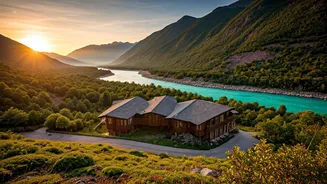
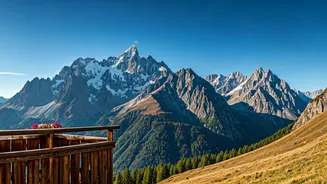
Before the first dancer appears, the setting itself provides the drama. Ladakh, a high-altitude desert in northern India often called “Little Tibet,” is a land of stark, breathtaking beauty. Nestled among jagged, snow-dusted mountains are ancient Buddhist
monasteries, or gompas, that cling to cliffsides as if carved from the rock itself. These monastery courtyards, open to the vast, blue sky, become the sacred stages for the Cham. Festivals like Hemis Tsechu, held at the region’s largest monastery, draw devotees from across the remote valleys. For outsiders, it’s a journey to a place that feels disconnected from the modern world, where tradition isn't a performance for tourists but the unwavering rhythm of life.
A Dance of Gods and Demons
To call Cham a “dance” is an understatement. It is a profound religious ritual, a moving meditation that has been practiced for centuries in Tibetan Buddhism. The performance is not for entertainment; it is a spiritual tool. Each deliberate step, turn, and gesture is part of a complex ceremony designed to vanquish evil spirits, purify the land and its people, and impart moral teachings from Buddhist scriptures. The dancers are monks who have spent years, sometimes decades, mastering the intricate choreography. Through their movements, they embody deities and historical figures, transforming the courtyard into a cosmic battleground where good ultimately triumphs over evil and ignorance.
Faces of the Divine
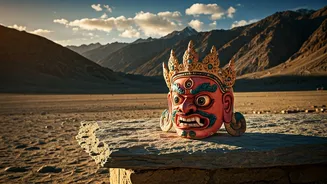
The most striking element of the Cham is undoubtedly the masks. These are not simple face coverings but massive, intricate works of art, often made of wood or papier-mâché and vividly painted. Some depict wrathful protector deities, with bulging eyes, bared fangs, and crowns of skulls, designed to terrify malevolent forces. Others represent serene Bodhisattvas, historical figures like the guru Padmasambhava, or even comical skeletons that remind the audience of life's impermanence. Paired with elaborate, multi-layered silk brocade costumes, the masks completely subsume the identity of the monk beneath. They become vessels for the divine, their larger-than-life presence filling the courtyard with an aura of otherworldly power.
The Rhythm of Ritual
The visual drama is set to an equally powerful soundtrack. The monastic orchestra produces a soundscape that is both hypnotic and jarring. The deep, resonant blasts of the *dungchen*, or long-horns, are punctuated by the crashing of cymbals, the rhythmic beat of large drums, and the haunting melodies of oboe-like clarinets. This is not music in the Western sense of harmony and melody, but a sonic invocation. The dancers move in a slow, trance-like rhythm, their heavy costumes swirling around them. The pace is deliberate, creating a form of moving mandala—a sacred, geometric pattern that reorganizes the spiritual energy of the space and everyone within it. The entire performance can last for two days, a slow-burn epic of sound and color.
More Than a Spectacle
For the Ladakhi people, attending a Cham festival is an act of faith and a vital social gathering. Families dress in their finest traditional clothing, sharing food and reaffirming communal bonds while receiving the blessings of the ritual. For the handful of travelers who make the arduous journey to witness it, the experience is transformative. You are not a passive spectator watching a show; you are an observer in a deeply sacred event. The line between performance and reality blurs. The fierce deities seem real, the blessings palpable. It’s a powerful reminder that in some corners of the world, ancient spiritual dramas are still a vibrant, living force.